Showing posts with label "Dr. June McCarroll". Show all posts

Monday, July 15, 2013

An Invention We Depend Upon Every Day

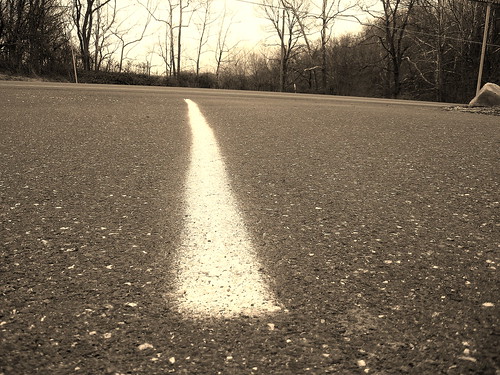
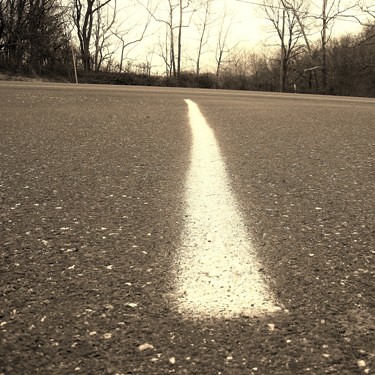
Specifically, the white line.

whiteline
The story of this simple innovation may surprise you.

 A Milestone Monday Feature:

Who besides myself has ever wondered "who was the 'guy' who invented pavement markings?" Without them modern highways could not function so their origin must have been forged by necessity. Some historians like to point to Roman street crossing stones as the forerunner of modern 'zebra walks' and that is certainly good history but the actual sorting of traffic by lanes requires a visit to more recent times.

As the automobile came into common use in the United States, the U.S. Numbered Highway System came into being and the various states embarked on a mission to pave cross-country highways. In their gravel and dirt condition the danger of head-on collisions was not so life threatening as the speeds were not that great. As the great highways became paved, however, the speed of vehicles increased to the point that dangerous collisions did occur. U.S. 99 in Indio, California was a particularly dangerous stretch of road and in 1917 necessity would soon become the 'mother of invention.'

Dr. June Hill Robertson McCarroll was born in New York's Adirondack Mountains and went on to study medicine in Chicago during an era when few women completed professional studies at all. When her first husband John Robertson developed tuberculosis, she moved with him to Southern California hoping the desert climate would help his recovery. She took a job as a nurse with the Southern Pacific Railroad. Mr. Robertson died in 1914 and Dr. June later married Frank McCarroll, the local station master. She continued in her medical practice and at one time was the only physician serving the desert area between Palm Springs and the Salton Sea. She began to see victims of automobile accidents on an increasingly regular basis.

Driving in her model T Ford, along what was to become U.S. 99 in Indio, the good doctor was run off the road by a large truck roaring toward her in the center of the pavement. In her own words: "My Model T Ford and I found ourselves face to face with a truck on the paved highway. It did not take me long to choose between a sandy berth [sic] to the right and a ten-ton truck to the left! Then I had my idea of a white line painted down the center of the highways of the country as a safety measure."

Dr. McCarroll approached the Riverside County Supervisors and the Chamber of Commerce who listened politely to her idea and politely shelved it. Frustrated, but far from defeated, she finally engaged in a bit of guerrilla road improvement, hand painting a four-inch white line down the center of a mile-long stretch of U.S. 99 to create two distinct lanes. Aided by the Indio Women's Club, she began a statewide letter writing campaign and finally, in 1924 the state highway commission adopted her proposal. Initially 3500 miles of road were striped at a cost of $163,000. Soon pavement markings were in use around the world.
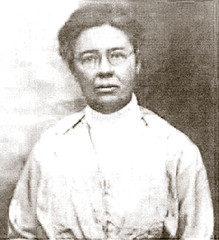
Dr. June McCarroll
Dr. June Hill Robertson McCarroll

Sunday, August 8, 2010

The 'Guy' Who Invented Pavement Markings

Specifically, the white line.

Here begins a series of 'Best of'' posts from the series: 'Milestone Monday.' This was the very first one:

Line

Who besides myself has ever wondered"who was the 'guy' who invented pavement markings?" Without them modern highways could not function so their origin must have been forged by necessity.Some historians like to point to Roman street crossing stones as the forerunner of modern 'zebra walks' and that is certainly good history but the actual sorting of traffic by lanes requires a visit to more recent times.

As the automobile came into common use in the United States, the U.S. Numbered Highway System came into being and the various states embarked on a mission to pave cross-country highways. In their gravel and dirt condition the danger of head-on collisions was not so life threatening as the speeds were not that great.As the great highways became paved, however, the speed of vehicles increased to the point that dangerous collisions did occur. U.S. 99 in Indio, California was a particularly dangerous stretch of road and in1917 necessity would soon become the 'mother of invention.'

Dr. June Hill Robertson McCarroll was born in New York's Adirondack Mountains and went on to study medicine in Chicago during an era when few women completed professional studies at all. When her first husband John Robertson developed tuberculosis, she moved with him to Southern California hoping the desert climate would help his recovery. She took a job as a nurse with the Southern Pacific Railroad. Mr. Robertson died in 1914 and Dr. June later married Frank McCarroll, the local station master. She continued in her medical practice and at one time was the only physician serving the desert area between Palm Springs and the Salton Sea. She began to see victims of automobile accidents on an increasingly regular basis.

Driving in her model T Ford, along what was to become U.S. 99 inIndio, the good doctor was run off the road by a large truck roaring toward her in the center of the pavement. In her own words: "My Model T Ford and I found ourselves face to face with a truck on the paved highway. It did not take me long to choose between a sandy berth [sic] to the right and a ten-ton truck to the left! Then I had my idea of a white line painted down the center of the highways of the country as a safety measure."

Dr. McCarroll approached the Riverside County Supervisors and the Chamber of Commerce who listened politely to her idea and politely shelved it. Frustrated, but far from defeated, she finally engaged in a bit of guerrilla road improvement, hand painting a four-inch white line down the center of a mile-long stretch of U.S. 99 to create two distinct lanes.Aided by the Indio Women's Club, she began a statewide letter writing campaign and finally, in 1924 the state highway commission adopted her proposal. Initially 3500 miles of road were striped at a cost of $163,000. Soon pavement markings were in use around the world.

Dr. June McCarroll

Thursday, July 9, 2009

Celebrating Brilliance and Persistance

The Dr. June McCarroll Award

Dr. June McCarroll
Dr. June McCarroll, inventor of
pavement markings for highways.

It is time for the first ever Dr. June McCarroll Award to be given. Here is My Original Piece [click to read] about this amazing woman. After she was run off the road by a truck she came up with the idea for a dividing line to be painted down the center of roads. When she took the idea to the government they politely ignored her. She made her point, however, by painting a center line on one mile of US 99 in Indio California. Her invention was then impossible to ignore and became part of highway history.

This year's award goes to a young mother who sought to make her own community better. In 1992 she ran for city council of Wasilla, AK and served there until 1996 when she became mayor. She was appointed to the Alaska Oil and Gas Conservation Commission and served as Ethics Commissioner from 2003 to 2004. She resigned and exposed corruption in the commission, fingering prominent members of her own party. Her credentials as a reformer clearly established, she ran for Governor in 2006 and defeated incumbent Republican Governor Murkowski in the primary. She went on to win the general election and became, at 42, Alaska's youngest Governor in history.

Known as a foe of wasteful spending, she is famous for her vetoes of questionable expenditures. She has another unique qualification for leadership -- she is the Mother of five children! Her youngest child, Trig, was born while she was Governor of Alaska. That has to be another historic first! Her oldest son serves in the U.S. Army in Iraq.

We know her as the Vice Presidential candidate who reenergized John McCain's flagging bid for the White House. People are unnerved by her appeal to the common man and she is now routinely villified by media and entertainment 'elites.' Here's what one Alaska citizen has to say about her:

This from SaraPac.

Letter to the Editor by Elsie M. O’Bryan,
Houston, AK
Mat-Su Valley Frontiersman

July 6, 2009

To the editor:

In case you’re wondering what this Alaskan thinks of Sarah stepping down before her term is up…

I know, from my own observation of the articles and editorials and multiple facetious ethics complaints that Sarah could make no move — regardless of how mundane — without constant harassment. Yes, I use the word “harassment” because I believe that is what it has been.


No political figure is immune, nor should they be immune, from questioning (those who know me know I’ve done my share of that on the local and state level over the years) of motives, proper procedures, etc. That’s part of the process.


However, when it comes to the point that a person who is attempting to do her best in the position she was elected to do cannot do so, and when the cost in time and money to the individual and to the state to defend against allegations, becomes the prudent thing to do to step away.

I think it was an unselfish move to have chosen to step away from the office of governor and I believe that it was a matter of analyzing the ability to continue to be effective and judging that with the onslaught of attacks of every move and concluding that it was time to step aside.

I believe it is time to impose a fee for filing ethics complaints, which can be refunded if the complaint is found to have merit. I believe those who filed multiple complaints, which were dismissed, were on a well-thought out campaign that cost them nothing. There needs to be a process whereby folks can continue to file complaints and expect a fair and unbiased review, yet those who use that process for a campaign for destruction are held accountable for a part of the expense.


Has she been a good governor? Yes she has. Has she been able to accomplish getting major goals accomplished through bringing thorny players together? Yes
.
Would an ugly male be treated the same way by the media? Murkowski wasn’t. Obama isn’t.


I have to agree with one commenter who stated, to the effect of “Just believe what she’s saying.” Don’t look for alligators under rose bushes.


I only hope that some of the media people and “bloggers” who pushed this to this extent can have a measure of conscience and learn that there is a line and they have crossed it.

Elsie M. O’Bryan
Houston


Rasmussen makes it clear, a lot of conservative voters have NOT written her off:

Seventy-six percent (76%) of Republican voters have a favorable opinion of Palin, even after her decision to resign as governor of Alaska, with 45% whose view of her is very favorable. Palin trails Huckabee, who unsuccessfully sought the Republican presidential nomination in 2008. Huckabee is favored by 78%, with 41% who feel very favorably toward him.

Sarah Palin represents a rebirth of that Jeffersonian ideal where people from ordinary life go up to Washington to represent us and then come home! She's no Washington insider in a grey suit. She got involved in the first place because she cares. It is with great pleasure that I nominate her to receive the first ever Dr. June McCarroll Award, given here this day, July 9, 2009.

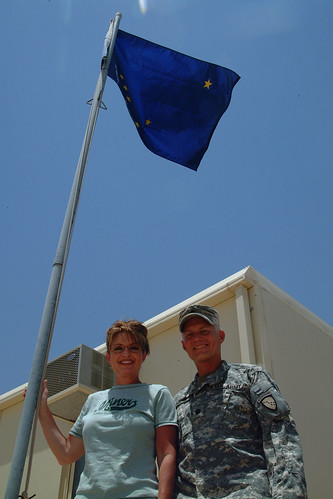
Sarah_Palin_Kuwait_18
Governor Palin in Kuwait.

HT/SWAC Girl

Wednesday, March 25, 2009

The VDOT Diet

Mark Obenshain's VDOT 'Waste Reduction' Program

Here is a great idea seen by SWAC Girl [click to read]. Mark Obenshain's VDOT Waste Website [click to read] offers a forum for citizen input. Obenshain says:

“All of us can give examples of hard-working VDOT employees who are dedicated to keeping our roads safe,” said Obenshain. “I consider them allies in this fight. This is about getting our priorities straight: let's make sure that we spend our scarce transportation dollars wisely, maintaining our existing roadways, prioritize – not politicize – new construction projects, and above all, let's make sure that wasteful spending doesn't take away from top safety priorities like clearing snow, grading roads, and keeping the rest stops open.”

I think Dr. June McCarroll [click to read] would have loved it.

Saturday, August 30, 2008

The "Barracuda" and the "Maverick"

Congratulations to Sarah Palin

Back at the beginning of this blog, Doctor June McCarrol was featured as the Inventor of Highway Pavement Markings! You can read her remarkable story Here. Her genuine concern led her to activism as she petitioned the Indio government and later the State of California. Alaska Governor Palin is made of the same stuff. Beginning as a concerned parent she got involved in local government. In 1992 she ran for city council of Wasilla, AK and served there until 1996 when she became mayor. She was appointed to the Alaska Oil and Gas Conservation Commission and served as Ethics Commissioner from 2003 to 2004. She resigned and exposed corruption in the commission, fingering prominent members of her own party. Her credentials as a reformer clearly established, Ms. Palin ran for Governor in 2006 and defeated incumbent Republican Governor Murkowski in the primary. She went on to win the general election and became, at 42, Alaska's youngest Governor in history.

As Governor, Palin is known as a foe of wasteful spending and is famous for her vetoes of questionable expenditures. She has another unique qualification for leadership -- she is the Mother of five children! Her youngest child, Trig, was born while she was Governor of Alaska. That has to be another historic first! Her oldest son serves in the U.S. Army and will serve in Iraq starting this fall.

So how did she get the nickname "Barracuda?" It goes back to her Wasilla High School basketball days when she earned the moniker: "Sarah Barracuda" for her fierce play as point guard. Off the court, she was President of the school's Fellowship of Christian Athletes Chapter. Do you see a penchant for leadership here?

Sarah_Palin_Kuwait_18
Alaska Governor Sarah Palin in Kuwait.

Binyamin L. Jolkovsky of Jewish World Review ran This Piece by Nat Hentoff in May! Mr. Hentoff is a liberal thinker who is pro-life [he thinks for himself, obviously]. His observations about Ms. Palin and her qualifications for the job are well worth reading, even now, months after Hentoff wrote them. This is no overnight decision.

A Vice President We Can Relate to

Sarah Palin represents a rebirth of that Jeffersonian ideal where people from ordinary life go up to Washington to represent us and then come home! She's no Washington insider in a grey suit.
She got involved in the first place because she cares. I thought of a young mother of five we know who is very active in her kids' schools, and said to my wife "that's like (our friend) being chosen to be Vice-president." Ms. Palin should take that as a great compliment. She's truely one of us!

Wednesday, March 19, 2008

Let's Start With the Road

Specifically, the white line.

Line

Who besides myself has ever wondered"who was the 'guy' who invented pavement markings?" Without them modern highways could not function so their origin must have been forged by necessity.Some historians like to point to Roman street crossing stones as the forerunner of modern 'zebra walks' and that is certainly good history but the actual sorting of traffic by lanes requires a visit to more recent times.

As the automobile came into common use in the United States, the U.S. Numbered Highway System came into being and the various states embarked on a mission to pave cross-country highways. In their gravel and dirt condition the danger of head-on collisions was not so life threatening as the speeds were not that great.As the great highways became paved, however, the speed of vehicles increased to the point that dangerous collisions did occur. U.S. 99 in Indio, California was a particularly dangerous stretch of road and in1917 necessity would soon become the 'mother of invention.'

Dr. June Hill Robertson McCarroll was born in New York's Adirondack Mountains and went on to study medicine in Chicago during an era when few women completed professional studies at all. When her first husband John Robertson developed tuberculosis, she moved with him to Southern California hoping the desert climate would help his recovery. She took a job as a nurse with the Southern Pacific Railroad. Mr. Robertson died in 1914 and Dr. June later married Frank McCarroll, the local station master. She continued in her medical practice and at one time was the only physician serving the desert area between Palm Springs and the Salton Sea. She began to see victims of automobile accidents on an increasingly regular basis.

Driving in her model T Ford, along what was to become U.S. 99 inIndio, the good doctor was run off the road by a large truck roaring toward her in the center of the pavement. In her own words: "My Model T Ford and I found ourselves face to face with a truck on the paved highway. It did not take me long to choose between a sandy berth [sic] to the right and a ten-ton truck to the left! Then I had my idea of a white line painted down the center of the highways of the country as a safety measure."

Dr. McCarroll approached the Riverside County Supervisors and the Chamber of Commerce who listened politely to her idea and politely shelved it. Frustrated, but far from defeated, she finally engaged in a bit of guerrilla road improvement, hand painting a four-inch white line down the center of a mile-long stretch of U.S. 99 to create two distinct lanes.Aided by the Indio Women's Club, she began a statewide letter writing campaign and finally, in 1924 the state highway commission adopted her proposal. Initially 3500 miles of road were striped at a cost of $163,000. Soon pavement markings were in use around the world.

Dr. June McCarroll