Showing posts with label Aircraft. Show all posts

Saturday, February 7, 2015

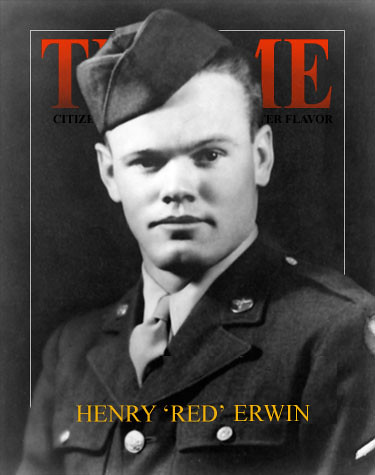
THYME Magazine: Henry 'Red' Erwin

Citizen Journalism with a Better Flavor

THYME0905A
Volume IX, Issue Va

An Extraordinary Hero

Henry Eugene Erwin was born in Docena, Alabama in 1921. His coal miner father died when he was ten. Gene, as he was called then, was the oldest child and he went to work in the company store to help his struggling family. At the height of the depression, Erwin joined the Civilian Conservation Corps and later went to work in a steel mill in Birmingham. He was now his family's main breadwinner. In 1943 young Erwin joined the army. He qualified for the Air Corps and after training on the B-17 Flying Fortress he became a radio operator on the new B-29. This new Superfortress would soon strike deep into Japanese territory in the Pacific.

After getting married to his wife Betty on furlough in 1944, Erwin and his crew were assigned to Guam. Here their plane, the City of Los Angeles would make bombing runs on the main islands of Japan. On April 12, 1944, the City of Los Angeles led a formation of B-29s striking Koriyama.  Part of Irwin's job was to launch phosphorous smoke bombs to lead the other planes in to their targets. As Erwin pushed the smoke bomb into the chute, something went terribly wrong. It either jammed or was blown back, exlpoding in Erwin's face. He was blinded. His flesh was burning and the plane filled with smoke. The smoke bomb, burning at 1300 degrees, had lodged itself among the bombs in the plane!

The pilots could not see. The plane began a dive. It was certain that death would come, but would it be from the certain crash or the explosion from the munitions? Then the crew saw what had to have seemed to them an apparition as Irwin, totally aflame, located the burning phosphorus bomb and grabbed it with his right hand! Holding the white-hot canister against his rib cage, he somehow made his way towards a plane window by the navigator's station. The navigator's table blocked his progress and the seconds it took to raise it must have seemed like an eternity. Fellow crewmen remember Erwin saying: "Excuse me." as he stumbled past them into the cockpit to throw the bomb out the window.

Henry 'Red' Erwin then collapsed to the floor. He was totally aflame and his distinctive red hair was burned away. The crew put out the fire and administered morphine to the man they thought to be at death's door. But Erwin never lost consciousness. In agony, he asked: "Is everybody else alright?" The plane flew to Iwo Jima where there was a hospital.

"I Don't Say I'm a Hero"
-- Henry Eugene 'Red' Erwin


'Red' Erwin talks about the events of April 12, 1944.

Now began the most difficult set of challenges for Erwin. The doctors did not expect him to live, the phosphorous in his eyes would eventually blind him if he did. He was burned over most of his body. Ironically, his Mae West (life jacket) protected his chest as he clutched the red hot bomb. He was required to wear the life jacket during missions because he couldn't swim! Doctors began removing the phosphorous from his eyes. It was a painful process as the substance had a tendency to ignite when exposed to oxygen.

Major General Curtis E. Le May rushed a recommendation for the Medal of Honor through channels, hoping to present it to Erwin while he was still alive. There was only one problem. The only Medal of Honor in the Pacific was in a locked display case in Honolulu. General Le May had been awakened at 5:00 am to sign the Medal of Honor Citation. A special plane had been dispatched to obtain the medal. Finding noone to unlock the case, the airmen assigned to the mission broke the glass, absconded with the medal, and slipped back to their waiting plane.

Erwin had been flown to the hospital on Guam, where General Le May personally pinned the medal on him, saying: "Your effort to save the lives of your fellow airmen is the most extraordinary kind of heroism I know." Through the bandages covering his wounded face, Erwin responded: "Thank you, sir."

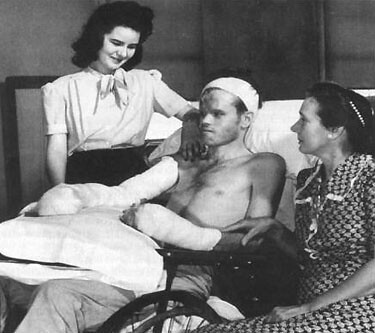
Erwin would go on to endure 43 surgeries in the next thirty months. But what might be his greatest giving of himself was yet to come. He did survive. He and Betty raised four children and he lived to see seven grandchildren. Henry 'Red' Erwin, his right arm permanently disabled, could not go back to the steel mills. Harry Truman had issued orders that any Medal of Honor recipient, otherwise qualified, was eligible for a veterans' benefits job. Erwin went to work for the Veterans Administration as a veterans' benefits counselor. For thirty-seven years he worked with wounded veterans, especially burn victims. Though the sight and smell of burned flesh brought back memories of his own intense pain, Erwin took a special interest in encouraging these heroes.

His son, Henry E. Erwin Jr. says of him: "Dad was a man of manners; He was always polite and courteous. He rarely got angry, but when he did, he meant business. He never yelled and screamed, but he had a firmness to his voice when he was angry. ...He embodied all the ideals of the Medal of Honor. He wore them like a well pressed suit. He was honest, thrifty, and patriotic. ...He never owed a debt, never got a ticket, never was sued. He obeyed the law, attended church, and treated everyone with courtesy and respect." On January 16, 2002, Henry 'Red' Erwin died at the age of eighty.
erwinfamily
Henry Erwin with his wife Betty and his mother.

Wednesday, May 14, 2014

THYME Magazine: Rebuilding the Dream II

Citizen Journalism with a Better Flavor

THYME0721
Volume VII, Issue XXII

Restoration Begins in the Heart

The story is told of a man who sat down on a weekend afternoon to watch a football game. His wife had left him in charge of his small son, who eagerly sought to engage his father in play. Seeking to divert the boy's attention for a bit, the father came up with a game. He found a world map on one page of the newspaper and cut it into an impromptu jigsaw puzzle. "Hey son, put this together and bring it back to me, then we'll play some more!" The father was astounded at how fast the boy returned... map taped together perfectly! "How did you do this?" the amazed father asked. "It was simple," the boy replied, "On the other side of the page there was a picture of a man. I just put the man together and the world was together!" The father hugged his boy, touched by the truth that often comes "from the mouths of babes!"

I set out to write this week about revitalizing American technology. Then tragedy hit our small city as police discovered the body of Julian Parrot in a city park. He was my son's age. He was well known to many Staunton Braves fans as he often helped out at the ballpark. He walked people's dogs for them and though he was mentally disabled, he was known as a kind and friendly person. A sixteen year old juvenile was charged in the apparent murder.

It was time to step away from trying to put the world together.

The technology we used to go to the moon was originally built to blow us up. German scientists at Peenemünde created the ICBM to dominate the world. In a stroke of brilliance, Americans created the civilian space agency with the V2 Rockets they had captured along with their designer, Dr. Wernher von Braun, and reached for new heights. We went to the moon! The inventive Germans created the highways Eisinhower would eventually model the Interstate system after. Clearly the technology for an amazing new world was at hand... and almost led to the domination of the world by the darkest regime in modern history. Was there something in the American character that added discipline to the great march forward?

In the nineteen seventies, journalists from National Geographic went to Leningrad in the Soviet Union. They were not prepared for the welcome that greeted them. Arriving to photograph a dreary Soviet-style factory they were met by the drably-clothed elderly women who worked there. When the women realized that these were Americans, their countenances brightened. They smiled warmly and embraced the startled journalists with many tears. You must remember that after the terrible siege of Leningrad was broken in World War II, the American GIs arrived and were remembered for their kindness to the people. They shared their food and genuinely looked out for their well being. Decades later, the gratitude had not diminished!

So what is it that exists in our national spirit that creates such acts? What might there be to temper the violence of the warrior? The testimony of these Russian women, lectured by their leaders for three decades about the 'evils' of America, who rushed to embrace Americans nonetheless speaks volumes! And have we lost it? A cruel senseless murder and a growing sense that many youths have lost respect for life do not speak well of our national culture today. America's character was formed in the taming of hostile frontiers and adjusting to a new world (as my Bavarian ancestors had to). It was tested on the battlefields of Europe and the Pacific. But now, have we lost it in our luxury? Have we cast off as 'archaic' those values that once guided us to higher deeds on distant shores?

It was time to put the man together.

In the dark turmoil of our Civil War, Evangelist Dwight L. Moody reached out to scores of troops, giving them the hope of the Gospel. Lives were changed, just as lives had been changed in the Great Awakenings prior to this time. Faith gave hope and direction. Faith had a part in the forging of our national character. But Moody almost didn't get a chance to be the agent of the Divine that he surely became.

It is well-known history that in April 1855 Moody embraced Faith when his Sunday school teacher, Edward Kimball, explained how much G-d loved him. He would go on to become a great evangelist, yet it is not so well known that his first application for church membership, in May 1855, was rejected. He was not received as a church member until May 4, 1856. His teacher, Edward Kimball, stated:

"I can truly say, and in saying it I magnify the infinite grace of God as bestowed upon him, that I have seen few persons whose minds were spiritually darker than was his when he came into my Sunday School class; and I think that the committee of the Mount Vernon Church seldom met an applicant for membership more unlikely ever to become a Christian of clear and decided views of Gospel truth, still less to fill any extended sphere of public usefulness."

"The first meeting I ever saw him at was in a little old shanty that had been abandoned by a saloon-keeper. Mr. Moody had got the place to hold the meetings in at night. I went there a little late; and the first thing I saw was a man standing up with a few tallow candles around him, holding a negro boy, and trying to read to him the story of the Prodigal Son and a great many words he could not read out, and had to skip. I thought, 'If the Lord can ever use such an instrument as that for His honor and glory, it will astonish me.' As a result of his tireless labor, within a year the average attendance at his school was 650, while 60 volunteers from various churches served as teachers. It became so well known that the just-elected President Lincoln visited and spoke at a Sunday School meeting on November 25, 1860." [1.]

The rest is history, as they say. But it is more than that. It should serve as a challenge to us. We dare not leave it to our great institutions to identify greatness... we must seek for it around us and nurture it, fully prepared to be astonished!

Redeeming Restoration

Louisiana Governor Bobby Jindal spoke last weekend at Liberty University's commencement. He pointed out that those in power now actively stand in the way of the First Amendment's guarantee of freedom to exercise religious faith. He referenced the case of Hobby Lobby and the government's desire to mandate abortificants trumping conscience. The case is going to the Supreme Court. Secularists want to relegate faith to the level of a personal hobby, according to Jindal. Hillary Clinton's carefully crafted statements on "freedom of religion" bear this out. Secularists use the 'Establishment Clause' to exclude as much religious expression as they can from the public square. Jindal remarked:

“It is said that College is an intellectual pursuit, involving reason and logic. I went to Brown University in the Ivy League, a place that prides itself in intellectual reasoning. One of the good things about going to Brown is that I was able to become the President of the College Republicans on campus almost immediately. The other Republican student at Brown was the Vice President.

Some kids go off to college and lose their way, they become convinced that their faith is not an intellectual pursuit.

Nothing could be further from the truth. Reason and logic lead to truth…which means that reason and logic lead to G-d.

There is a general view among many of the elites in America that truly enlightened folks realize that all this faith and religion stuff is just quaint and antiquated thinking from an earlier era. Or that it is a nice restful place for those who are not as bright or as intellectually curious as they are.

Again, nothing could be further from the truth. True intellectual curiosity will inevitably lead to an understanding of the Creator.

I always noticed examples of this elitist view of faith when national political reporters, usually from places like Boston, New York, or Washington, would come down to Baton Rouge to interview me in my first years as Governor.

Inevitably during these interviews they say something like this – “you are a smart guy, we know you went to Brown and were a Rhodes Scholar, so tell me, how is it that you call yourself pro-life, and you say that you oppose gay marriage, and you say that you oppose gun control? You just say that stuff to get elected in the Deep South right?”

So of course, l liked to have a little fun with it, so I would lean over the desk, and in hushed tones, pretending to confide in him or her, I would say – well…just between us, do me a favor, go tell your editors the bad news, tell them that I absolutely believe everything I say. As you can imagine, those interviews ended rather abruptly.” [2.]

I know a university professor of great integrity, who says to his students who are possibly struggling with what they believe, that "someone, somewhere has wrestled with this question before." He points out that scholars like C. S. Lewis and Tolkien have likely struggled with it to the point of writing about it. Professors like him are truly an inspiration to young scholars.

This professor operates within what I would call: The Mapmaker's Ethic. Simply expressed, the Mapmaker's Ethic acknowledges the fact that people must rely on maps to safely navigate and avoid dangers as they proceed to their destination. Known conditions must be clearly and accurately rendered. To do less is to unnecessarily endanger the traveler!

On November 10th, 1975, the Great Lakes Freighter Edmund Fitzgerald sunk in a violent storm on Lake Superior. Captain Ernest M. McSorley decided to hug the Northern shore of the lake, hoping to gain protection from the raging tempest. Normally the 729 foot Fitzgerald would stay in the shipping lanes in the center of the lake. Surprised by the sudden November gale, the captain plotted a new course that would take him very close to Caribou Island. In all likelihood, the large vessel bottomed out on the treacherous Six-fathom Shoal, which jutted out from the island. Examination of the charts of the day showed that Six-fathom shoal was incorrectly placed. It was a half-mile off! We may never know, but it is quite likely that a small error on a map contributed to the deaths of 29 good men!

Those who would assert that reason and logic cannot coexist with faith would to well to pull out the old charts... the ones that provide plenty of evidence for the Divine. The people of old were exhorted to pile up stones and teach their children of the mighty acts of the Divine. We ignore such landmarks at our own... and our childrens' peril.


Monday, December 6, 2010

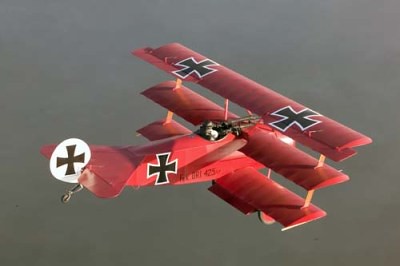
Manfred von Richthofen's Fokker Triplane

Remembering the Early Days of Aerial Combat

FokkeTriplane
The Fokker Triplane [reconstruction], flown by 'Red Baron' Manfred Albrecht Freiherr von Richthofen.

Yankee Phil has This Bit of History [click to read] popularized by the 'Peanuts' comic strip. Von Richthofen was a real-life pilot of WWI who shot down 80 planes.
___________________________________________________

laneyadvrt

Friday, October 1, 2010

Make Your Job Fun Day at Cebu Air

Don't Yawn Off During Their Safety Instructions


ht/Frank

Thursday, October 29, 2009

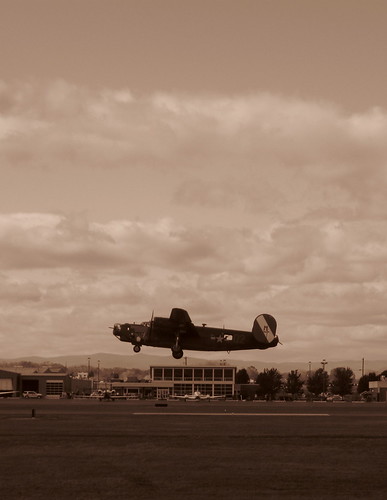
B-24 Taking Off from SHD

On to Lynchburg...

B-24 Liberator
The Liberator is the last plane to take off as the historic aircraft continue their tour.

The first thing you notice upon entering the aircraft is how tight things are. Making our way through the bombers we try to imagine what it was like for the young men who flew in them.

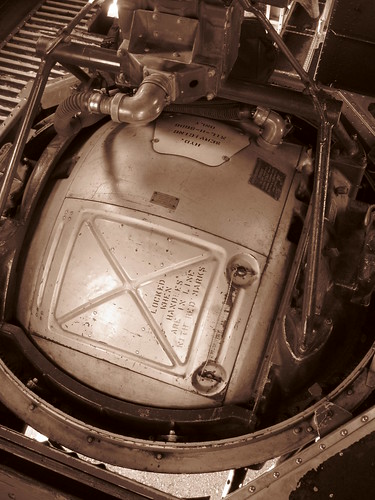
The crews were made up of pretty young men. 25 was an old man in this crowd! Many came from America's heartland and were tough men, used to hard work. But what did it feel like to slip down into that ball turret and defend your craft from attackers? If only those old aircraft could talk...

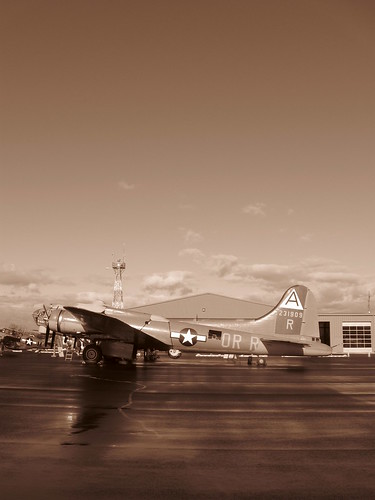
B-17 Flying Fortress
B-17 Flying Fortress.

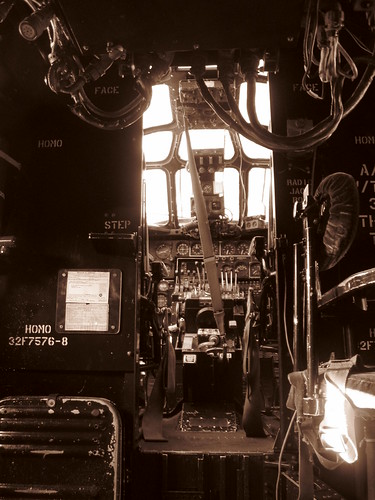
B-24 Liberator
B-24 cockpit.

B-24 Liberator
Ball turret.

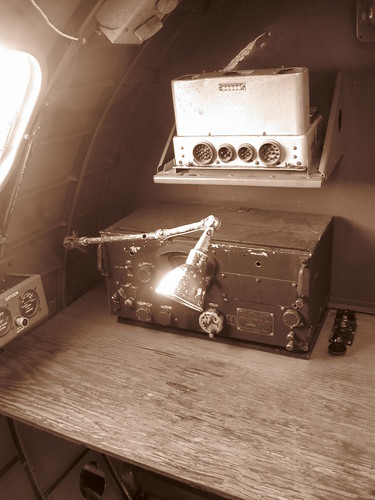
I used to have breakfast in the old Crozet Pool Room when I lived on the other side of the mountain. One of the 'regulars' was a gentleman who had been the radio operator on a B-24 liberator. He told some hair-raising stories! When I saw his station in the aircraft it looked pretty much as I imagined...

Radio
The plane's radio.

Wednesday, October 28, 2009

World War II Aircraft Visit Valley

The Mustang, Liberator and Flying Fortress

P-51 Mustang
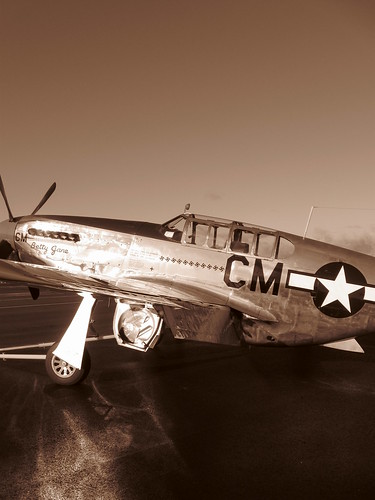
A beautifully restored, flying P-51 Mustang.

B-17 Flying Fortress
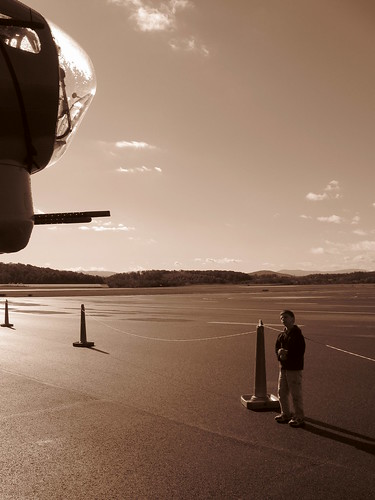
A young American meets a B-17 Flying Fortress.

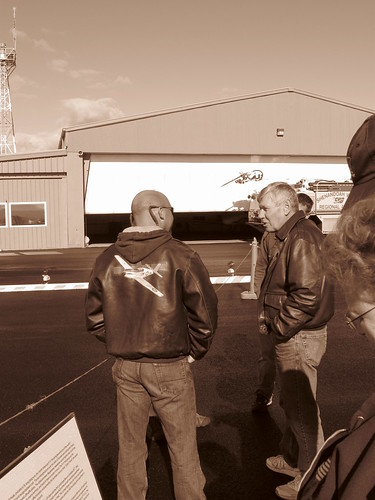
Pilot Talk
Pilot talk.

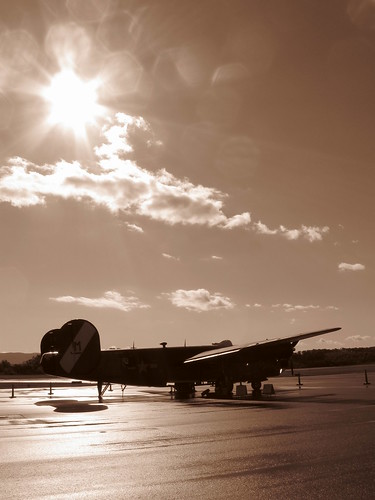
B-24 Liberator
A B-24 Liberator.

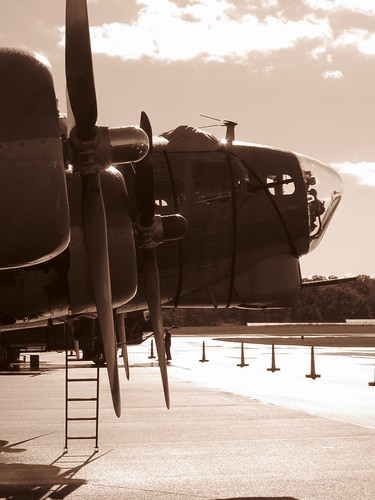
B-17 Flying Fortress
B-17 Flying Fortress.

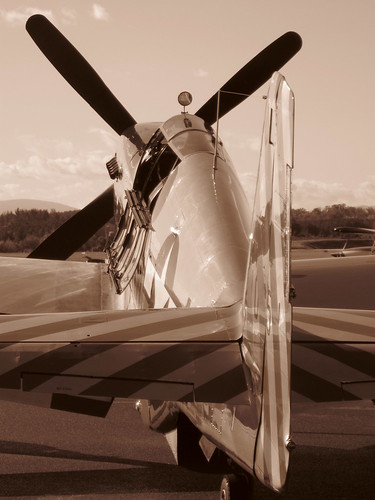
P-51 Mustang
P-51 Mustang.