Showing posts with label God's Not Dead. Show all posts

Wednesday, December 31, 2014

THYME Magazine: Recognizing True Greatness

Citizen Journalism with a Better Flavor

THME0501
Volume VIII, Issue XXVII

Recognizing True Greatness
G-d's Not Dead

What do you do when your faith is challenged? A recent film asks that question as it follows a college student's unexpected 'testing' when his philosophy professor demends that all of the students write "G-d is Dead" on a piece of paper, sign it, and hand it in at the beginning of the first class, or face a failing grade. For most, it is a simple exercise of class compliance, but for freshman Josh Wheaton it is a demand that he deny the very foundations of who he is. Josh nervously refuses to comply, raising the ire of professor Radisson, who counters Wheaton's refusal with a daunting assignment; he must prove G-d's existence by presenting well-researched, intellectual arguments and evidence. He must go head to head with Radisson in a series of classroom debates. If he cannot convince his classmates of G-d's existence, he fails the course.

The movie G-d's Not Dead opened in just under 800 theaters, yet it sold out in many locations and outperformed films with far larger exposure. Directed by Harold Cronk, the film dramatizes what is unfortunately an all too commonly seen antipathy to faith in the modern academic community. But consider this; the universities that the radicals of the 1960's became tenured in during the years that followed owe their beginnings to people of faith who sought to bring truth and order, rooted in faith, to the Americas. Great schools like Dartmouth and William and Mary sought to bring the invigorating element of Faith to the populace of the New World, both Native and European. That initial mission is now reflected only in the aforementioned schools' mascots and Dartmouth's remaining scholarships for people of Native American ancestry.

“G-d’s Not Dead didn’t have a massive marketing budget, a liberal A-list star above the title or even the same number of screens most mainstream movies receive. The film is still on pace to snare the fourth spot in the weekend’s box office chart in a very competitive frame. LA Times: ”The religious drama ‘G-d’s Not Dead’ surprises at box office. The film, which opened on just 780 screens nationwide, took in more than $2.8 million Friday. It’s likely to be the No. 3 movie for the weekend, behind the bigger-budget, wider-released “Divergent” and “Muppets Most Wanted.” - Breitbart

The need to consider the greatness of G-d and His story are nothing new. This is reflected in the hymns of old and the wonder that they still inspire!
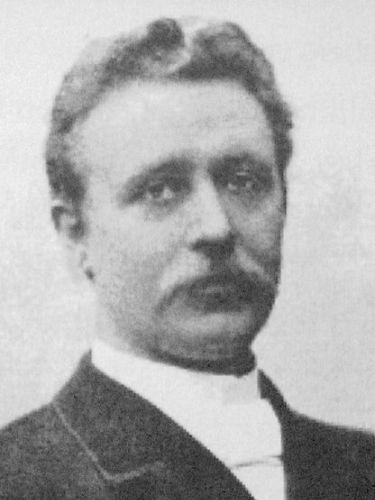
416px-Carl_Boberg
Carl Boberg.

He was 26 years old. The year was 1885. Carl Boberg, a Swedish minister,  wrote a poem entitled, “O Store Gud”. Boberg’s poem was published in 1886. The title, “O Store Gud,” translated into English is “O Great G-d,” translated into English, it reads like this:

When I the world consider
Which Thou has made by Thine almighty Word
And how the webb of life Thy wisdom guideth
And all creation feedeth at Thy board.
Refrain:
Then doth my soul burst forth in song of praise
Oh, great G-d
Oh, great G-d.


Stuart K. Hine, who wrote the hymn "How Great Thou Art" that we recognize today, was an English missionary to Poland in the 1920s. Climbing through the Carpathian Mountains, his entourage was faced with a gathering storm. Inspired by "O Store Gud," he penned the first verse of the hymn we know today. The storm was so severe that the party could not travel further. Reaching a little village, they were given shelter by the local schoolmaster.

Traveling on into Romania and into Bukovina, Hine wandered forest glades with the young people in his company. Thus was born the second verse. The conversion of many people living in the Carpathian Mountains inspired the third verse and the fourth, speaking of Christ's triumphant return to Earth, was written when Hine returned to England.
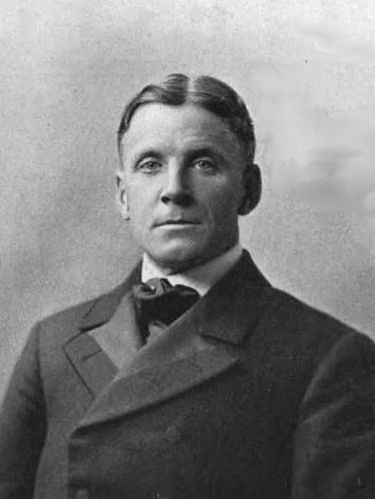
Babcock_001
Maltbie Davenport Babcock.

 Born in Syracuse, New York in 1858, Maltbie Davenport Babcock was the Pastor of a church in Lockport, New York. He often took long walks along the Niagra Escarpment, where he enjoyed the sweeping views of Lake Ontario. He would say to his wife Katherine: "I am going out to see the Father's World." Indeed, his walks with G-d in the beauty of Upstate New York inspired him to write the poem that became the great hymn. My beautiful wife was born in Syracuse, New York, though her Oklahoma accent, acquired in her childhood, makes that a well kept secret! She often hears me express a sentiment similar to Babcock's as I head for the Blue Ridge Mountains for the "Sunday Afternoon Walk."

Both hymns begin with an awe of G-d revealed in observation of nature. They build to an understanding of Christ's redemptive Love and rise to an expression of the triumphant Messiah establishing his rule and order on this Earth.

I have always loved the hymns these men wrote. The Hymns Project [click to read] was inspired by them. My friend and Colleague, Kristina Elaine Riley Greer actually deserves the credit for first developing graphic expression for great hymns. Her work on Henry Alford's Come Ye Thankful People, Come [click to read] and Joy to the World [click to read] deserve recognition in their own right. The Hymns Project was an attempt to build a visual representation of the rich musical tradition began by Carl Boberg, Stuart K. Hine and Maltbie Davenport Babcock.

IMG_0206
The Hymns Project.


The Testimony of Nature
Evening Light Plays Across the Folds of the Great Valley

valley
Photo by Kristina Elaine Riley Greer.

The heavens declare the glory of G-d; and the firmament sheweth his handywork.

Day unto day uttereth speech, and night unto night sheweth knowledge.

There is no speech nor language, where their voice is not heard.

Their line is gone out through all the earth, and their words to the end of the world. In them hath he set a tabernacle for the sun,

Which is as a bridegroom coming out of his chamber, and rejoiceth as a strong man to run a race.

His going forth is from the end of the heaven, and his circuit unto the ends of it: and there is nothing hid from the heat thereof.

The law of the Lord is perfect, converting the soul: the testimony of the Lord is sure, making wise the simple.

The statutes of the Lord are right, rejoicing the heart: the commandment of the Lord is pure, enlightening the eyes.

The fear of the Lord is clean, enduring for ever: the judgments of the Lord are true and righteous altogether.

More to be desired are they than gold, yea, than much fine gold: sweeter also than honey and the honeycomb.

Moreover by them is thy servant warned: and in keeping of them there is great reward.

Who can understand his errors? cleanse thou me from secret faults.

Keep back thy servant also from presumptuous sins; let them not have dominion over me: then shall I be upright, and I shall be innocent from the great transgression.

Let the words of my mouth, and the meditation of my heart, be acceptable in thy sight, O Lord, my strength, and my redeemer. -- Psalm 19
Wednesday, September 10, 2014

THYME Magazine: Back to School Issue

Citizen Journalism with a Better Flavor

THYME0811
Volume VIII, Issue XI

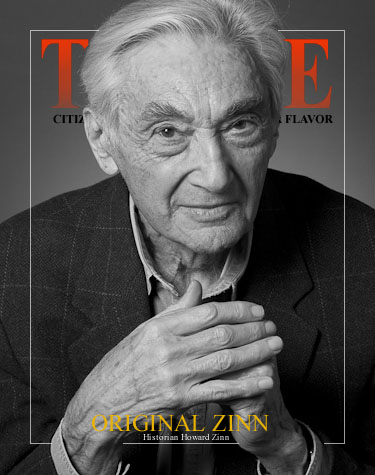
 The Problem of Original Zinn

Last week THYME asked the question: Could it be that the modern activist narrative, perpetuated by writers like Howard Zinn, conveniently ignores the sin, violence and retribution that lies outside of 'Western' activity. His 776 page A People's History of the United States [click to read] is required reading on many college campuses. No doubt, his philosophy has influenced many an aspiring journalist in their own activism. But Zinn must be seen for the Marxist that he is, and his convenient 'omission' of important history needs to be corrected.The problem is that Zinn, not sin, has become the basis for the activism of men like Sharpton and Jackson, who for the media serve as icons of the Civil Rights Movement.

First of all, it must be noted that Zinn himself admits: “Once I was bar mitzvahed, and I had done my religious duty, and my family needn’t be ashamed of me anymore…. that was the end of my religiosity.” He further perpetuates the marginalization of Faith in his works. Bob Cheeks [click to read] writes: "Rhetorician Richard M. Weaver in his essay, Up From Liberalism, explained the spiritual discernment that gave birth to his intellectual epiphany: “Original sin is a parabolical expression of the immemorial tendency of man to do the wrong thing when he knows the right thing.” By acknowledging Original sin, Weaver, abandoned a youthful dalliance with what at that time (the 1930’s) was called liberalism. Unfortunately, historian/activist Howard Zinn had no such epiphany."

The problem is not so much that Zinn has a narrative,but that the academy has embraced Zinn's one-sided narrative as a base for understanding our culture. Daniel J. Flynn sums it up quite nicely: "Who is the most influential historian in America? Could it be Pulitzer Prize winners Arthur Schlesinger, Jr. or Joseph Ellis or David McCullough, whose scholarly works have reached a broad literary public? The answer is none of the above. The accolade belongs instead to the unreconstructed, anti-American Marxist Howard Zinn, whose cartoon anti-history of the United States is still selling 128,000 copies a year twenty years after its original publication. Many of those copies are assigned readings for courses in colleges and high schools taught by leftist disciples of their radical mentor."

That is the problem. Steeped in the narrative that the world was doing fine before the evil white oppressors arrived on the scene, Zinn ignores the sin that has plagued men of all colors and cultures since long ago. Raiding and retribution were seen in tribal cultures and are still seen today in the tragic breakdown of civil society in places like Rwanda. Somehow the only real 'evil' in Zinn's world is that of the Western 'Imperialist.' That is why history, like mapmaking, requires an honest telling. Even America's Romantic period Romanticised the "Noble Savage." Indeed a lot of bloody raiding and retribution was left out even then. Ironically the best anti-colonial emergence of all, the American Experiment, is lumped in with the great empires of Spain and Britian.

No doubt, this is possible because men like Zinn see America as simply a continuation of European Imperialism. What is missed is the bright hope that burned briefly in newly freed African nations who initially modeled themselves after our Constitutional government. I remember that time in the middle of the Twentieth Century where Africans in traditional garb met in gleaming new assembly halls to take their rule from their former colonizers. That seemed such a time of hope and promise. Later I was saddened to see the destruction of Uganda, once known as the 'Pearl of Africa,' by despotic leadership feeding off of the bad feelings and retribution culture of the old tribalism. Rwanda's bloody descent was a terrible playing out of the same scenario.

But the United States Constitution actually acknowledges quite clearly the weakness of man and his propensity to take advantage of his fellows. Thus it enumerates basic rights held by all and limits the restriction of those rights by the institutions of government. Within the framework of Constitution, slavery, long a part of human history, becomes problematic in a way that allows the work of a William Wilberforce to go forward. But, as Bob Cheeks writes: "Zinn’s ideals have a misanthropic ring to them. I don’t believe he loves humanity as he claims. I believe he worships the idea of a state that can transform Americans into that antiseptic android, the socialist’s “New Man.” Perhaps he is angry with a G-d who would allow pain and suffering in this world?"

That last thought of Cheeks, so well dramatized in the movie: G-d's Not Dead [click to read], appears to drive far too much of the narrative at the academy. That would explain the steady stream of socialist solutions coming out of that world and their antipathy for localized initiative outside of government oversight, as in the case of healthcare reform. It may be seen as well in the state's resistance to Faith-based solutions and the desire of the state to create 'compelling public interest' legislation to force businesses run by people of Faith (Hobby Lobby, Conestoga Wood Products) to provide coverage of abortion causing drugs or prohibiting them from refusing service to those who would force them, in providing such service, to violate their conscience (Elane Photography, Sweet Cakes by Melissa). Such is in keeping with the molding of the "antiseptic android," the "New Man." It can be no less than that.

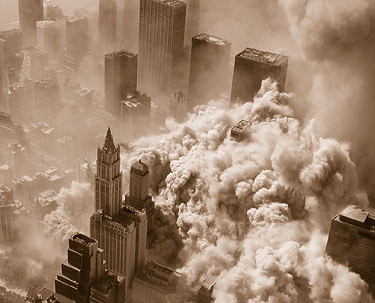
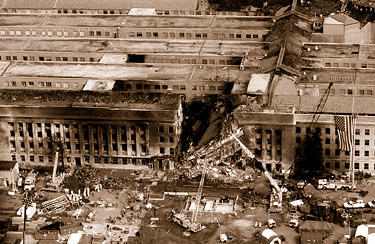
Remembering September 11, 2001

Where Were You (When The World Stopped Turning)
Alan Jackson

Where were you when the world stopped turning on that September day?
Were you in the yard with your wife and children
Or working on some stage in L.A.?
Did you stand there in shock at the sight of that black smoke
Risin' against that blue sky?
Did you shout out in anger, in fear for your neighbor
Or did you just sit down and cry?

Did you weep for the children who lost their dear loved ones
And pray for the ones who don't know?
Did you rejoice for the people who walked from the rubble
And sob for the ones left below?
Did you burst out in pride for the red, white and blue
And the heroes who died just doin' what they do?
Did you look up to heaven for some kind of answer
And look at yourself and what really matters?

I'm just a singer of simple songs
I'm not a real political man
I watch CNN but I'm not sure I can tell
you the difference in Iraq and Iran
But I know Jesus and I talk to God
And I remember this from when I was young
Faith, hope and love are some good things He gave us
And the greatest is love

Where were you when the world stopped turning on that September day?
Were you teaching a class full of innocent children
Or driving down some cold interstate?
Did you feel guilty 'cause you're a survivor
In a crowded room did you feel alone?
Did you call up your mother and tell her you loved her?
Did you dust off that Bible at home?

Did you open your eyes, hope it never happened
Close your eyes and not go to sleep?
Did you notice the sunset the first time in ages
Or speak to some stranger on the street?
Did you lay down at night and think of tomorrow
Or go out and buy you a gun?
Did you turn off that violent old movie you're watchin'
And turn on "I Love Lucy" reruns?

Did you go to a church and hold hands with some strangers
Did you stand in line and give your own blood?
Did you just stay home and cling tight to your family
Thank God you had somebody to love?

I'm just a singer of simple songs
I'm not a real political man
I watch CNN but I'm not sure I can tell
you the difference in Iraq and Iran
But I know Jesus and I talk to G-d
And I remember this from when I was young
Faith, hope and love are some good things He gave us
And the greatest is love

Where were you when the world stopped turning that September day?


0911002
Lower Manhattan, New York, New York. Photo by Detective Greg Smedinger
 
0911007
Arlington, Virginia.
 
0911003
Shanksville, Pennsylvania.

The Southeast Reliability Project

gasline
"There are no simple solutions, only intelligent choices." -- Caterpillar Advertisement.

Intelligent Choices, that was the message of a series of advertisements by construction equipment giant Caterpillar in the 1960's. Of course Caterpillar had a vested interest in the construction industry moving forward, but the thought is a good one. Augusta County, Virginia now faces the need, in the case of Dominion Resources' 42 mile proposed pipeline route through the county, to make some intelligent choices.

"Pipelines tear up the land..." "Affordable Energy requires pipelines."
Those could be the conflicting sentiments in today's discussion, much like the opposing viewpoints highlighted in the Caterpillar advertisements. And they can guide us, as we consider the impact and opportunity of any project. A badly designed pipeline route will indeed affect us for years to come, but design is a beautiful process and through intelligent considerations we might indeed arrive at a very workable solution.

The first map of the proposed route simply cut across the expanse of George Washington National Forest without regard for terrain or sensitive natural areas. A second map corrected the route to reflect concern for sensitive areas in the National Forest, but cut a swath through the growing community of Stuarts Draft. The pipeline mappers now had created conflict with the county's comprehensive plan. Supervisor David Karaffa also pointed out the need to protect important underground aquifers in the Stuarts Draft area. Obviously more design is in order.

Pipelines are easiest to site in open country. After they are buried and the land is restored you can indeed farm right over them. They are problematic where there is heavy development. They require an open right of way where only roads may cross them and no structures may be placed over them. It might surprise you to know that a gas pipeline runs right through the Virginia Horse Center Complex outside of Lexington Virginia. At one point the center's designers considered covered walkways from stables to arenas and were stopped by the need to leave pipeline right of way uncovered.

Pipelines are least desirable where there is a dense community or in natural preservation areas. The 100' right of way MUST be maintained clear in order to perform necessary inspection and maintenance. Thus it is imperative that the route be sensitively threaded through the mountains by its designers. But that is certainly possible. Just North of Calf Mountain Shelter on the Appalachian Trail, one first crosses a very obvious swath cut for power line right of way. The electricity crackles in the lines overhead, supported by enormous towers... it is a bit eery... but walk a bit farther and you step into what appears to be a wildlife clearing just past Jarman's Gap. Wildflowers and butterflies abound.

You leave the trail and walk to the edge to take in the view a little better. Only then do you realize you are standing on a natural gas line right of way! You can see now that the cleared path extends on past the end of Buck's Elbow Mountain, far in the distance. I grew up with gas lines. In fact, as a boy I walked to my favorite lake, Triadelphia Reservoir, on the gas line right of way. The gas line actually ran right under the reservoir!

One resource I still have from my younger days is a copy of Ian McHarg's 1967 book: Design with Nature. It is a great guide to intelligently siting projects with sensitivity to their environment. McHarg used a series of semi-transparent overlays on which important natural features, historically important sites and existing communities are all colored in. The result of analyzing the composite of McHarg's overlays is the most environmentally responsible design. Such is the process we must insist be applied to the Southeast Reliability Project.

Samuel Truett Cathy: 1921-2014

samueltruett
Samuel Truett Cathy.

No goal is too high if we climb with care and confidence.”

Nearly every moment of every day we have the opportunity to give something to someone else – our time, our love, our resources. I have always found more joy in giving when I did not expect anything in return.”

“I’d like to be remembered as one who kept my priorities in the right order. We live in a changing world, but we need to be reminded that the important things have not changed, and the important things will not change if we keep our priorities in proper order.”

“You have to be very careful about what you say. More importantly, you have to be very careful about what you do. You never know how or when you influence people – especially children.”

“It is when we stop doing our best work that our enthusiasm for the job wanes. We must motivate ourselves to do our very best, and by our example lead others to do their best as well.”

“I believe no amount of business school training or work experience can teach what is ultimately a matter of personal character. Businesses are not dishonest or greedy, people are. Thus, a business, successful or not, is merely a reflection of the character of its leadership.”

Wednesday, April 16, 2014

THYME Magazine: Special Easter Edition

Citizen Journalism with a Better Flavor

THYME0516
Volume VII, Issue XVII

The Meaning of the Miraculous

For many Centuries man has acknowledged  the miraculous. This week the Jewish community celebrates their deliverance from Egypt and the beginning of their journey to the Promised Land. A dialogue set in a meals has all generations together consider the preservation of their people that could only be seen as a work of G-d. Previous generations always saw G-d, or some miraculous force as Creator. The Patriarchs saw Him as Provider and Deliverer! The relatively recent concept of Evolution (Charles Darwin in the Nineteenth Century) has created a philosophy of Naturalism that either outright rejects or quietly diminishes the Theistic explanation.

I once attended an Easter service at a large church in Richmond. The minister asserted that the Resurrection was not important! I don't remember anything else he said. I was astonished because Christ's Resurrection would seem to be a cornerstone of Christianity. Many voices today denounce Faith. They may not directly denounce it, but in the academy it is the subject of "open discourse" such as that experienced by Ryan Rotella at FAU [click to read]. Rotella was asked to leave a class. His "offense" was refusing to participate in an excercise where students were required to "stamp on Jesus." Dennis Prager [click to read] has more details. Though the school ultimately apologized to Rotella, it justified its so-called "open discourse" in doing so.

Running from the Resurrection

In fact, among many in academia today you are likely to hear some variation of the following: "There are other reasons why I consider Christianity to be an ill-chosen creed, such as the morals actually taught in the Bible, many of which are abhorrent to a compassionate and just man, or other details of its theology which run counter to observable facts." writes atheist Richard Carrier in introduction to his argument against Jesus' resurrection from the dead.

Here in his introduction, Carrier gives what I believe is his real reason for being uncomfortable with a physical resurrection. A G-d who can so control the laws of nature can ask 'unreasonable' things of us as well. A 'Compassionate and Just Man,' in Carrier's world can support abortion on demand because it is not 'abhorrent' to his viewpoint that abortion is a kind response to the needs of women with unplanned pregnancies. The beating heart of the unborn child need not be seen here as an 'observable fact.' Likewise, the 'restrictive' definition of marriage as a relationship defined by Scripture in specific terms may be viewed as archaic and discriminatory.If G-d didn't design it, He cannot write the specifications.

The elimination of Christianity as an authoritative source allows us to personalize moral decisions. In a culture that elevates self-actualization, this is virtue. It spares us the heavy lifting required to weigh moral absolutes with human frailty.

Jesus, meeting a Samaritan woman at a well, is a prime example of what I mean by this heavy lifting. Balancing compassion for the woman with his observation that she has not been a faithful wife, Jesus creates a constructive dialogue. He does not condemn her, nor does He overlook the complexity she has created in her relationships. He speaks truth and ultimately the dialogue that results sets her free. Here Absolute Love and Absolute Truth are in no way mutually exclusive. In the end her search for 'Living Water' trumps her desire to live as she pleases. [2.]

A G-d who can part the Red Sea, Create worlds and has power over death is pretty much to be respected. A G-d who changes human lives in intimate communion with his Creation is amazing.

Before Jesus appeared, the concept of Resurrection is found in Scripture. Sometimes it is very clear and other times it is a logical assumption consistent with the text.

Resurrection Foretold

"And he made his grave with the wicked, and with the rich in his death; because he had done no violence, neither was any deceit in his mouth. Yet it pleased the Lord to bruise him; he hath put him to grief: when thou shalt make his soul an offering for sin, he shall see his seed, he shall prolong his days, and the pleasure of the Lord shall prosper in his hand. He shall see of the travail of his soul, and shall be satisfied: by his knowledge shall my righteous servant justify many; for he shall bear their iniquities. Therefore will I divide him a portion with the great, and he shall divide the spoil with the strong; because he hath poured out his soul unto death: and he was numbered with the transgressors; and he bare the sin of many, and made intercession for the transgressors." -- Isaiah 53:9-12

The famous Messianic text above talks of triumph after death. Other texts that may be seen as prophetic of Resurrection are: Genesis 3:15, Psalm 2:7, Psalm 16:9-11, Psalm 22:14-25, Psalm 30:29, Psalm 40:13, Psalm 110:1, Psalm 118:21-24, Hosea 5:15-6:3, Zechariah 12:10.

Resurrection Documented and Verified

"I know of no one fact in the history of mankind which is proved by better, fuller evidence of every sort, to the understanding of a fair inquirer, than the great sign which God hath given us that Christ died, and rose again from the dead." says Dr. Thomas Arnold, formerly Professor of History at Rugby and Oxford Universities. Simon Greenleaf, one of the most skilled legal minds ever produced in this nation, top authority on the question of what constitutes sound evidence, developer of the Harvard Law School, after a thorough evaluation of the four Gospel accounts from the point of view of their validity as objective testimonial evidence, concluded:

"It was therefore impossible that they could have persisted in affirming the truths they had narrated, had not Jesus actually risen from the dead, and had they not known this fact as certainly as they knew any other fact." [3.] Dr. Henry M. Morris PhD writes more on The Importance of the Resurrection [click to read]. His point is that the foundational truth of the Christian faith has plenty of evidence to support it.

A G-d who can part the Red Sea, Create worlds and has power over death is pretty much to be respected. A G-d who changes human lives in intimate communion with his Creation is amazing.

Butterfly_icon
A Caterpillar becomes a butterfly. Nature itself suggests the possibility of miraculous transformation and new life! Rice Paper Butterfly, or Paper Kite Butterfly, Idea leuconoe.
Illustration © 2013, by Kristina Elaine Riley for HOPE Publications, Pvt. ltd.

Jesus

Wednesday, April 9, 2014

THYME Magazine: Special Palm Sunday Edition

Citizen Journalism with a Better Flavor

THYME0515
Volume VII, Issue XVI

How to Cure Conflict

"For unto us a child is born, unto us a son is given: and the government shall be upon his shoulder: and his name shall be called Wonderful, Counsellor, The mighty G-d, The everlasting Father, The Prince of Peace." -- Isaiah 9:6

The world is a dangerous place today. As an American President faces a resolute Vladimir Putin, who is intent on reinvigorating the Soviet Empire, and Israel's Binyamin Netanyahu deals with hostilities on multiple borders, the problem of human conflict is on our minds. Indeed it seems like peace is beyond our grasp. Thousands of years of human history are filled with wars and strife.

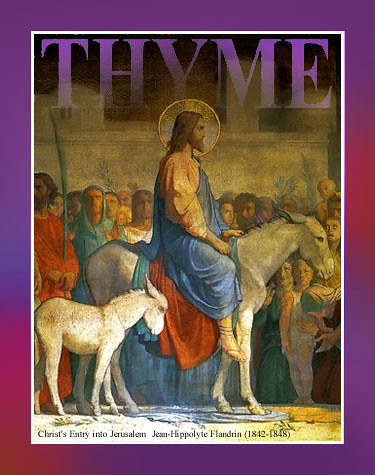
This coming Sunday Christians remember the time when the Prince of Peace [1.] (Isaiah 9:6) rode into Jerusalem on a donkey! The people lined the way spreading their cloaks and palm branches, expecting the return of the King in an earthly manifestation of the Heavenly Kingdom. [2.] Jesus, however, had greater plans in mind.

Jesus rode into town as the lambs were being brought into the homes in preparation for Passover, the remembrance of G-d's deliverance from Pharaoh centuries before. [3.] Instead of establishing an earthly kingdom, He would be tried by both religious and civil authorities. Although there was no crime committed on His part, He would be sentenced to die a most horrible death by crucifixion.

He ate the Passover meal with His disciples, one of whom betrayed Him. The Roman ruler Pilate could find no fault in Him, yet the religious leaders stirred up a mob to demand His death. He died on a cross on a hill called Golgotha, flanked by two thieves. Hardly the way to begin a movement to transform the world, but that is what history tells us.

His death conquered sin and death. [4.] "The day Jesus was crucified was the day of the Passover celebration and the day that the Passover lamb was to be sacrificed. For the previous 1,200 years, the priest would blow the shophar (ram's horn) at 3:00 p.m. - the moment the lamb was sacrificed, and all the people would pause to contemplate the sacrifice for sins on behalf of the people of Israel. At 3:00, when Jesus was being crucified, He said, "It is finished" - at the moment that the Passover lamb was sacrificed and the shophar was blown from the Temple. The sacrifice of the lamb of God was fulfilled at the hour that the symbolic animal sacrifice usually took place. At the same time, the veil of the Temple (a three-inch thick, several story high cloth that demarked the Holy of Holies) tore from top to bottom - representing a removal of the separation between G-d and man. Fifty days later, on the anniversary of the giving of the law (Pentecost), G-d left the earthly temple to inhabit those who call on the name of Jesus through His Holy Spirit." -- How the Passover Reveals Jesus Christ by Rich Deem [click to read].

But the story does not end there. In Revelation 21 Christians look to a New Heaven and a New Earth where a Heavenly Jerusalem descends to join the Earth. Here is a Kingdom that needs no temple, needs no sun to light it, for G-d Himself is the force that illuminates it! [5.]

"And I saw a new Heaven and a new earth: for the first Heaven and the first earth were passed away; and there was no more sea. And I John saw the holy city, new Jerusalem, coming down from G-d out of heaven, prepared as a bride adorned for her husband. And I heard a great voice out of heaven saying, Behold, the tabernacle of G-d is with men, and he will dwell with them, and they shall be his people, and God himself shall be with them, and be their G-d." -- Revelation 21:1-3

West_web East_web
Journey to Jesus, a mural depicting the nations coming to Jesus in the New Heaven and New Earth described in Revelation 21. Mural by Kristina Elaine Riley and Bob Kirchman

Journey to Jesus [click to view larger images].

IMG_3253
The Journey is complete when you reach the kind face of Jesus!
"I judge all things only by the price they shall gain in eternity." —John Wesley

Heaven is For Real Movie

Wednesday, April 2, 2014

THYME Magazine: Recognizing True Greatness

Citizen Journalism with a Better Flavor

THME0501
Volume VII, Issue XV

Recognizing True Greatness
G-d's Not Dead

What do you do when your faith is challenged? A new film asks that question as it follows a college student's unexpected 'testing' when his philosophy professor demends that all of the students write "G-d is Dead" on a piece of paper, sign it, and hand it in at the beginning of the first class, or face a failing grade. For most, it is a simple exercise of class compliance, but for freshman Josh Wheaton it is a demand that he deny the very foundations of who he is. Josh nervously refuses to comply, raising the ire of professor Radisson, who counters Wheaton's refusal with a daunting assignment; he must prove G-d's existence by presenting well-researched, intellectual arguments and evidence. He must go head to head with Radisson in a series of classroom debates. If he cannot convince his classmates of G-d's existence, he fails the course.

The movie G-d's Not Dead opened last week in just under 800 theaters, yet it sold out in many locations and outperformed films with far larger exposure. Directed by Harold Cronk, the film dramatizes what is unfortunately an all too commonly seen antipathy to faith in the modern academic community. But consider this; the universities that the radicals of the 1960's became tenured in during the years that followed owe their beginnings to people of faith who sought to bring truth and order, rooted in faith, to the Americas. Great schools like Dartmouth and William and Mary sought to bring the invigorating element of Faith to the populace of the New World, both Native and European. That initial mission is now reflected only in the aforementioned schools' mascots and Dartmouth's remaining scholarships for people of Native American ancestry.

“G-d’s Not Dead didn’t have a massive marketing budget, a liberal A-list star above the title or even the same number of screens most mainstream movies receive. The film is still on pace to snare the fourth spot in the weekend’s box office chart in a very competitive frame. LA Times: ”The religious drama ‘G-d’s Not Dead’ surprises at box office. The film, which opened on just 780 screens nationwide, took in more than $2.8 million Friday. It’s likely to be the No. 3 movie for the weekend, behind the bigger-budget, wider-released “Divergent” and “Muppets Most Wanted.” - Breitbart

The need to consider the greatness of G-d and His story are nothing new. This is reflected in the hymns of old and the wonder that they still inspire!

416px-Carl_Boberg
Carl Boberg.

He was 26 years old. The year was 1885. Carl Boberg, a Swedish minister,  wrote a poem entitled, “O Store Gud”. Boberg’s poem was published in 1886. The title, “O Store Gud,” translated into English is “O Great G-d,” translated into English, it reads like this:

When I the world consider
Which Thou has made by Thine almighty Word
And how the webb of life Thy wisdom guideth
And all creation feedeth at Thy board.
Refrain:
Then doth my soul burst forth in song of praise
Oh, great G-d
Oh, great G-d.


Stuart K. Hine, who wrote the hymn "How Great Thou Art" that we recognize today, was an English missionary to Poland in the 1920s. Climbing through the Carpathian Mountains, his entourage was faced with a gathering storm. Inspired by "O Store Gud," he penned the first verse of the hymn we know today. The storm was so severe that the party could not travel further. Reaching a little village, they were given shelter by the local schoolmaster.

Traveling on into Romania and into Bukovina, Hine wandered forest glades with the young people in his company. Thus was born the second verse. The conversion of many people living in the Carpathian Mountains inspired the third verse and the fourth, speaking of Christ's triumphant return to Earth, was written when Hine returned to England.

Babcock_001
Maltbie Davenport Babcock.

 Born in Syracuse, New York in 1858, Maltbie Davenport Babcock was the Pastor of a church in Lockport, New York. He often took long walks along the Niagra Escarpment, where he enjoyed the sweeping views of Lake Ontario. He would say to his wife Katherine: "I am going out to see the Father's World." Indeed, his walks with G-d in the beauty of Upstate New York inspired him to write the poem that became the great hymn. My beautiful wife was born in Syracuse, New York, though her Oklahoma accent, acquired in her childhood, makes that a well kept secret! She often hears me express a sentiment similar to Babcock's as I head for the Blue Ridge Mountains for the "Sunday Afternoon Walk."

Both hymns begin with an awe of G-d revealed in observation of nature. They build to an understanding of Christ's redemptive Love and rise to an expression of the triumphant Messiah establishing his rule and order on this Earth.

I have always loved the hymns these men wrote. The Hymns Project [click to read] was inspired by them. My friend and Colleague, Kristina Elaine Riley actually deserves the credit for first developing graphic expression for great hymns. Her work on Henry Alford's Come Ye Thankful People, Come [click to read] and Joy to the World [click to read] deserve recognition in their own right. The Hymns Project was an attempt to build a visual representation of the rich musical tradition began by Carl Boberg, Stuart K. Hine and Maltbie Davenport Babcock.

IMG_0206
The Hymns Project.


Planning on Seeing the Movie Noah?

Here are some thoughts from my friend Pastor Chuck Balsamo. Many are criticizing the Biblical inaccuracy of the film and forgetting that this is a project by non-believers. Pastor Balsamo points out that any time people outside of the household of Faith delve into Biblical themes, the possibility exists for there to develop a great dialogue. To those who are ready to pounce on the film's weaknesses, he writes:

"Why focus on how much you hate this movie, and miss a huge opportunity to start up real discussions with real people about who G-d really is?

Some people live on a soap box, ranting about the things they hate. Who knows, maybe they’re doing good in some bizarre way… like shoving back the tide of evil or something.

But, I think there is a better way. That is, to seize the better opportunity!"

The Noah Movie – Are You Missing The Real Opportunity? [click to read]

Saturday, March 29, 2014

G-d's Not Dead: In Theatres this Week

How Far Would You go… to Defend Your Belief