Showing posts with label Ravi Zacharias. Show all posts

Friday, March 16, 2012

Thoughts for the Atheist and the Agnostic...

"What About Those Who Don't Believe in G-d ?"

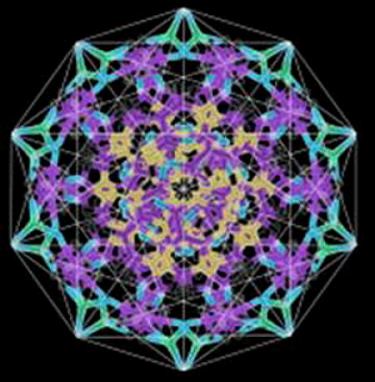
sectiondna
Vertical section of the human dna.


Ravi Zacharias and Francis Collins. ht/Joy
___________________________________________________

laneyadvrt

Saturday, May 16, 2009

Understanding the Times

Making Sense of Secularization's Senslessness

Secularization, Its Control and Power [Part 1] [click to listen]
Secularization, Its Control and Power [Part 2] [click to listen]

Ravi Zacharias has some important observations. His talk will help you understand the worldview discussion that is going on today.

Flower Shop
Flower in Monterey.

Dr. Gordon Pennington: Culture & Our Identity [click to listen]

Dr. Pennington describes how our postmodernist culture has so disturbed our identity as a people.

Wednesday, October 1, 2008

Divine Order or Random Happening?

Your View of the Creation Affects How You Live

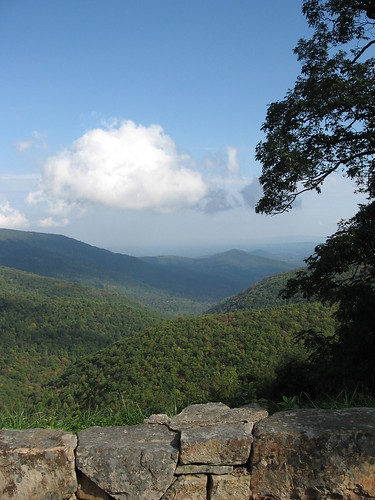
View
Is it orderly or totally random?

Dostoevsky wrote "Without G-d, all is permitted." Indeed a lot of modern thought seeks to cast off religion as restrictive of human freedom and religion is also blamed for much of society's ills. This Piece by Dennis Prager points out that far from restricting human potential for good, the knowledge of the divine actually curbs our destructive tendencies and historically has allowed for societies to grow and thrive. Our Constitution invokes G-d as the giver of those basic human rights it elaborates and protects.

Dennis Prager's Fourteen Arguments Here are certainly important if we seek to honestly understand our lives and our world.

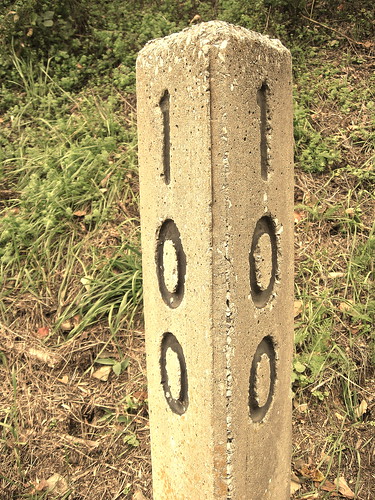
100
If G-d is involved in creation, life is a purposeful journey and His mileposts should be visible in inspired writings.

If the Almighty Doesn't Exist, Prager points out the ultimate tragedy and despair that come from a G-dless worldview. Take note what happens in the arts.

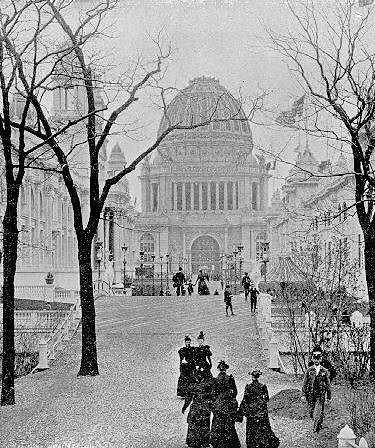
At the turn of the Century some of our country's greatest works of art and architecture were created. The 'White City' of the 1893 Chicago World's Fair inspired a nation to high ideals. Prager points out the post-modern artistic works reject outright that sense of order, beauty and truth. I was quite moved by Ravi Zacharias' description of his experience visiting the first post-modern building in America. The building had stairways going to no particular place that ended in mid-air, walls placed out of context as were windows and doors. Roof planes were broken in arbitrary fashion. Zacharias had this one question: "Did he [the architect] take similar liberties with the foundation as well?"

In a world where many conflicting philosophies present themselves, some claiming that the door is not a door and order is unimportant, that's a fair question.

1893
A scene from the 1893 Columbian Exposition, the Chicago World's Fair.

Tuesday, April 29, 2008

Why Knowledge of the Divine Matters

Our Place and Purpose are Defined by It

I am listening to a series of messages by Ravi Zacharias, one of the great minds of our time. The message series is called Is There Meaning in Pain and Suffering and one of the reasons the series is so powerful is the panel discussion at the end. A leading scientist represents the atheistic perspective. A hindu scholar joins him as well. Such discussions, when carried on with integrity and mutual respect, are a valuable part of understanding the human experience.

Francis Collins, I feel, adds similar depth to our discussion of origins. Can you imagine peeking into the Divine's working drawings? Although Collins does not promote intelligent design he sees G-d's hand in things, perhaps more as architect and less as builder. The writings of C.S. Lewis influenced Collins who was not a believer earlier in his life, to come to faith. There is no testimony more powerful than that of the honest inquirer's.

Belief, or non-belief, colors our discussion of such matters as purpose, pain and suffering and even how should we live our lives.

Here be Dragons

Really old maps fascinate me. You see the well-rendered survey of known lands and the nebulous shapes of imagined and unexplored realms. I love how the old mapmakers would draw very imaginitive sea-serpents cavorting in the margins with the notation: "Here be dragons." So what has changed? We render well what we know and imagine what we don't. Yet navigation has always been a matter of life and death.

My son and several friends were venturing to New York City for New Year's eve in Times Square and I asked them if they needed any directions. The fellow in their group from Australia announced decisively "we've got GPS!" We didn't have that in the 1970's when I did the same trip.

I wonder if he was driving when the car, registered to me, went through an EZ-pass lane? I got the missed toll bill later? There is always a point where our knowledge is limited even though we see more than our forefathers. Knowledge should be freely sought, but we shall never come to a point where it will eclipse our need for faith and further exploration.