
Showing posts with label The Poverty of Nations. Show all posts

Wednesday, February 12, 2014

THYME Magazine: A Case for Vision V

Citizen Journalism with a Better Flavor

THYME0708
Volume VII,Issue VIII

A Case for Vision V

In their book: The Poverty of Nations [click to read], Wayne Grudem and Barry Asmus describe what they call: "The amazing process of creating value that did not exist before." Using the example of a woman in a poor country who takes three dollars' worth of material and sews it into a shirt which she sells for thirteen dollars, the authors point out that she has created a new product of value. She has made that cloth ten dollars more valuable than when she bought it. She has also contributed ten dollars of value to the total value of everything her nation will produce that year, the GDP of that nation. In Zambia, at a place called Grippis Farm, people are learning to sew. They begin with plastic snack bags as they build their skills to the point where they can work with the actual valuable fabric. In fact, Grippis Farm, which receives support from people in American churches, is putting into practice what The Poverty of Nations preaches.

Grippis Farm provides education for the young people of the community. It supports sustainable advances in agriculture as well as incubating the fledgling sewing business. Angus Buchan, who fled Zambia for South Africa buring its previous period of political unrest, has created a similar community of opportunity of opportunity at Shalom Ministries. Asmus and Grudem point to examples in history of nations that have become prosperous by producing more goods and services. England during the Industrial Revolution invented machinery for efficiently weaving cotton thread, thus revolutionizing the clothing industry. "The principle product of the new technology that we know as the Industrial Revolution was cheap, washable cotton, and along with it mass-produced soap made of vegetable oils. For the first time, the common man could wear underwear, once known as body linen because that was the washable fabric that the well-to-do wore next to their skin... Personal hygiene changed drastically, so that commoners of the late Nineteenth and early Twentieth Century often lived cleaner than kings and queens of a century earlier.

By producing immense amounts of cotton and then other desirable products (such as high quality steel and machinery), England became the world's wealthiest nation. Income per person in England doubled between 1780 and 1860, then between 1860 and 1990 it multiplied another six times!" -- David S. Landes, The Wealth and Poverty of Nations, (New York, W. W. Norton, 1999), 154, 190-94. [1.] The authors go on to cite post World War II Japan and modern China as having become similar productive societies. The Congressional Office of Management and Budget has just released projections showing massive shrinking of America's employment resulting from the so-called "Affordable Care Act's" implementation. [2.] That is on top of an already documented decline that began around 2007. Employment percentages often hide the fact that many employable people have given up and are no longer counted. Employment as a percentage of actual population in the United States has reached a new and dismal all-time low.

A White House spokesman's decree that: "now more Americans are no longer tied to a full-time job and are free to pursue their dreams." rings hollow. Most creative ventures in following dreams, after all, began as night and weekend enterprises begun by people in regular jobs. My own venture into enterprenuership began over thirty years ago. I was frustrated in a position where my creativity was dismissed and their was no prospect of growth in career stature or compensation. My best designs often ended up on the cutting room floor, so to speak, as the man I worked for desired quick and dirty... and made that fact very clear. He was a good man, but saw no need for vision when what worked twenty years ago would, he surmised, serve quite adequately. I began with my little studio in a spare bedroom. I would pick up my assignments before and after work, and often missed lunch to meet with clients. I would do the actual work in the evening. My little daughter was a baby and often I would share a tender moment with my beautiful wife at the 2:00am feeding!

I gave my employer a month's notice. I thought he would like for me to train my replacement. No one ever showed up to shadow me; Instead, I remember the afternoon I was taken to a very nice lunch by my bosses who proceeded to tell me that I would most certainly fail at my new venture. I should stay where I was! That I "failed" for thirty years at it I do wear as a badge of honor. I have had a handful of brilliant young people share with me in the process of learning the art of visualization. That has been the greatest honor I have received in the process. I once won a PIVA award for one of my brochure designs for a major development company and they misspelled my name! I think of the young people like my last assistant who mostly taught themselves while in my company, and I feel that having somehow enabled their greatness to shine is my most fulfilling reward! These are the honors that gather no dust sitting on your sideboard.

So, we must ask ourselves: "What are we bequeathing to these brilliant young souls?" My nephew works in Baltimore at the sugar refinery. He sent me an article not long ago talking about how they were tearing down the Sparrow's Point Steel Mill and selling the demolished machinery for scrap value. Management saw the need to create one last bit of profit by making men who had lovingly maintained these machines and used them to make a living now tear them apart and sort them into scrap bins! One man saw some sander disks and though they were industrial quality, they would fit on his home sander. He asked his immediate supervisor if he could have them. When his supervisor agreed he threw them in the open bed of his pickup only to be fired by a higher-up manager later that day for stealing company property! The man did not steal the disks, he asked first. Most of us will read this and see the higher law that should govern, but the manager only saw what should have been added to the gross tonnage of scrap 'misdirected' to an employee's vehicle.[3.]

If one looks at the percentage of growth in private employment compared to government employment, the picture is bleak.[4.] Government does not produce, it can only tax and procure. Furthermore, look at communities that have been "freed from work" and subsist on government programs. Are they hotbeds of entrepreneurship (other than the drug trade)? A friend of mine shared with me a video about an inner city ministry in Brooklyn, New York. They did home visits and you see disturbing footage inside a dirty, roach infested apartment. A young child still plays but an older sibling stares vacantly from a couch. There are no dreams here to be pursued! Generations have known nothing but government dependency. Is this the vision our leaders have for our great nation?[5.] More and more Americans are on food stamps now. But here, amid the bleakness, one finally sees the hope. While most states have lackluster private employment growth or outright decline, South Dakota stands out like a bright beacon. Though the current administration has done everything to stifle domestic energy production on public lands and the Keystone Pipeline, PRIVATE lands have never been busier. The Dakotas and parts of Texas as well have become boom economies. You can go there and sign on with an oil company and soon be making a six-figure salary. Workers are so desired that you can make seventeen dollars an hour at Wal Mart! The point is that in this one sector of the country there are workers creating value that wasn't there before... and they are being rewarded for it.
Wednesday, February 5, 2014

THYME Magazine: A Case for Vision IV

Citizen Journalism with a Better Flavor

THYME0707
Volume VII, Issue VII

A Case for Vision IV

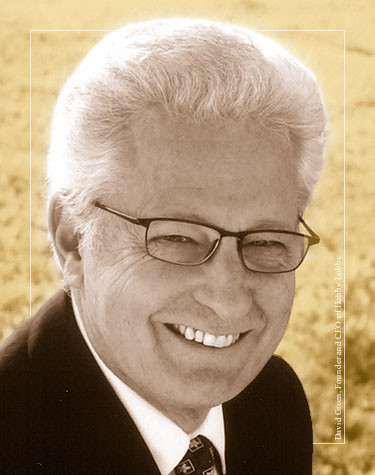
A recent buzz on social media was one to the effect that Hobby Lobby was planning to close stores in response to the Obamacare insurance contraceptive/abortificant mandate. The rumor was not new. The company is actively fighting this regulatory infringement upon its right of conscience. Founder and CEO David Green was quick to respond to the news piece in which he is reported to have announced the downsizing [1.]. Actually Mr. Green said that the company had plans to build 30 or more new stores this year. Doing the news involves checking facts and we found Mr. Green's actual statement in a report issued in conjunction with receiving an award from a major university this past April [2]. The reasons for the award actually spoke volumes about the life and vision of David Green. From the news articles it would appear that Mr. Green was quietly doing what CEOs all do, just running his company to make a profit, when all of a sudden he became the object of Federal regulation. The fact of the matter is that David Green's work itself springs from, and is dedicated to, a higher vision.

Dr. Henry Smith, President of Indiana Wesleyan University said in conferring the honor: "I am excited to announce that Dr. David Green, founder and CEO of Hobby Lobby Creative Centers, has accepted our invitation to the Society of World Changers as our 2013 inductee. David Green is a business leader, an entrepreneur, a philanthropist, an author, a patron of scholarship and culture but above everything else, he is a servant of Christ like any one of us, a saved sinner dependent upon the grace of God and the guidance of the Holy Spirit. He attributes any success he has had to his trust in G-d, and acknowledges that G-d has used that success as a platform to minister to the world. IWU recognized David Green and his achievements previously through the conferral of an honorary doctorate in 1999."[3.]

FORBES notes: "There are very few members of The Forbes 400 who bring religion to work. Most notable are Chick-fil-A's Truett Cathy and Forever 21's Jin Sook and Do Won Chang, born-again Christians who keep Bibles in their office and print John 3:16 on the bottom of each shopping bag. More typical is Warren Buffett, who admits to being agnostic. Green joined Buffett’s Giving Pledge in 2010: His public letter doing so quotes 2 Corinthians ('Each of you should give what you have decided in your heart to give, not reluctantly or under compulsion, for God loves a cheerful giver'). And that's about all that Buffett and Green have in common philanthropically." Green has a vision to change the world and it plays itself out in the way he conducts his business. He does not see any part of his life as outside of G-d's oversight: "You can't have a belief system on Sunday and not live it the other six days."[4.]

Green is the son of a preacher who's small congregations in Oklahoma barely supported their family. He wore hand-me-down clothes and ate many a meatless meal with his siblings. His five siblings all became pastors (or pastors' wives). Green took "the road less travelled," struggling through school and eventually becoming a stock boy in a general store. FORBES says of him: "Green spent most of his time sweeping floors and unloading boxes for 60 cents an hour, but he fell in love with the romantic idea of buying something for 10 cents and selling it for 20." He served in the Air Force Reserve, and was working as a manager at TG andY stores when he borrowed $600.00 to buy some picture frame making equipment. He and his wife Barbara and another manager literally started the business working on his kitchen table. Their first product was miniature picture frames which they began selling in 1970. In 1972 they opened their first 300 square foot retail location.

Green credits the bead buying craze of the hippies for growing his business to the point that he was able to quit his day job and open a larger store in 1975. Barbara was not thrilled. Those days he was doing about $100,000 in sales and TG andY was doing two billion. Today Hobby Lobby makes well over three billion dollars annually. He speaks candidly of the businesses' struggles and near failure. In 1985 the business was overleveraged and struggling under the weight of bad inventory decisions. Green says of that time: "It was a pride problem, and I had to get rid of it. It's sort of like God says to me, because I was arrogant, 'I'm going to let you have it by yourself.'" Green prayed, worked hard, cut costs and negotiated with his creditors. In the end his perserverance paid off and the company not only survived, but thrived.

Hobby Lobby stores close on Sundays to allow staff time to worship and enjoy time with family. He starts employees well above minimum wage and sees the company's profitability as a gift from G-d. He has given much to further the work of the Gospel and Christian education. Green says: "I want to know that I have affected people for eternity. I believe I am. I believe once someone knows Christ as their personal savior, I've affected eternity. I matter 10 billion years from now." Dr. Henry Smith says of him: "We thank God for David Green's example precisely for that reason: because he sees his wealth as God's possession rather than allowing himself to be possessed by it; because he judges himself by the standards of Heaven and not of earth; and because he recognizes that his own efforts are in vain unless he trusts and depends upon the Holy Spirit." [5.]

A Vision For Work and the World

"Let thy work appear unto thy servants, and thy glory unto their children. And let the beauty of the Lord our God be upon us: and establish thou the work of our hands upon us; yea, the work of our hands establish thou it." -- Psalm 90:16-17

I am reading The Poverty of Nations, A Sustainable Solution [click to read] by Wayne Grudem and Barry Asmus. It examines the reasons successful nations are successful and how successful nations can forget the roots of their success and fall into decline. Like Alvin Schmidt's Under the Influence [click to read], the book does not hide the influence of Biblical principles in advancing the state of humanity. As many in the academy and the media today criticize free markets, Grudem and Asmus point out that the flaws are not necessarily a flaw in free markets, but in human morality. If a people have no moral barrier to it, markets will indeed deliver drugs, slaves and a host of evils, but that is not necessarily a fault of a free market. Indeed the attempts of government to control such evils will inevitably cost far more than imagined and have far less effect on curtailing the evils than proponents of such action desire. Thus the authors show how the Rule of Law, Respect for Property and Good Leadership are all essential for national prosperity... these things being rooted in values presented in the Bible.

Markets, influenced by morality, are actually quite fertile for creativity. When the slave trade was ended in England by William Wilberforce, the initial result was the economic decline of the port of Bristol. Creativity responded to the need as Isambard Kingdom Brunel built the Great Western Railway and steamships to link Bristol to America. The heart of George Müller ministered to Bristol's cast off children, but it was possible largely due to the creativity that linked Bristol to the economic pulse of the world. In fact, Grudem and Asmus point out that a wonderful coming together of talents and resources occurs in markets that requires no huge agency of oversight. In a simple little story called I Pencil, the beauty of this phenomenon is wonderfully illustrated.


I Pencil.

"No single person on the earth could make a pencil without the help of countless others."

Read, Leonard E., "I, Pencil: My Family Tree as told to Leonard E. Read." [click to read] 1999. Library of Economics and Liberty. 5 February 2014.