Showing posts with label Economics. Show all posts

Wednesday, April 1, 2015

THYME Magazine: Building the Kingdom III

Citizen Journalism with a Better Flavor

THYME0914
Volume IX, Issue XIV

The Ministry of Building Things

I'll bet if I asked you to think of some different types of ministry and ways to build the Kingdom of G-d, you probably wouldn't think of Economic Development. Pastor Tim Keller, in his book: Resources for Deacons, sees it clearly as a part of the Diaconal ministry. Our church helps women in Zambia get sewing machines. To be sure, the gift of the ability to earn their living as seamstresses is an act of ministry to these ladies.

But think bigger! THYME presents the story of how a nation turned from a great evil and one city suffered greatly in doing so. G-d provided a provider! Then G-d provided provision for the provider by inspiring great innovation that came to revitalize that great city. Should we dare to pray for such innovation and inspiration in our own day?

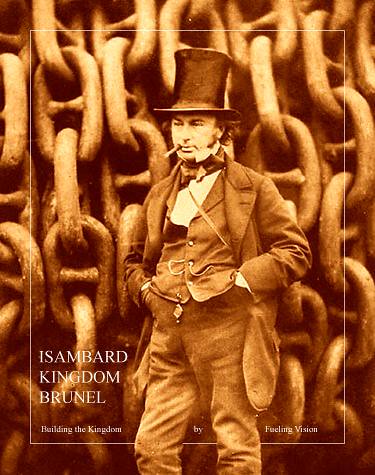
Isambard Kingdom Brunel
What a Nineteenth Century Innovator Can Teach Us Now
© 2013 The Kirchman Studio, All rights reserved.

They say that the condition for a miracle is difficulty, but the condition for a great miracle is impossibility” -- Angus Buchan, “G-d's Farmer”

When William Wilberforce [1.] had ended the slave trade in the British Empire, he had thrown the city of Bristol, England into economic depression. The port there was heavily devoted to that wretched business and suffered heavily when it was brought to a sudden halt. The unintended consequence had been a rise in children condemned to a life of poverty. Ending the vile business of enslaving Africa's children had resulting in England's society spurning the needs of her own. Into this world came George Müller [2.], who, relying on faith in G-d alone, provided redemption for thousands of orphans. Many of these children were cast-offs of a society in economic despair.

George Müller [3.] had seen the wretched street urchins most people despised as jewels to be polished. Muller, relying solely on Divine provision, built five large houses for Orphans at Ashley Downs in Bristol, England. He trained the girls to be nurses, teachers, clerical workers and domestics. He apprenticed all the boys in various trades. He was excoriated for training these unwanted children "above their station." He ignored the critics.

Müller looked to G-d alone, but Bristol needed an outfowing of Divine provision to provide for her children. G-d's provision for Bristol was to come in the form of inspiration and innovation, embodied in the work of a young pioneer of civil engineering. He also ignored his critics.

suspension-bridge001
Brunel's Clifton Suspension Bridge became the symbol of the City of Bristol.

greatwesternrr001
Building the Great Western Railway.

In 1831, 24 year old Isambard Kingdom Brunel [4.] was awarded a contract to bridge the Avon Gorge. It was the dream of a prosperous wine merchant who provided the initial funding. The completed bridge would become the symbol of the city, but lack of funding dogged the project. It took thirty years to complete it. For years only the towers stood completed. In 1833 Brunel began work on the Great Western Railway, which would become the instrument of Bristol's economic revitalization. The nicknames: "Great Way Round" and "G-d's Wonderful Railway" seem to describe well Brunel's great work.

Brunel was an innovator. He probably experienced as many failures as successes in his short lifetime. Born on April 9, 1806, the son of Sir Marc Brunel, he assisted his father in building a tunnel under the Thames. He would later become the resident engineer of that project. At twenty years of age, he designed a suspension bridge to cross the Avon river. A modified version of his plan was actually constructed.

At 26, Brunel was building the Great Western Railway, commissioned to maintain Bristol's importance as a port and position her for  trade with America. This wide-gauge railroad linked Bristol and Western regions of England to London. Bristol's prosperity as a port was assured and the work of Müller created solid citizens with strong spiritual foundations to benefit.

But Brunel was not content to simply build a better railway. He looked across the Atlantic, envisioning fleets of ocean greyhounds -- great steamships that would complete the linking of his Great Western Railway to America! The S. S. Great Britain was his creation. It was the first metal-hulled propeller-driven ocean ship and became the prototype for modern ocean liners.

Building the South Devon Railway as a spur to the Great Western, Brunel experimented with an alternative to steam engines -- Vacuum tube powered trains. Stationary vacuum plants evacuated tubes laid along the center of the track that powered the movement of trains.

atmosenginesmall
Brunel's 'Atmospheric Railway.'

The technology required the use of leather flaps to seal the vacuum pipes. The natural oils were drawn out of the leather by the vacuum, making the leather vulnerable to water, rotting it and breaking the fibres when it froze. It had to be kept supple with tallow, which is attractive to rats. The flaps were eaten, and vacuum operation lasted less than a year, from 1847 (experimental service began in September; operations from February 1848) to 10 September 1848.[45] It has been suggested that the whole project was an expensive flop. In Brunel's favour, it has been noted that he had the courage to call a halt to the venture instead of struggling on with it at greater cost." -- Wikipedia

Like alternative transportation prototypes of our day, the vacuum tube system was more expensive. The accounts of the SDR for 1848 show that atmospheric traction cost 3s 1d (three shillings and one penny) per mile compared to 1s 4d/mile for conventional steam power.Though considered a failure at the time, vacuum powered trains may have been a distant precursor to Evacuated Tube Technology [5.] which is now being developed to move entire transport capsules through large tubes -- essentially powered in the same way as Brunel's South Devon train. Brunel was simply two Centuries before his time on this.

What can we learn from Brunel today? Plenty! Inspiration and innovation are needed now as they were needed then. Brunel teaches us valuable lessons about expanding vision with proven technologies and wisely exploring alternatives (and abandoning them when they do not work as planned).

Praying people see the diaconate role of economic development as an integral part of G-d's provision. In “Resources for Deacons, Love Expressed Through Mercy Ministries,” [6.] Tim Keller states his belief in three “levels” of mercy in diaconal ministry:

The first Level Is Simple Relief: That is taking care of the immediate need.

The Second Level Is Economic Development: That is teaching the poor how to get out of poverty by teaching them how to handle money, property, etc. and furnishing them with the means to do so. “Not handouts, but ownership is the way to break the cycle of poverty.”

The Third Level Is Social Reform: Christians should be involved in the culture in an effort to change the social structure.

We see it very localized in a place like Zambia, where people of faith instruct widows to become seamstresses (and people in America gift them with sewing machines). But, can we believe G-d for ever greater inspiration? What vision would G-d give us for our family, our company of employment, our city and county... and beyond? Müller said "the age of miracles is not past." Angus Buchan [7.], in the turmoil of Zambia and South Africa, looked to G-d for inspiration. G-d met him in a corn field where he learned the power of prayer!

Buchan had packed his family up during the unrest in Zambia in the late 'seventies and moved them to South Africa. A successful farmer in Zambia, he felt that he would be happy if he could acquire another farm in South Africa. It didn't. Experiencing deep depression, Buchan was angry and confused. Wandering into a lay-witness Sunday at the local Methodist Church, Angus heard builders, tradesmen and fellow farmers tell of what Jesus meant in their lives. For the first time he saw men crying, he wept unashamedly himself as he responded to an altar call. He took the Lord seriously about the changed life promise.

Buchan went back to his farm and learned to pray in his own corn field. Then he sought to minister to his Zulu workers. His farm manager, Simeon Bhengu, told him: "that's women's religion..." But G-d met Angus and spoke through his friendship with Simeon. Today the men are brothers in faith and brothers in every way. "My children are his and his are mine." Angus says of his Zulu brother. Angus expanded his farming operations and G-d's miraculous provision was seen at every turn. The movie "Faith like Potatoes" is the true story of Angus Buchan and it is quite inspiring! Buchan used machinery but avoided totally mechanizing the farm, looking to provide steady employment to his Zulu neighbors.

In the early 1980's Buchan became aware of a new tragic development. AIDS was ravaging families and creating untold numbers of orphans. Buchan reached out to these orphans but had no place to house them. A local school had temporary classrooms they were going to demolish and Angus received permission to take them apart and reassemble them at Shalom, which he had named his complex at the farm. At first the children lived in dormitories but gradually Angus was able to create "houses" where one "mother" cared for a smaller number.

South Africa in her recent history has experienced much uncertainty and Buchan's experience is instructive as we look to address the turmoil in our own country today. Isambard Kingdom Brunel should serve as an inspiration as well.

Let no man despise thy youth; but be thou an example of the believers, in word, in conversation, in charity, in spirit, in faith, in purity." -- 1 Timothy 4:12

Passover
Dogwood Flower. Photo by Bob Kirchman

Passover and Passion
Stories of Divine Redemption

Why is this night different from all other nights?

On all other nights we eat leavened products and matzah, and on this night only matzah.

On all other nights we eat all vegetables, and on this night only bitter herbs.

On all other nights, we don't dip our food even once, and on this night we dip twice.

On all other nights we eat sitting or reclining, and on this night we only recline." [7.]

The meal begins with a child's questions. It is a celebration of Divine Redemption and it is told in the courses of the meal. This time of year is a special time of remembering G-d's hand in delivering his people! Remembering the hand of the Divine in our own lives and passing that knowledge along to our children is a Sacred thing. May this be a time of great blessing and significance for you.

Dogwoods
Dogwood Flowers. Photo by Bob Kirchman
Wednesday, February 11, 2015

THYME Magazine: Perley Albert Thomas

Citizen Journalism with a Better Flavor

THYME0906
Volume IX, Issue VI

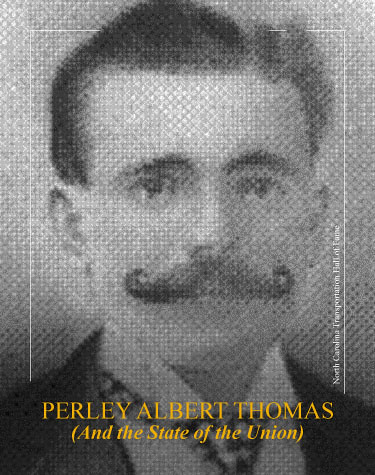
The Genius of Perley A. Thomas

One of my  heroes is a man born in Chatham, Ontario in 1874. He trained as a millsmith, primarily working in wood, and went to Cleveland, Ohio to work in a factory manufacturing streetcars. In 1901 he moved to Detroit, where he attended night courses at Case Institute of Technology. There he studied technical drawing, design skills, and structural engineering. In 1910 he accepted a position with the Southern Car Company in High Point, North Carolina. Perley A. Thomas became chief engineer, draftsman and designer for the company. In 1916, the company folded. Thomas, now unemployed, undertook a contract to renovate streetcars for the Southern Public Utilities Company of Charlotte, North Carolina. He signed on a lot of his old colleagues from Southern and was able to obtain the use of Southern's shuttered shops. A year later he would organize the Perley A. Thomas Car Works.

The Thomas Car Works would become famous for their streetcars. Tennessee Williams would write a play, A Streetcar Named Desire, about a route named Desire in New Orleans where Thomas streetcars ran. But as the 1930's transportation began to move from Rails to Roads [click to read]. The Great Depression slowed business. Perley A. Thomas and his two sons struggled as they reinvented the company to make buses. When there was no work, Thomas returned to his woodworking skills. Many a fine home in High Point, North Carolina boasts a fine mantlepiece carved by Perley Thomas!

The company was eventually reorganized as Thomas Built Buses and became one of the United States' three largest manufacturers of buses in the Twentieth Century. Today the factory in High Point, North Carolina is a sprawling subsidiary of the Freightliner Group of Daimler AG. Thomas was inducted into the North Carolina Transportation Hall of Fame in 2004 and the North American Railway Hall of Fame, St Thomas, Ontario, in 2010.

The True State of the Union

Here’s something that many Americans -- including some of the smartest and most educated among us -- don’t know: The official unemployment rate, as reported by the U.S. Department of Labor, is extremely misleading. -- Jim Clifton

In an article entitled The Big Lie [click to read], Jim Clifton debunks the government's claim that unemployment is now at a new low of 5.6%! He continues: "And it’s a lie that has consequences, because the great American dream is to have a good job, and in recent years, America has failed to deliver that dream more than it has at any time in recent memory."

Clifton points out that if you left the labor force and after four weeks you are not looking for a new job, the Department of Labor doesn't count you. Even more misleading is the knowledge that if you are unemployed in your main area of expertise, but working -- even part time at something else, guess what, you are counted among those employed! As Perley Thomas found other sources of work, so have many of us affected by the 21st Century Depression.

That is why Thomas is a hero to those of us who know what is going on in America. We may not be counted... but we intend to make our service count!

Wednesday, February 12, 2014

THYME Magazine: A Case for Vision V

Citizen Journalism with a Better Flavor

THYME0708
Volume VII,Issue VIII

A Case for Vision V

In their book: The Poverty of Nations [click to read], Wayne Grudem and Barry Asmus describe what they call: "The amazing process of creating value that did not exist before." Using the example of a woman in a poor country who takes three dollars' worth of material and sews it into a shirt which she sells for thirteen dollars, the authors point out that she has created a new product of value. She has made that cloth ten dollars more valuable than when she bought it. She has also contributed ten dollars of value to the total value of everything her nation will produce that year, the GDP of that nation. In Zambia, at a place called Grippis Farm, people are learning to sew. They begin with plastic snack bags as they build their skills to the point where they can work with the actual valuable fabric. In fact, Grippis Farm, which receives support from people in American churches, is putting into practice what The Poverty of Nations preaches.

Grippis Farm provides education for the young people of the community. It supports sustainable advances in agriculture as well as incubating the fledgling sewing business. Angus Buchan, who fled Zambia for South Africa buring its previous period of political unrest, has created a similar community of opportunity of opportunity at Shalom Ministries. Asmus and Grudem point to examples in history of nations that have become prosperous by producing more goods and services. England during the Industrial Revolution invented machinery for efficiently weaving cotton thread, thus revolutionizing the clothing industry. "The principle product of the new technology that we know as the Industrial Revolution was cheap, washable cotton, and along with it mass-produced soap made of vegetable oils. For the first time, the common man could wear underwear, once known as body linen because that was the washable fabric that the well-to-do wore next to their skin... Personal hygiene changed drastically, so that commoners of the late Nineteenth and early Twentieth Century often lived cleaner than kings and queens of a century earlier.

By producing immense amounts of cotton and then other desirable products (such as high quality steel and machinery), England became the world's wealthiest nation. Income per person in England doubled between 1780 and 1860, then between 1860 and 1990 it multiplied another six times!" -- David S. Landes, The Wealth and Poverty of Nations, (New York, W. W. Norton, 1999), 154, 190-94. [1.] The authors go on to cite post World War II Japan and modern China as having become similar productive societies. The Congressional Office of Management and Budget has just released projections showing massive shrinking of America's employment resulting from the so-called "Affordable Care Act's" implementation. [2.] That is on top of an already documented decline that began around 2007. Employment percentages often hide the fact that many employable people have given up and are no longer counted. Employment as a percentage of actual population in the United States has reached a new and dismal all-time low.

A White House spokesman's decree that: "now more Americans are no longer tied to a full-time job and are free to pursue their dreams." rings hollow. Most creative ventures in following dreams, after all, began as night and weekend enterprises begun by people in regular jobs. My own venture into enterprenuership began over thirty years ago. I was frustrated in a position where my creativity was dismissed and their was no prospect of growth in career stature or compensation. My best designs often ended up on the cutting room floor, so to speak, as the man I worked for desired quick and dirty... and made that fact very clear. He was a good man, but saw no need for vision when what worked twenty years ago would, he surmised, serve quite adequately. I began with my little studio in a spare bedroom. I would pick up my assignments before and after work, and often missed lunch to meet with clients. I would do the actual work in the evening. My little daughter was a baby and often I would share a tender moment with my beautiful wife at the 2:00am feeding!

I gave my employer a month's notice. I thought he would like for me to train my replacement. No one ever showed up to shadow me; Instead, I remember the afternoon I was taken to a very nice lunch by my bosses who proceeded to tell me that I would most certainly fail at my new venture. I should stay where I was! That I "failed" for thirty years at it I do wear as a badge of honor. I have had a handful of brilliant young people share with me in the process of learning the art of visualization. That has been the greatest honor I have received in the process. I once won a PIVA award for one of my brochure designs for a major development company and they misspelled my name! I think of the young people like my last assistant who mostly taught themselves while in my company, and I feel that having somehow enabled their greatness to shine is my most fulfilling reward! These are the honors that gather no dust sitting on your sideboard.

So, we must ask ourselves: "What are we bequeathing to these brilliant young souls?" My nephew works in Baltimore at the sugar refinery. He sent me an article not long ago talking about how they were tearing down the Sparrow's Point Steel Mill and selling the demolished machinery for scrap value. Management saw the need to create one last bit of profit by making men who had lovingly maintained these machines and used them to make a living now tear them apart and sort them into scrap bins! One man saw some sander disks and though they were industrial quality, they would fit on his home sander. He asked his immediate supervisor if he could have them. When his supervisor agreed he threw them in the open bed of his pickup only to be fired by a higher-up manager later that day for stealing company property! The man did not steal the disks, he asked first. Most of us will read this and see the higher law that should govern, but the manager only saw what should have been added to the gross tonnage of scrap 'misdirected' to an employee's vehicle.[3.]

If one looks at the percentage of growth in private employment compared to government employment, the picture is bleak.[4.] Government does not produce, it can only tax and procure. Furthermore, look at communities that have been "freed from work" and subsist on government programs. Are they hotbeds of entrepreneurship (other than the drug trade)? A friend of mine shared with me a video about an inner city ministry in Brooklyn, New York. They did home visits and you see disturbing footage inside a dirty, roach infested apartment. A young child still plays but an older sibling stares vacantly from a couch. There are no dreams here to be pursued! Generations have known nothing but government dependency. Is this the vision our leaders have for our great nation?[5.] More and more Americans are on food stamps now. But here, amid the bleakness, one finally sees the hope. While most states have lackluster private employment growth or outright decline, South Dakota stands out like a bright beacon. Though the current administration has done everything to stifle domestic energy production on public lands and the Keystone Pipeline, PRIVATE lands have never been busier. The Dakotas and parts of Texas as well have become boom economies. You can go there and sign on with an oil company and soon be making a six-figure salary. Workers are so desired that you can make seventeen dollars an hour at Wal Mart! The point is that in this one sector of the country there are workers creating value that wasn't there before... and they are being rewarded for it.

Wednesday, February 5, 2014

THYME Magazine: A Case for Vision IV

Citizen Journalism with a Better Flavor

THYME0707
Volume VII, Issue VII

A Case for Vision IV

A recent buzz on social media was one to the effect that Hobby Lobby was planning to close stores in response to the Obamacare insurance contraceptive/abortificant mandate. The rumor was not new. The company is actively fighting this regulatory infringement upon its right of conscience. Founder and CEO David Green was quick to respond to the news piece in which he is reported to have announced the downsizing [1.]. Actually Mr. Green said that the company had plans to build 30 or more new stores this year. Doing the news involves checking facts and we found Mr. Green's actual statement in a report issued in conjunction with receiving an award from a major university this past April [2]. The reasons for the award actually spoke volumes about the life and vision of David Green. From the news articles it would appear that Mr. Green was quietly doing what CEOs all do, just running his company to make a profit, when all of a sudden he became the object of Federal regulation. The fact of the matter is that David Green's work itself springs from, and is dedicated to, a higher vision.

Dr. Henry Smith, President of Indiana Wesleyan University said in conferring the honor: "I am excited to announce that Dr. David Green, founder and CEO of Hobby Lobby Creative Centers, has accepted our invitation to the Society of World Changers as our 2013 inductee. David Green is a business leader, an entrepreneur, a philanthropist, an author, a patron of scholarship and culture but above everything else, he is a servant of Christ like any one of us, a saved sinner dependent upon the grace of God and the guidance of the Holy Spirit. He attributes any success he has had to his trust in G-d, and acknowledges that G-d has used that success as a platform to minister to the world. IWU recognized David Green and his achievements previously through the conferral of an honorary doctorate in 1999."[3.]

FORBES notes: "There are very few members of The Forbes 400 who bring religion to work. Most notable are Chick-fil-A's Truett Cathy and Forever 21's Jin Sook and Do Won Chang, born-again Christians who keep Bibles in their office and print John 3:16 on the bottom of each shopping bag. More typical is Warren Buffett, who admits to being agnostic. Green joined Buffett’s Giving Pledge in 2010: His public letter doing so quotes 2 Corinthians ('Each of you should give what you have decided in your heart to give, not reluctantly or under compulsion, for God loves a cheerful giver'). And that's about all that Buffett and Green have in common philanthropically." Green has a vision to change the world and it plays itself out in the way he conducts his business. He does not see any part of his life as outside of G-d's oversight: "You can't have a belief system on Sunday and not live it the other six days."[4.]

Green is the son of a preacher who's small congregations in Oklahoma barely supported their family. He wore hand-me-down clothes and ate many a meatless meal with his siblings. His five siblings all became pastors (or pastors' wives). Green took "the road less travelled," struggling through school and eventually becoming a stock boy in a general store. FORBES says of him: "Green spent most of his time sweeping floors and unloading boxes for 60 cents an hour, but he fell in love with the romantic idea of buying something for 10 cents and selling it for 20." He served in the Air Force Reserve, and was working as a manager at TG andY stores when he borrowed $600.00 to buy some picture frame making equipment. He and his wife Barbara and another manager literally started the business working on his kitchen table. Their first product was miniature picture frames which they began selling in 1970. In 1972 they opened their first 300 square foot retail location.

Green credits the bead buying craze of the hippies for growing his business to the point that he was able to quit his day job and open a larger store in 1975. Barbara was not thrilled. Those days he was doing about $100,000 in sales and TG andY was doing two billion. Today Hobby Lobby makes well over three billion dollars annually. He speaks candidly of the businesses' struggles and near failure. In 1985 the business was overleveraged and struggling under the weight of bad inventory decisions. Green says of that time: "It was a pride problem, and I had to get rid of it. It's sort of like God says to me, because I was arrogant, 'I'm going to let you have it by yourself.'" Green prayed, worked hard, cut costs and negotiated with his creditors. In the end his perserverance paid off and the company not only survived, but thrived.

Hobby Lobby stores close on Sundays to allow staff time to worship and enjoy time with family. He starts employees well above minimum wage and sees the company's profitability as a gift from G-d. He has given much to further the work of the Gospel and Christian education. Green says: "I want to know that I have affected people for eternity. I believe I am. I believe once someone knows Christ as their personal savior, I've affected eternity. I matter 10 billion years from now." Dr. Henry Smith says of him: "We thank God for David Green's example precisely for that reason: because he sees his wealth as God's possession rather than allowing himself to be possessed by it; because he judges himself by the standards of Heaven and not of earth; and because he recognizes that his own efforts are in vain unless he trusts and depends upon the Holy Spirit." [5.]

A Vision For Work and the World

"Let thy work appear unto thy servants, and thy glory unto their children. And let the beauty of the Lord our God be upon us: and establish thou the work of our hands upon us; yea, the work of our hands establish thou it." -- Psalm 90:16-17

I am reading The Poverty of Nations, A Sustainable Solution [click to read] by Wayne Grudem and Barry Asmus. It examines the reasons successful nations are successful and how successful nations can forget the roots of their success and fall into decline. Like Alvin Schmidt's Under the Influence [click to read], the book does not hide the influence of Biblical principles in advancing the state of humanity. As many in the academy and the media today criticize free markets, Grudem and Asmus point out that the flaws are not necessarily a flaw in free markets, but in human morality. If a people have no moral barrier to it, markets will indeed deliver drugs, slaves and a host of evils, but that is not necessarily a fault of a free market. Indeed the attempts of government to control such evils will inevitably cost far more than imagined and have far less effect on curtailing the evils than proponents of such action desire. Thus the authors show how the Rule of Law, Respect for Property and Good Leadership are all essential for national prosperity... these things being rooted in values presented in the Bible.

Markets, influenced by morality, are actually quite fertile for creativity. When the slave trade was ended in England by William Wilberforce, the initial result was the economic decline of the port of Bristol. Creativity responded to the need as Isambard Kingdom Brunel built the Great Western Railway and steamships to link Bristol to America. The heart of George Müller ministered to Bristol's cast off children, but it was possible largely due to the creativity that linked Bristol to the economic pulse of the world. In fact, Grudem and Asmus point out that a wonderful coming together of talents and resources occurs in markets that requires no huge agency of oversight. In a simple little story called I Pencil, the beauty of this phenomenon is wonderfully illustrated.


I Pencil.

"No single person on the earth could make a pencil without the help of countless others."

Read, Leonard E., "I, Pencil: My Family Tree as told to Leonard E. Read." [click to read] 1999. Library of Economics and Liberty. 5 February 2014.

Wednesday, October 16, 2013

THYME Magazine Special Shutdown Edition IV

Citizen Journalism with a Better Flavor

THYME0620
Volume VI, Issue XX

America's Obama Problem

The 'other' weekly news magazine last week featured an interesting cover on their Overseas Editions [click to read]. Michael Bloomberg may aspire to be "Mayor of the World," but Barack Hussein Obama seems to be more intent on conquering his own country's Tea Party than asserting the cause of stability, peace and freedom around the world.

Edward Klein, in his book The Amateur [click to read]  has some harsh criticism for the President, presenting us with: "a withering portrayal of a radical adrift, in over his head, drowning in his own incompetency -- while being weighed down by a small circle of "advisers" who are compounding the problem of the Amateur in the White House."

"On issue after issue, President Obama remains his insular self, refusing to seek counsel or input from others with more experience. Critics believe he has made a mess of foreign policy precisely because not only does he have a dearth of experience in this area, but because, under our system, foreign policy is one of the few areas where a president enjoys almost unlimited power. Thus, he is free to formulate his own agenda regardless of the views of others and the damage these policies cause."-- Ed Lasky

Indeed it is Obama's inability to deliver the sort of openness and constructive dialogue he promised in his campaigns that is dogging him now. Seeking to "fundamentally transform" this country, he and his fellow Progressives pushed their unpopular healthcare law through Congress in spite of strong and reasoned opposition. Rather than listen to less disruptive ways to deal with The Preexisting Condition Problem [click to read], Obama insisted that the ONLY solution was to create a massive government driven solution encompassed in a 2000+ page piece of legislation which was merely the outline of a structure to be designed later by bureaucrats. Indeed, the scope of the legislation seems driven by the desire of Progressives to eventually arrive at a Single Payer system, though that end is clearly unpopular.

As the Manhattan Institute's Roy Avok points out: "Obamacare’s approach to pre-existing conditions helps a small number of people gain coverage in the short term, but the law makes the fundamental problems worse by driving up the cost of health insurance and requiring employers to sponsor health coverage for their workers, even when workers would be better off owning their own policies."

So, Obama wrestles with a Congress essentially doing its job. "Legislation by Appropriation" is nothing new. Already scores of Obama friends in business have received waivers from the "employer mandate," the exchange website is beset with glitches and in spite of a fawning media there is no way to gloss over the fact that this legislation is wreaking havoc on the system. Costs are rising, employers are shifting thousands of employees to 'part time' status to control their budgets. When the dust settles it is estimated that there will still be thousands uninsured and projections do not show that there will be funds to care for them.

As Obama fiddles, the world burns. The President is missing the opportunity to speak forcefully into the Iranian nuclear crisis and his generally weak and ambiguious foreign policy leaves a gap that nations like China, who DO aspire to world leadership, are moving to fill. Thankfully there are leaders like Binyamin Netanyahu who are not afraid to assume the authority American Presidents once possessed in world affairs. It is THEIR leadership that will have to carry us through this present time of crisis.

Wednesday, October 17, 2012

Running Against the Last Four Years

Some Thoughts on the Second Presidential Debate

hillsautoparts
Hill's Auto Parts. Photo by H. Peterson.

Resembling a boxing match, more than a town hall meeting at times, the second Presidential debate was a lively exchange. THYME has these thoughts:

First of all, both men appeared to be running against the actual record of the last four years. Mitt Romney again emphasized his plan for energy independence and tax simplification. The President chimed in with a "Me too" statement, but left himself open to criticism as his administration has actually stifled domestic energy production. Energy Secretary Steven Cho's statement that: “Somehow we have to figure out how to boost the price of gasoline to the levels in Europe,” though later retracted, is telling, nonetheless. Romney clearly wants to go after proven traditional resources while advancing market-ready renewables. The President's actual record does not support claims to be advancing energy independence. His 90 billion dollar 'investment' in green energy has not produced results.

Exploration for new resources off the coast of Virginia are on hold, blocked by the Administration, as is the full construction of the Keystone Pipeline. Romney correctly asserted that actual energy production gains have occurred on private land, such as in the case of the Bakken formation. Indeed, the Administration has reduced permits while encouraging South and Central American nations to go for resources in the Gulf of Mexico.

Obamacare continues to make employers wary of new hiring, and rather than reduce costs as promised, it adds a new layer of penalties and mandates to an already stressed system. Indeed, the middle-class has suffered most from employer uncertainty, with average net income for those who are still working down. Unemployment stubbornly hovers above eight per-cent, even when you remove from the count those people no longer actively looking for work. Add these individuals and the underemployed and you are looking at a much worse scenario.

The President talked about legislating pay equity for women, but Romney pointed out that more women are simply unemployed. Romney's 'solutionist' discussion of workplace flexibility actually adressed the structural reality of women simply not staying in the workplace long enough to break the 'glass ceiling.'

Romney could have stressed more emphatically that tax reform and simplification, with lower rates, would actually increase revenues (both JFK and Reagan actually did this). Focusing on taxing the rich more will only send them (and their creative investments) offshore.

The answer to the country's economic problems would be to restore healthy growth along with fiscal responsibility. Romney could point to examples from his prior experiences. The President, hoping to sway undecided voters, actually had to argue that in the future he would govern more like Romney.

On foreign policy, the President seemed to want to adopt the policies of George Bush. He "got" Bin-Laden and though moderator Candy Crowley asserted that the President had said Benghazi was an act of terrorism in a Rose Garden speech, she was later forced to retract it. Indeed, the notion that those events were a spontanious riot had been perpetuated by UN Ambassador Susan Rice days after that speech.

THYME's analysis of the debate is thus: The real Mitt Romney showed up again, the President showed up to agressively argue that he wasn't who his record suggests he is. It did make for an interesting conversation.

Saturday, June 9, 2012

Memo to the President from the Private Sector

Seen Along Interstate 64 in Fishersville, Virginia

Recovery
I photographed this sign on the side of L.E. Wood Equipment Company in Fishersville, Virginia. Mr. Wood sells heavy construction equipment and has had this message on his building since 2008. Some people may think that the private sector is 'doing fine,' but I'm with Mr. Wood in praying for recovery.

Monday, April 30, 2012

Visualizing America's Future Greatness

It is Time for Optimism Based on Reality...

wrights

IMG_7736
Susan Allen and Jason Bibeau.

Susan Allen joined residents for lunch at Wright's Dairy Rite in Staunton to talk about her husband's campaign for U.S. Senate. George Allen, who has served Virginians as Governor and U.S.Senator, has a Blueprint for America's Comeback that is a pro-growth plan of action to get our country back on course by focusing on jobs, competitiveness, freedom, and opportunity.

George Allen's Blueprint for America's Comeback includes:

Part 1:
Making America Competitive for Job Creators (America is Open for Business!) [click to read]

If America is going to make a comeback, we must reinvigorate our economy so that it is growing and creating jobs again. Yet, more than two years – and nearly a trillion dollars – after passage of Washington’s jobless stimulus bill, the American economy is stuck in idle. GDP grew at an anemic 1.8 percent rate during the second quarter of 2011. Unemployment continues to hover around 9 percent, with more than 14 million Americans looking for jobs while millions of others have simply given up.

Part 2:
Unleashing America’s Plentiful Energy Resources and Creativity (American Energy Freedom Act) [click to read]

The good news is that America has the most plentiful energy resources of any country in the world. U.S. reserves plus technically recoverable oil, gas, and coal amount to 1,320 billion barrels of oil equivalent (BOE) – ahead of Russia, Saudi Arabia, and China. And American ingenuity has traditionally led the way for new and expanded global energy resources.

Part 3:
Reining in the Over-Reaching, Over-Spending Federal Government [click to read]

With the national debt at $14 trillion and growing at an alarming rate, America urgently needs to take control of our financial destiny. By restoring American competitiveness and unleashing our energy resources, the Blueprint for America’s Comeback will help by bringing in new revenues, but runaway spending must also be brought under control.

beringbridge_webnite1
A future based on using America's abundant natural gas resourses could put us at the front of the new global economy. Graphic byBob Kirchman.

bering2
The dream of a bridge between the Americas and Asia has been a staple of publications like Popular Science for years. Will the next generation make it a reality?

Our parents lived through the Great Depression. Then they saw a war that practically destroyed the Continent of Europe. Our Country had barely survived its birthing and was almost destroyed by Civil War in the Nineteenth Century. Now rising powers across great oceans threatened our continued existence. Still, in the midst of the Depression, the 1939 World's Fair showed us the world of the Twentieth Century.

A few years later the National Socialists in Germany were busy creating Hell on Earth. Surely to a person of faith at that time, the World was ending. For over six million people it did. The attempt to install a new order and a Master Race almost destroyed Western Civilization.

Faith gives us hope in the midst of such dark terror. Certainly the hope expressed in Isaiah 60 and Revelation 21 is necessary to anchor us in such desparate times. One day the Divine will establish His Kingdom. A kingdom that is without end.

Mankind has moved through ages of deep depravity and times that we have come to know as Golden Ages as well. What will we do with the time that is ours?

The great irony is that Heavenly minded men and women, far from being "no Earthly good," have often been the catalysts for building a better life for their fellows. Alvin Schmidt documents this in his book "Under the Influence." Many advances in compassion and society are the result of people like England's William Wilberforce, who championed the abolition of slavery for years, and Charles Dickens, who changed the way society responded to the needy among them.

With our eyes set firmly on the "hope of things to come," will we bring the touch of G-d to our age?, or will we surrender to our dark demons?

Now is not the time for quitting.

CablestayedBSB
The Bering Straight Crossing might have cable stayed sections to allow ships to pass...

bering3
...and miles of floating piers.

Bering_Straitweb
Is the human ability to dream big dreams a gift from the Divine? I believe it is.

Thursday, March 29, 2012

THYME Magazine

Citizen Journalism with a Better Flavor

thyme0413
Volume IV, Issue XIII

The Ballad Of Jed Clampett

Come and listen to a story about a man named Jed
A poor mountaineer, barely kept his family fed,
Then one day he was shootin' at some food,
And up through the ground came a bubblin' crude.

Oil that is
Black gold
Texas tea.

Well the first thing you know ol Jed's a millionaire,
Kinfolk said "Jed move away from there"
Said "Californy is the place you ought to be"
So they loaded up the truck and moved to Beverly.

Hills, that is.
Swimmin' pools.
Movie stars.


The Truth About Oil

Find it on your own land and it will change your life. The 'other' weekly news magazine this week boldly proclaims: "The Truth About Oil." They acknowledge the fact that new techniques are increasing our recoverable domestic supply but are quick to point out that this will not necessarily bring the price per gallon down. True, the methods are more expensve than drilling a gusher in the good old days, but as technologies come into more widespread use, guess what?, the price goes down. Also, here is the real argument for domestic production: Those are American workers getting the paychecks. Domestic production creates domestic economic development. Money that once went overseas stays right in North Dakota or wherever the production is.

Another reality of domestic production will be price stability, allowing businesses to have more confidence in their projections because energy won't be such a wild variable. Steady costs are so much more of a boon to businesses than costs that fluctuate wildly between unrealistically low and high.

Finally, the whole matter of national security demands that we do the best job of providing for our own needs with our own resources. We need to be able to manage our own destiny apart from the Middle East.

The Second Oil Revolution

Victor Davis Hanson Reports [click to read] on this exciting development.

"Given that North America in general and the United States in particular might soon be completely autonomous in natural gas production and within a decade without much need of imported oil, life as we have known it for nearly the last half-century would change radically." -- Victor Davis Hanson

oped2112chu

Thursday, March 22, 2012

THYME Magazine

Citizen Journalism with a Better Flavor

thyme0412
Volume IV, Issue XII

What Wimpy Recovery do You Mean?

This week the 'other' weekly news magazine is asking "why the recovery is wimpy?," at THYME we're asking "what recovery?"

The Beureau of Labor Statistics says: "The number of unemployed persons, at 12.8 million, was essentially unchanged in February. The unemployment rate held at 8.3 percent, 0.8 percentage point below the August 2011 rate.

Among the major worker groups, the unemployment rates for adult men (7.7 percent), adult women (7.7 percent), teenagers (23.8 percent), whites (7.3 percent), blacks (14.1 percent), and Hispanics (10.7 percent) showed little or no change in February. The jobless rate for Asians was 6.3 percent, not seasonally adjusted. The number of long-term unemployed (those jobless for 27 weeks and over) was little changed at 5.4 million in February. These individuals accounted for 42.6 percent of the unemployed. (See table A-12.) Both the labor force and employment rose in February. The civilian labor force participation rate, at 63.9 percent, and the employment-population ratio, at 58.6 percent, edged up over the month.

The number of persons employed part time for economic reasons (sometimes referred to as involuntary part-time workers) was essentially unchanged at 8.1 million in February. These individuals were working part time because their hours had been cut back or because they were unable to find a full-time job.

In February, 2.6 million persons were marginally attached to the labor force, essentially unchanged from a year earlier. (The data are not seasonally adjusted.) These individuals were not in the labor force, wanted and were available for work, and had looked for a job sometime in the prior 12 months. They were not counted as unemployed because they had not searched for work in the 4 weeks preceding the survey. Among the marginally attached, there were 1.0 million discouraged workers in February, about the same as a year earlier. (The data are not seasonally adjusted.) Discouraged workers are persons not currently looking for work because they believe no jobs are available for them. The remaining 1.6 million persons marginally attached to the labor force in February had not searched for work in the 4 weeks preceding the survey for reasons such as school attendance or family responsibilities."


But even as the employment rate "falls" America's long-term unemployment problem isn't going anywhere and the BLS statements above say so between the lines. By the end of 2011 4 million people had been without a job for more than a year according to the Pew Fiscal Analysis Initiative.

Although discouraged workers are often mentioned they are not always counted. Some estimates have real unemployment anywhere from 11% to 17% based on the tendency of unemployed workers to dissapear, either into underemployment or they just stop looking.

Some of us never really make the statistics though. I own my own company and am still here even when there is no work. In 2005 I had all the work I could handle. By 2010 I was working part-time for the Census to supplement the much more meager workload. Last year at this time there was a brief surge in our workload that lasted throught the Summer but I was still "supporting" this business by contract work for another small business person.

sgs-emp

So I am inclined to view the above chart from ShadowStats.com [click to read] as more representative of the reality that my colleagues and I are actually seeing. A lot of the reality behind the "better" numbers has to be nothing less than "creative survival." Americans are pretty good at "creative survival!"

What's it All About? Algae?

Additionally, we are faced with rising energy prices and an administration that 'tilts at windmills' while denying permits that would allow our country to become more energy independent. In fact, forget the windmills, the POTUS is now telling us pond scum is the fuel of the future and that nasty old oil is the fuel of the past. Fine, but we haven't mastered the technology to fly a jet powered by pond scum yet. Market forces are providing alternatives to fossil fuels and helping us gain more efficiency with them, but they are still important.

New methods offer safe ways of bringing large amounts of North American oil and gas to market and using them with ever increasing efficiency. We were supposed to have run out of oil in the 'Seventies but a convergence of technologies sees us entering the second decade of the Twenty-first Century with reserves to spare (North American natural gas is being sold to China).

oped2112chu

Monday, January 9, 2012

This Truck Really 'Kicks Gas!'

A Ride in David Waterman's Electric Ford Ranger

IMG_6105
On the outside it looks like an ordinary 2003 Ford Ranger 2.3L 5 speed with a regular cab...

I was heading out of my neighborhood Saturday morning when David Waterman asked me: "Do you want to ride in my electric truck?" The answer should be obvious. David opened the hood, revealing the lack of a gasoline engine, radiator and exhaust manifold. Instead, a 150 pound WarpNine electric motor from NetGain is seated in place of the conventional engine. An adapter kit allows it to be attatched to the Ford drive shaft.

48 lithium ion cells provide power. A device called a controller regulates power to the motor. It is mounted up near the firewall and is a beautiful piece of milled aluminum with cooling fins.

David designed the vehicle around his driving needs. At 120 volts it takes 20 hours to put on a full charge. A full charge costs about $3.00 and the estimated range with all cells healthy is around 100 miles. That's a 'fuel cost' of three cents per mile!

A business such as an auto parts warehouse might provide a charging station so the trucks can be charged every time they are 'docked' for loading. A company could provide charging stations for its employees who had electric vehicles. A 50 amp 240 volt charge station could replenish the batteries in less than half the time of a full charge at 120 volts. Companies wanting to do a bit of 'green marketing' could put charging stations in the parking area.

But the time needed for recharge still limits range. Long trips are still questionable with the technology as it exists. Cracker Barrel restaurants in Tenessee have added electric car charging stations [1.] in a prototype installation but even a leisurly meal and time in the retail store might only give you ten miles of added range.

David starts the truck and we glide out of the neighborhood onto route eleven. He starts in second gear with the clutch out. Electric motors can start from a standstill. He shifts up for efficiency as we approach highway speed.

We enjoy a quiet ride and plenty of power as we ride through the countryside.

David estimates the conversion costs at under $15,000. That's pricey for a short-hop pickup but chunk-change for a prototype vehicle. The perfectly good gasoline motor awaits sale.

The lithium ion cells are made in China. Bench tests indicate David should get 200,000 to 400,000 miles out of the present set. He's had to exchange some bad cells though and attributes it to poor quality control at the Chinese plant.

David sees this technology as having a very specific nitch. Natural gas fleets for large over-the-road trucks and hydrogen need to be developed as well. One can argue that the truck is simply removing the pollution source to a coal plant in West Virginia, but it is still more efficient to control emissions from a large single source than many small ones. Also the truck eliminates foreign oil. The coal and uranium that fuel the truck come from North America.

IMG_6104
...but under the hood things are quite different. Here is the 150 pound electric motor and its controller.

IMG_6112
One of 48 lithium ion cells that make up the battery of the truck.

IMG_6116

IMG_6113
Kik'n Gas.

Thursday, November 3, 2011

Unleash the Entrepreneurs

Bad Policies are Holding Back the Ultimate Job Creators

Mcormick's Mill
Agriculture was revolutionized by Cyrus McCormick, who built his first reaper at his Father's mill in Augusta County. The operation moved to Chicago to become the International Harvester Corporation.

Unleash the Entrepreneurs [click to read] by Edward L. Glaeser in City Journal.

waynesboro
Waynesboro grew to its greatest extent in the mid-Twentieth Century propelled by industry such as the DuPont plant that employed thousands...

IMG_4715
...and provided the resources for them to build many fine homes in the city.

Saturday, October 1, 2011

A Stimulous We Could Believe In

The President Needs to Look to Teddy, Not Franklin

Tr_great_white_fleet_from_p
The Great White Fleet with the battleship USS Connecticut at the lead...

"There's a stimulus plan that President Obama could put forward that would attract strong bipartisan support and which would also produce great jobs at great wages while strengthening the nation's defenses.

He could propose to build the Navy the country needs."
-- Hugh Hewitt

This Proposal [click to read] would basically consist of carrying out a plan put forth five years ago to deploy a fleet of 313 ships by 2020. "The Navy is short by more than 30 ships of its own admitted needs. That is the equivalent of just under three complete aircraft carrier strike force groups (each with 13 ships built around a carrier and each requiring about 8,000 sailors)," according to Hewitt.

Us-atlantic-fleet-1907
...left Hampton Roads, Virginia in December of 1907 to circumnavigate the globe. The ships were all painted white, the Navy's peacetime color scheme.

Thursday, May 19, 2011

What Would Jesus Say about Capitalism?

Perspective on Human Nature and Economics

Mcormick's Mill
Agriculture was revolutionized by Cyrus McCormick, who built his first reaper at his Father's mill in Augusta County. The operation moved to Chicago to become the International Harvester Corporation.

Randy Alcorn, author of the book: Heaven, offers This Perspective [click to watch] on economic systems and human nature. The question that should really be asked is: "which economic model best mitigates human tendencies toward depravity?"

Tuesday, April 19, 2011

Stroke of Boldness

Why Not Eliminate the IRS AND the Welfare Bureaucracy

IMG_0922Springtime is tax time. Dogwood Photo by Bob Kirchman

Once again American tax season has come upon us. Many have again put forth the idea of a simpler and fairer tax system. It is an idea that is gaining interest. Here's an interesting Article [click to read] about an idea put forth by Milton Friedman. His idea is both revolutionary and simple, a NEGATIVE income tax.

If the bureaucracy necessary to collect taxes is ridiculously complex, the bureaucracy necessary to redistribute makes our current system twice as cumbersome. Statistics tell us that about 30% of welfare dollars actually get to beneficiaries. The rest is consumed by the agencies that manage the programs.

"Republicans would do well to revisit Friedman’s alternatives. The most familiar is the school voucher, which students could use as tuition at any school, public or private, willing to accept them. But one of the most inventive and potentially effective of Friedman’s alternatives to statist bureaucracy receives far less attention than vouchers do. Liberals tend to dismiss Friedman as an extremist libertarian, a blind advocate of selfishness, an enemy of any kind of social help. This was always an absurd charge. In his 1962 book Capitalism and Freedom, Friedman acknowledged that some form of welfare was necessary in capitalist societies and that the state would likely play a role in its provision. The trick was to imagine a very different, radically improved, and more efficient form of welfare—what Friedman’s son, David, also an economist, calls “libertarian redistributionism.” What kind of program could help protect every citizen from destitution without granting excessive power to bureaucrats, creating disincentives to work, and clogging up the free-market economy, as the modern welfare state has done? Friedman’s answer was the negative income tax, or NIT." -- Guy Sormon

Monday, February 21, 2011

Fiscal Health and Local Government

Visible Debate by Visible Lawmakers... A Healthy Sign

IMG_2091
The Augusta County Government Center.

Nichole Gelinas in City Journal writes about the indicators of health in local and state finances. Her article: Hidden in Plain Sight [click to read] says that disclosure requirements are a step in the right direction, but they alone will not fix the situation.

Think of our own local government and the recent property assessment battle. The historical pattern had always been one where assessments were performed in a rather casual way to follow the then predictable rise in real estate values. Governments planned expenditures based on this pattern and boards of supervisors rubber stamped the whole process.

In a steadily growing economy there was no need for questioning reality, after all. The can kicked down the road was highly unlikely to roll back on you.

After 2006, reality changed. The appraisal and budget process that followed underscored the need for lively and open debate. Tracy Pyles, supervisor from the Pastures District, took the bold and necessary step of addressing flaws in the process that would eventually come back to bite us. The assessors were using values derived from a real estate bubble that had already burst. There was no reality in letting tax rates be driven by these numbers. Furthermore, the inflated numbers created a false report to state revenue agencies, resulting in reduced payments to the county from state taxes collected.

The inability of other local elected officials to throw themselves into this debate is telling. In low-crime Mayberry, Barney Fife can keep his service revolver empty and his bullet in his pocket. If revenues can be counted on to rise 'safely,' we can afford to let the supervisors kick the can down the road, or so it might seem. Actually the need for open and honest debate is even more important when we might plan honestly for a range of contingiencies. The best reforms happen quietly and in a timely manner. They may never show up in print.

The 2011 campaign for supervisor's seats in Augusta County should create no less than a mandate for the kind of debate that will monitor county vital signs BEFORE a fiscal disaster occurs.

Note: The Author of this post actively serves in the campaign of David Karaffa for Supervisor.


Taking a different path. Governor McDonnell in support of Governor Walker.

Thursday, February 3, 2011

Infrastructure as Investment

The Economic Impact of Improved Tansportation

Vienna
Interstate 66 in Vienna.

The Impact of 16 Infrastructure Projects
on the Commonwealth of Virginia Economy


This Report [click to read] by Stephen S. Fuller, Ph.D, makes the case. Virginia’s economy would expand by $4.1 billion and support 56,798 additional jobs if 16 infrastructure mega-projects being considered by the Virginia Department of Transportation (VDOT) are completed. The research conducted by Dr. Fuller, a George Mason University Professor in the School of Public Policy and Director of the Center for Regional Analysis, supports the Governor's proposed highway improvements as a long-term investment in Virginia's future.

Wednesday, December 8, 2010

Putting America Back to Work

Our Future Should be Built on Our Past Success

Valley Railroad Bridge
The Valley Railroad was once a branch of the B&O that ran all the way to Rockbridge County.

Mcormick's Mill
Agriculture was revolutionized by Cyrus McCormick, who built his first reaper at his Father's mill in Augusta County. The operation moved to Chicago to become the International Harvester Corporation.

Fishersille Mike shares this piece: Hard Choices All Around [click to read]. The bottom line is that it is time to start making things again. He references This Article by William Gross [click to read].

"The global economy is suffering from a lack of aggregate demand. With insufficient demand, nations compete furiously for their share of the diminishing growth pie.

In the U.S. and Euroland, many policies only temporarily bolster consumption while failing to address the fundamental problem of developed economies: Job growth is moving inexorably to developing economies because they are more competitive.

Unless developed economies learn to compete the old-fashioned way – by making more goods and making them better – the smart money will continue to move offshore to Asia, Brazil and their developing economy counterparts, both in asset and in currency space."

Drive past the once flourishing DuPont plant in Waynesboro and this will soon start to sink in. Once this complex employed thousands. Today a few hundred workers make Lycra. To qoute Billy Joel: "We're all in Allentown now."

Well we’re living here in Allentown
And they’re closing all the factories down
Out in Bethlehem they’re killing time
Filling out forms

Standing in line

Well our fathers fought the Second World War
Spent their weekends on the Jersey Shore
Met our mothers at the USO
Asked them to dance
Danced with them slow

And we're living here in Allentown.
But the restlessness was handed down
And it's getting very hard to stay.

Well we're waiting here in Allentown
For the Pennsylvania we never found
For the promises our teachers gave
If we worked hard
If we behaved.

So the graduations hang on the wall
But they never really helped us at all
No they never taught us what was real
Iron or coke,
Chromium steel.

– Billy Joel, 1982

But 'living in Allentown' is not an option. The decline of the American economy cannot support our large urbanized population.

"The constructive way is to stop making paper and start making things. Replace subprimes, and yes, Treasury bonds with American cars, steel, iPads, airplanes, corn – whatever the world wants that we can make better and/or cheaper. Learn how to compete again. Investments in infrastructure and 21st century education and research, as opposed to 20th century education are mandatory, as is a withdrawal from resource-draining foreign wars. It will be a tough way back, but it can be done with sacrifice and appropriate public policies that encourage innovation, education and national reconstruction, as opposed to Wall Street finance and Main Street consumption."

Some of the developments that make American plants less competitive are not bad. American mills in the Nineteenth Century employed children, often in dangerous environments. A system that has made life better for the workers is not a bad thing. High corporate tax rates, unsustainable pension plans and redundant Federal oversight that discourages production are very bad things.

We needn't reclaim all manufacturing. We need to find opportunities to excell as new technologies develop and master their development. New processes and craftmanship should fill our vacant plants and find market share enriching customers around the world.

Producing our own energy is essential. Increased nuclear capacity must be developed along with our own oil, gas and coal resources. Controlling energy costs is essential to our future productivity.

Localized production, small and home businesses and artisan farms are part of the answer too. Less centalization of such things as food production is good and renders us less susceptable to worldwide economic chaos.

The 1904 Saint Louis World's Fair and American Superiority

This Article by Guy Sorman in City Journal caught my eye. In 1904 the robust American economy was recognized as a world leader, but Sorman quotes a study showing the American economy coming into its own by 1820! He goes on to point out how egalitarian American ideals actually created the first mass market. Joseph Schumpeter's “creative destruction” is also mentioned as a reason for economic prosperity as the new constantly replaces the old and the market reallocates resources accordingly.

That translates into new innovative technology and methods. Eventually we'll be driving hydrogen cars and seeing advances in healthcare delivery. Government mandates won't accomplish this, changing economies, innovation and market demand will.

I once did a reconstruction of the Nineteenth Century town of Ellicott's Mills, first terminus of the Baltimore and Ohio Railroad outside of Baltimore. The Ellicott Brothers had migrated from Bucks County, Pennsylvania and settled on the banks of the Patapsco River. There they convinced Charles Carroll [the signer of the Declaration of Independence] to diversify his plantation agriculture. They intruduced wheat, flour mills, limestone mining and many other innovations and that is a model of what happened throughout the young Republic.

Our real cultural diversity as a 'Nation of Nations' fuels discovery and innovation. In spite of the professed loathing of so many world rulers for our Nation, the best and brightest still want to come here.

Model
Ellicott's Mills is typical of many American communities in the Nineteenth Century. Model by Mr. Kirchman.

Sorman points out that the U.S. economy and its spirit of enterprise still set the pace for the rest of the world. We must not invoke change that diminishes that.

The First Terminus of the B&O Railroad

B&O Station
B&O Station.

Patapsco Hotel
Patapsco Hotel.

Bridge
Arch of the old railroad bridge.

Floods
Floods of the Twentieth Century.

Bridge Cornerstone
Cornerstone of the railroad bridge...

Bridge
...still carrying Chessie System trains today.


Thursday, November 18, 2010

Atlanta’s Public-Housing Revolution

Renee Glover's Fresh Approach Transforms Lives

cabrini-green-chicago-4
Cabrini Green in Chicago.

Renee Glover is the subject of This Piece [click to read] by Howard Husock in City Journal. Glover took charge of the Atlanta Housing Authority in 1994. "She has drawn national recognition for the fact that during her tenure, Atlanta became the first city in the United States to tear down virtually all its projects. But Glover’s plan is far more ambitious than demolition: she has set out to transform the dysfunctional behavior that condemns people to languish for years in public housing. Her approach is the most dramatic change in any city’s public-housing system since Franklin Roosevelt created the program in 1937."

Massive public housing projects were built in the mid-Twentieth Century. On the outside, they seemed to replace squalid run-down Nineteenth Century buildings with an economy version of the tall buildings of, say, Manhattan's Upper West Side. Tall buildings rose over open plazas. Better housing would improve lives...

Today those buildings that remain are often a nightmare. Encouraged by our welfare system to remain so, single mothers and their kids huddle in their apartments while gangs rule the plazas below. Across the country they are coming down. The whole experiment has only proved that the destruction of the family unit is destructive to society as a whole. Men find family in their association with gangs and multiple generations have grown up now without experiencing the satisfaction of working to improve their world.

Glover has begun to change all that. But better programs alone cannot do the job completely. Here is an opportunity for those who seek a Divine Mission in today's world!

The Church as Transformative Agent

In times past, the Church played a vital role in revitalizing society. As government has increasingly taken over the role of charitable work, it might seem that the Church is no longer relevant. The failure of public housing and welfare policy should make us look again.

It is well documented history that Christians labored to abolish slavery, reform institutions and improve treatment for the mentally ill. You might be surprised to learn that reformer John Calvin helped to set up silk mills in Geneva "...to absorb surplus labor and to make possible the`ending of begging." [G. W. Broomley, Servive in Christ, p111].

Timothy Keller, in a work called Resources for Deacons points to the role of Christians in promoting economic development. We've reduced the charitable ministry to handing out help with the rent, but Keller describes situations where Christian businessmen actually buy housing and create opportunities for both decent housing and gainfull employment by rehabilitating them.

Driving through Waynesboro, one sees the former Virginia Metalcrafters plant and the South River Complex. A few years ago I helped someone create a vision for a high-end speaker assemby operation in one of the South River buildings. What other inspirations might come to us if we prayerfully open our eyes to possibilities others might have overlooked.

Thursday, April 29, 2010

The Challenge of Restoring Civil Society

Is There Something Missing from Our Modern Discussion

First of all, here is Phillip Blond [click to read] in The American Conservative. He offers an interesting perspective in light of our current alternating possession politics. Perhaps he's on to something when he says that Civil Society has been lost.

Taken in light of Rabbi Yonason Goldson's Observations [click to read] that the best foundations of Conservative thought are found in the traditions inspired by Divine revelation. Then Rabbi Goldson points out that the noblest aspirations of Liberalism are also so rooted.

We all love the story of Star Parker [click to read] but deep down we lament that we're not creating more stories like hers. Big government provides the serfdom of the welfare state but a capitalism that excludes all but the best, brightest, and well funded from the marketplace does not reach those who need it with something better. Educational choice is a great starting point. In an honest discussion [excluding the teachers' unions] it would seem that both Liberal and Conservative could embrace the empowering reality of programs like the DC Opportunity Scholarships.

Policies that are Pro-Market more than simply Pro-business might make it possible for more people to create businesses and products. As Blond points out, this is another point where the common man must be empowered. Why CAN'T there be small players in every industry. The Tucker Car Company [click to read] in Chicago might be a good example of the kind of company Americans should be creatiing. Unforunately Preston Tucker was put out of business by the US Attorney Otto Kerner. Even though Tucker was eventually proven innocent of the charges brought against him, the trial bankrupted his company. The whole concept of government stepping in to rescue failing companies that are 'too big to fail' means effectively that government is taking sides. The loser is the smaller company, who's failure is not deemed so threatening.

Regulatary mechanisms unfortunately are often the means for creating efffective monopolies and decreasing value as protectors of the public interest. Corporations regularly make large contributions to politicians so that the legislation they craft -- often hurtful to ALL industry, hurts them less than their competitors. Our goal should be a marketplace with reasoned rules that encourage a variety of creative solutions to enter the marketplace.

Bell Tower
Samuel Miller, a wealthy Lynchburg businessman, founded this school for disadvantaged youth in his native Albemarle County.

Giving that Worked [click to read] by Marvin Olasky in World Magazine. People of faith need to reclaim their heritage as healers in the world. With "work tests" for the able-bodied and disdain for indiscriminate givers, Christians in the past fought urban poverty with generosity plus discernment

A Habit of Thrift [click to read] by Marvin Olasky. John D. Rockefeller’s economy and efficiency led to a better life for millions.