Showing posts with label History. Show all posts

Saturday, April 4, 2015

THYME Magazine: Why the Resurrection Matters

Citizen Journalism with a Better Flavor

THYMEResurrection
Volume IX, Issue XIVa

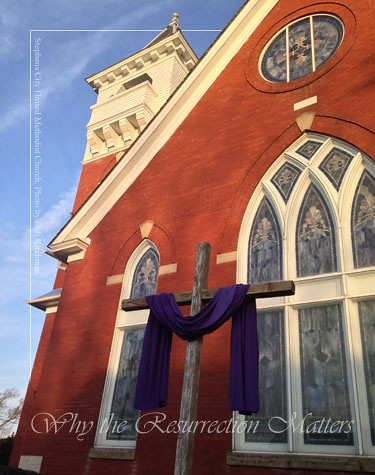
Why the Resurrection Matters

In his book 'Miracles,' C. S. Lewis wrote: “The New Testament writers speak as if Christ’s achievement in rising from the dead was the first event of its kind in the whole history of the universe. He is the ‘first fruits,’ the ‘pioneer of life.’ He has forced open a door that has been locked since the death of the first man. He has met, fought, and beaten the King of Death. Everything is different because He has done so. This is the beginning of the New Creation: a new chapter in cosmic history has been opened.”

Modern 'enlightened' man is not so sure. In fact, I once heard the pastor of a large church state that: "The Resurrection isn't that important." The early believers certainly would have objected to this reasoning. Belief in Resurrection is what propelled them to share the Good News. Belief in the Resurrection is what spurred them to rescue babies thrown into the Tiber River. Christianity was not spread by the sword, as other religions have been, but rather it has spread in spite of the very real possibility that you could be killed for doing so.

Could it be that the sure belief that death has been overcome makes the believer stronger in the face of death? Fox's Book of Martyrs would bear that out. Certainly some very ordinary people were propelled to do very extraordinary things through their belief in Resurrection. Brian G. Hedges writes in a piece entitled: Three Reasons the Resurrection Matters [click to read]: " What is unquestionable is that the first generation of Jesus’ followers did believe he had risen, and were convinced that everything had changed as a result.

Consider just three of the ways the New Testament highlights the significance of the resurrection. Jesus’ resurrection means that his sacrificial death on the cross was sufficient, and therefore our sins can be forgiven. Jesus’ resurrection means that death is defeated once and for all. Jesus’ resurrection means that the material world matters."

This is key as we consider the promises in Isaiah 60 and Revelation 21. G-d is indeed able to renew all things, as He promises. Hedges quotes writer: John Updyke:

Make no mistake: if He rose at all

it was as His body;

if the cells' dissolution did not reverse, the molecules

reknit, the amino acids rekindle,

the Church will fall."

(to be continued)

BluebonnetMoon
Texas Bluebonnets and moon. Photo by Melissa K. Hand

Wednesday, March 18, 2015

THYME Magazine: Faith and Bright Hope

Citizen Journalism with a Better Flavor

THYME0912
Volume IX, Issue XII

Jesus is Coming, Plant a Tree!

Therefore, my beloved brethren, be ye stedfast, unmoveable, always abounding in the work of the Lord, forasmuch as ye know that your labour is not in vain in the Lord."
   -- 1 Corinthians 15:58

In a wonderful article by N. T. Wright entitled Jesus is Coming, Plant a Tree [click to read], the author writes: "For the early Christians, the resurrection of Jesus launched God’s new creation upon the world, beginning to fulfill the prayer Jesus taught his followers, that God’s kingdom would come “on earth as in heaven” (Matt. 6:10), and anticipating the “new heavens and a new earth” (Isa. 65:17, 66:22; 2 Pet. 3:13; Rev. 21:1) promised by Isaiah and again in the New Testament. From this point of view, as I have often said (though the phrase is not original to me), Heaven is undoubtedly important, but it’s not the end of the world. The early Christians were not very interested, in the way our world has been interested, in what happens to people immediately after they die. They were extremely interested in a topic many Western Christians in the last few years have forgotten about altogether, namely the final new creation, new heavens and new earth joined together, and the resurrection of the body that will create new human beings to live in that new world."

I have friends who are very much into eschatology, wonderful people, but they are pretty much convinced that this world is pretty rotten and the sooner it passes away the better. I also have friends who are very much into fixing things in the here and now, not thinking about the hereafter at all. Wright makes the case that I very much agree with: Both are missing something! He also struck a chord with me, especially in light of this dedication in my yet to be published novel: "Pontifus, The Bridge Builder's Tale:"

This little book is dedicated to those brave young people, who though I shall not name them here, will likely recognize bits of themselves in the characters I portray. I apologize beforehand for this intrusion into your privacy but feel that the world so desperately needs your story. Your very real dedication and bravery inspired this book and it cannot be written without a foundation of such truth. Most of all it is dedicated to my beautiful wife, of whom the accolade: "Well done, good and faithful servant!" is most fitting. You have stood by me in good times and bad. We have shared in the raising of some incredible young people who inhabited our own home. You have poured your love and wonder into the lives of countless students. I love you with all my being!!!

It is because we both love young people so that I write this. It is but a poor attempt to offer hope and direction to a world so devoid of it. We err, perhaps, in pointing to the hope of the hereafter without providing adequate models and renderings of that Kingdom and those who have labored to bring it into the world we inhabit now. The water that will quench the soul's thirst is dismissed because those who profess to bear it often seem, (to the society around them,) preoccupied with apocalyptic visions and derision for the world as it is now. It is not wrong to love such things, but they are not easily shared with those for whom the flower of life is yet to come. No bride-to-be, having just unwrapped her wedding planner, wants to engage in a lengthy discourse on Eschatology!

Jeremiah of old told those in exile to "Build, Plant, Marry and Have Children, Prosper and Pray!" [1.] Jeremiah 29:4-7 -- and to be sure, there are many who do. They just don't make the headlines very often. The historical references in this work, and there are probably too many, are essential to understanding how men and women have navigated dangerous times before. They are most necessary to show how one can indeed have vision for one's own times and hope in a greater, unseen reality as well."
-- Excerpt from "Pontifus, The Bridge Builder's Tale"  ©Copyright, 2015, The Kirchman Studio

Referencing 1 Corinthians 15:58, Wright presents the important idea that our work here in this world is not wasted. It is incredibly important to the building of the Kingdom to come! Just as human marriage is a picture of Christ and his Church, there is much to do to point the way and give vision to the Unseen Kingdom. Wright continues: "I have no idea precisely what this means. I do not know how the painting an artist paints today in prayer and wisdom will find a place in G-d’s new world. I don’t know what musical instruments we will have to play Bach, though I’m sure Bach’s music will be there. 

I don’t know how my planting a tree today will relate to the wonderful trees that will be in G-d’s recreated world. I don’t know how my work for justice for the poor, for remission of global debts, will reappear in that new world. But I know that G-d’s new world of justice and joy, of hope for the whole earth, was launched when Jesus came out of the tomb on Easter morning: I know he calls me and you to live in him and by the power of his spirit, and so to be new-creation people here and now, giving birth to signs and symbols of the kingdom on earth as in heaven. 

The resurrection of Jesus and the gift of the Spirit mean that we are called to bring forth real and effective signs of G-d’s renewed creation even in the midst of the present age. Not to do so is at best to put ourselves in the position of those Second Temple Jews who believed they had to wait passively for G-d to act – when G-d has acted in Jesus to inaugurate his kingdom on earth as in heaven. At worst, not to bring forth works and signs of renewal in G-d’s creation is to collude, as gnosticism always does, with the forces of sin and death."

Revelation 19:6-9 speaks of the time when people of all nations are joined in communion with G-d:

And I heard as it were the voice of a great multitude, and as the voice of many waters, and as the voice of mighty thunderings, saying, Alleluia: for the Lord G-d omnipotent reigneth. Let us be glad and rejoice, and give honour to him: for the marriage of the Lamb is come, and his wife hath made herself ready. And to her was granted that she should be arrayed in fine linen, clean and white: for the fine linen is the righteousness of saints. And he saith unto me, Write, Blessed are they which are called unto the marriage supper of the Lamb. And he saith unto me, These are the true sayings of G-d."

In Isaiah 60 [4.] and in Revelation 21 Believers look to a New Heaven and a New Earth where a Heavenly Jerusalem descends to join the Earth. Here is a Kingdom that needs no temple, needs no sun to light it, for G-d Himself is the force that illuminates it! [5.]

And I saw a new Heaven and a new earth: for the first Heaven and the first earth were passed away; and there was no more sea. And I John saw the holy city, new Jerusalem, coming down from G-d out of heaven, prepared as a bride adorned for her husband. And I heard a great voice out of heaven saying, Behold, the tabernacle of G-d is with men, and he will dwell with them, and they shall be his people, and G-d himself shall be with them, and be their G-d." -- Revelation 21:1-3

West_web East_web
Journey to Jesus, a mural depicting the nations coming to Jesus in the New Heaven and New Earth described in Revelation 21. Mural by Kristina Elaine Greer and Bob Kirchman

Journey to Jesus [click to view larger images].

Our Christian hope is that we're going to live with Christ in a new Earth, where there is not only no more death, but where life is what it was always meant to be." -- Timothy Keller.

THYMELESS
The hope of Heaven and New Earth.

A Lesson from the Missionaries

Wes Stafford, founder of Compassion International, remembers with great joy the times he and his missionary father dug wells together. He happily recalls the tired, sweaty, muddy process of ensuring clean water for the villages in Africa that they served. Father and son came home tired and filthy and the people saw a beautiful illustration of the love of G-d! Clean wells, fenced off so that cattle could not foul them, meant healthy children instead of sickly ones. Lives were saved and the people, through that expression of love, were moved to trust in Christ!

The Staffords excitedly sent photographs of the whole operation, dirty faces and all. They surely would be an exciting part of the mission's newsletter. To their dismay, when the newsletter arrived, there were no pictures of the well digging. It wasn't about 'salvation' in the eyes of the mission board. Yet it had resulted in real salvation (earthly as well as Heavenly) to the villagers! Years later, as head of Compassion International, Wes Stafford still presides over the digging of a lot of wells!

Tragically, the board's earthward myopia extended to the boarding school for missionary kids that Wes and his sister attended. Those who washed out as missionaries were assigned to teach at the school. Not seeing the school as an important work of G-d, the children were poorly cared for, sometimes even abused, and the faith of many was destroyed. In his book: Too Small to Ignore, [2.] Stafford makes the case that the work of teaching and caring for children is paramount in the work of the Kingdom of G-d.

Passing the Torch

Perhaps the greatest lesson Stafford's father ever taught was in the digging of the wells. Wes grew up with practical experience in participating in the building of the Kingdom. That lesson would stick with him as he grew to head Compassion International. There is a poem by Gary Snyder: Axe Handles [click to read] which captures the Sacred process quite nicely:

I am an axe And my son a handle, soon
To be shaping again, model
And tool, craft of culture,
How we go on."

How are we doing as teachers. Not very well, I fear. As we are all too eager to see this world pass away, our young adults busy themselves with apocalyptic video games. The sad truth is that both generations have lost the mandate to build the Kingdom. A little child, it turns out, will teach me a "more excellent way." We are outside her house together... initially we set out to dig in the snow. Perhaps we'll build a snowman.

But we notice the chaos of snow and ice on the path to the trash cans. I chip, she digs. We create a beautiful clear walk for the neighbors. Then we clear off some sidewalk. The young child is clearly enjoying the whole process. But my adult mind soon grows restless that we have not built the snowman! Funny, how the adult mind can be distracted so easily!

It is only later that I realize that the child has been the teacher that day. We created a small patch of beauty (and safety) for her neighbors. She indeed saw that such labor was a good thing. No pontification, just a simple model, simply followed. We were making something together! Didn't Jesus say that: "the kingdom of God belongs to such as these!" -- Luke 18:16

The Fragrance of Eden
Wisdom from an Old Rebbe

AT on Hazeltop
In the Blue Ridge Mountains.

Here is a Beautiful Story [click to read] of an old Rebbe who's devotion to G-d's work of redemption shaped the way he lived his own life. The wise man was told one day that the Messiah had come and was in the steet outside. The man opened the window, sniffed the air outside and declared the so-called 'Messiah' a fraud. His instincts told him the coming Messiah would bring with him the sweet fragrance of Eden, the fragrence of the divine presence in the tabernacle and the temple, that was lost when the Glory departed.

Years later, the Rebbe's son wondered why his father had to go to the window to sniff the air. Surely the sweet smell of redemption would come into the house. His son then realized that the father had lived his life in devotion to torah study and the expectancy of Messiah's coming. His life, so lived, gave his own dwelling place the fragrance of what he hoped for. Thus it was necessary for him to smell the air outside his house to know if what he hoped for had truly appeared.

May our faith and devotion create such an aroma in our own dwelling places!

Spring Crocus
Spring Crocus

Saturday, March 7, 2015

THYME Magazine: Jonathan Myrick Daniels

Citizen Journalism with a Better Flavor

THYME0910a
Volume IX, Issue IXb

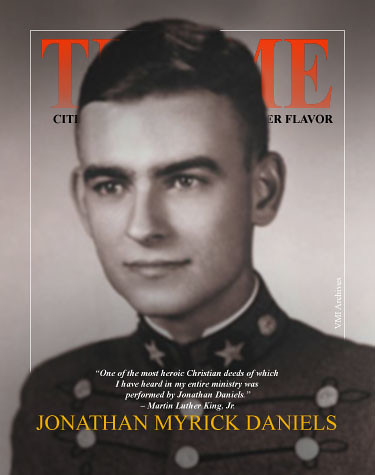
Jonathan Myrick Daniels

I can’t imagine that I have anything to give of any significance…” -- Jonathan Daniels

Graduating from Virginia Military Institute in 1961, Jonathan Myrick Daniels went on to study at the Episcopal Divinity School in Cambridge, Massachusetts. Daniels, who hailed from Keene, New Hampshire, probably never imagined that he would be remembered for one brave deed. In 1965, however, Daniels heard Dr. Martin Luther King plead for more clergy of all races and creeds to become involved in the struggle for civil rights. Daniels traveled to Alabama where he initially became involved in voter registration efforts.

He and 29 other people were arrested when they peacefully picketed whites-only businesses in the small town of Fort Deposit, Alabama. They were incarcerated in the Haynesville, Alabama Jail. Upon his release in August of 1965 Jonathan Daniels and Catholic priest Richard Morrisroe accompanied two black teenagers, Joyce Bailey and Ruby Sales, into Varner's Cash Store to buy a cold drink. Though the store served non-whites, Tom Coleman, a construction worker and part-time deputy sheriff, was at the store. He was looking for a confrontation. Coleman raised his shotgun and fired at the group. Daniels was shot and killed instantly as he pushed sixteen year old Ruby Sales to the ground in order to protect her. He saved her life. Father Morrisroe was seriously wounded.

His parents, Dr. Phillip Daniels and Connie Daniels, raised Jonathan and his sister Emily in an atmosphere of Faith and service to others. Their son struggled with his own identity and his own calling. He surprised his family by attending VMI, where he was elected Valedictorian and graduated at the head of his class. He initially went to graduate school at Harvard to study literature but then followed his calling to divinity school. He said that the Holy Spirit of G-d was the driving force in the direction of his life.

The young woman who's life he saved, Ruby Sales, eventually went into the ministry herself, founding an urban ministry dedicated to Daniels' memory.

Mr. Smith Goes to Washington
The Stories in the Story

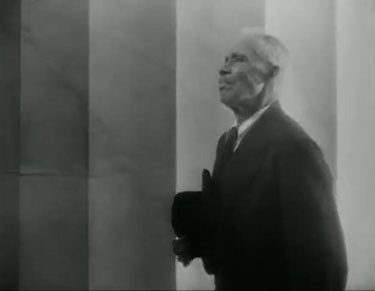
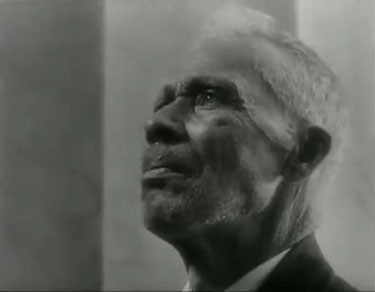
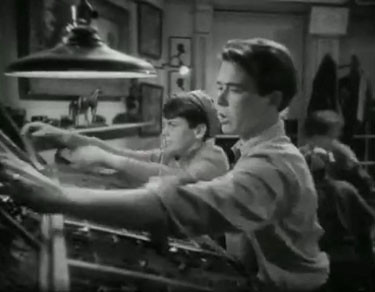
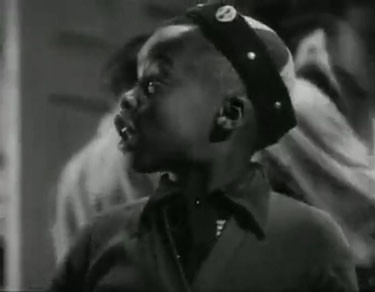
The Movie, Mr. Smith Goes to Washington [click to view], was made by Frank Capra in 1939. Capra's film contains some interesting snapshots of how the common man, operating in concert with the principles laid down by our founders, can truly change the course of history as he works to preserve freedom. Early in the story, a "lost" Mr. Smith finds himself in the Lincoln Memorial. Here he sees what must be an immigrant grandfather teaching his grandson the meaning of the great inscriptions that define freedom. Then the gentleman pictured below walks into the great edifice and deliberately removes his hat in reverence for the principles enshrined there.

mrsmith002
Jimmy Stewart enters the Memorial...

mrsmith003
...and sees this gentleman remove his hat, in reverence for...

mrsmith0011
...the freedom that was hard won through a time of great sacrifice.

smith006
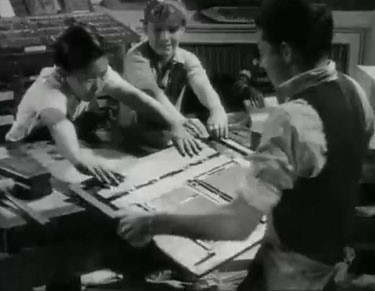
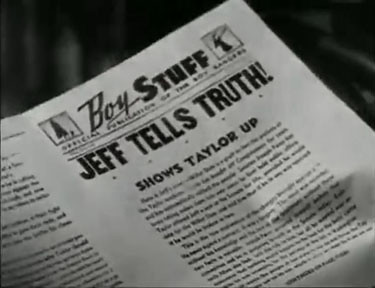
The little four page paper of Jeff's father has become 'Boy Stuff' and a wonderful group of boys put it together.

smith007
"Bring on the paper!" this young man shouts as they print a special edition to vindicate Jeff as the Taylor Machine attempts to control the big papers.

boystuff
Here they pull page proofs.

smith008
"Jeff Tells Truth!"

It would be a little over two decades before Dr. Martin Luther King would stand at that SAME Memorial to share his "I Have a Dream Speech," but it is clear from the stills above, that Capra is in on the dream. To an America mired in a reality of apartheid, he presents the great truth of IMAGO DEI, through the three characters alongside Smith in the Memorial. The staff of 'Boy Stuff' also presents a group where the dream lives. Though some students of the film have trouble with the "pigeons and the porters" in the scene where Smith arrives in Washington, one must remember that the film was made in the 1930's and also that the porters leave the politicians "holding the pigeons."

In the end, Capra makes a film that is entertaining as it gives us glimpses of that "bright shining city on a hill." Though Capra's Senate Chamber is a movie set, the truth he depicts there is something every American needs to see for themselves.

The Prime Minister's Speech

We presented Binyamin Netanyahu's Speech [click to read] without comment earlier in the week. That was by design as we feel the speech was most appropriate, delivered with respect and dignity and like the preceding story of Jefferson Smith, it laid out important truth clearly. Mr. Netanyahu does not need a lengthy defense. His critics, by their own wailing and gnashing of teeth, merely proclaim their own missplaced priorities.

A country that has no qualms about destabilizing the Middle-east, holds innocent Americans like Saeed Abedini [1.] for years without due process in foul prisons and is rushing to obtain weapons of mass destruction must be subjected to the sort of honest analysis presented by the Prime Minister. To do less is reckless! Those who want to wail about perceived insult need to ask themselves if that insult is indeed worse than the injury of an Iranian bomb destroying a city in Israel or America?

Saturday, February 21, 2015

THYME Magazine: Winter in America

Citizen Journalism with a Better Flavor

THYME0906AA
Volume IX, Issue VIIa

Winter in America

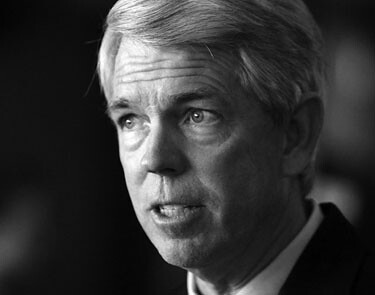
I for one am tired of seeing images of the President playing golf. I have a feeling I am not alone. The litany of problems our country faces have been mentioned many times in these pages, and Americans are right to feel frustrated and discouraged. But is this our Valley Forge, where our endurance and perseverance will lead to another time of triumph? I hope so, I dare to believe so. David Barton writes, in an article entitled How America Can Reclaim Greatness [1.]

It’s difficult to get Americans to agree on many things today, but there are a few exceptions. Three of four are unhappy with the direction the country is headed. Two of three think America is in a state of decline, and more than half believe that we’re no longer a country where anyone can get ahead and have a better standard of living.

This dismal outlook includes every major American institution. Strikingly, the one that enjoys the greatest public support is the military – but even at that, only four of ten adults have “a great deal of confidence” in our military. Next highest are churches, but only one of four has a high level of trust in our religious institutions. Only one in five has the highest degree of confidence in the presidency; one of seven in public schools; one of eight in the U.S. Supreme Court; one of ten in banks; and only one out of twenty in Congress."

Barton has teamed with George Barna to write: U-Turn: Restoring America to the Strength of its Roots. [2.] These two writers do not deny the serious problems that face us, nor do they ignore the urgency of our collective action. As the President fiddles (or tees off), our country burns. But it is not time for us to retreat to inaction. There are foundations to be remembered and restored. Barton says:

Over the last generation, we’ve largely destroyed our uniquely American culture, created an activist government that pursues its own agenda, no longer serving the people or following the Constitution, banished organized religion to a place of public irrelevance, and reconstructed the traditional family into something never before known in the history of mankind.

Exacerbating these problems is the paralysis that citizens feel as a result of our continuous national news inundation. We routinely hear of maddening decisions by the U. S. Supreme Court, the president’s use of his phone and pen to enact unpopular policies and the Senate’s refusal to take up over 300 common sense bills passed by the House (more than 200 of them passed unanimously), and we know there is nothing we can do to reverse any of these things."

But we have faced dark times before. A study of our nation's beginnings shows how perilous the pursuit of our freedom was. Many times it seems that but for the Hand of Providence, our nation would not have survived.

In tough and frustrating times, there is a tendency to look outside for help – for something to relieve the pressure, to solve the problem, or simply to give hope. For those in the religious community, the pressure-relief valve is often eschatology (the theological view of the final events of history, commonly described as the “end times”) They tell themselves that what is going on now is what was prophesied millennia ago – that current events were decreed by G-d and are beyond any human control."

That is not to ignore the serious problems we face, but rather, it is a call to see them from the perspective of what history can teach us. The authors reference the American Revolution. Only one third of the colonists were in favor of independence. One fourth were clearly against it. The remainder just wanted to be on the winning side. Here it was not an overwhelming majority who prevailed, but a persistent and dedicated core. The cause was taken up personally by those in communities across the land who stepped up and did their part.

The rogue ideology imposed by those in power in Washington is NOT that of the majority. Indeed it has been systematically imposed by encroachment into institutions of higher learning, the media and government itself. In the 1950's, Senator Joseph McCarthy [3.] pointed it out. It is telling that those opposed to McCarthy successfully painted him as an alarmist. The fact remains that the New Deal administration was packed with left-leaning bureaucrats. The seeds of our undoing were already planted. The President golfs, knowing his underlings enact his policies for him. They preceded him, beginning their careers many years ago, but have gained much traction in our present age. [4.]

In future issues of THYME we will look closer at how ideologies so opposed to the foundations of our freedom became ensconced in our national fabric. We will examine how the role of the Church, family, local community and the traditional foundations of our country have been deliberately eroded. For now, we must become well versed in the Truths upon which this nation was founded. We must teach them to our children and hold accountable the academy and the media, who have departed from their ordained purpose and now perpetuate the lies that threaten to destroy us.

Recovery
A sign on a heavy equipment dealership in Fishersville, Virginia says it clearly: Pray for recovery.
Photo by Bob Kirchman

david_barton_bw
David Barton. Wallbuilders Photo

2. Suggested Reading: "Venona" (Yale University Press); "The Secret World Of American Communism" (Yale University Press); "The Haunted Wood" (Random House); "The Venona Secrets" (Regnery); "The Secret History Of the KGB" (Basic Books); "Whittaker Chambers: A Biography" (Modern Library); and "Joseph McCarthy: Reexamining the life and legacy of America's most hated Senator" (Free Press).

The Museum of the Bible
Coming in 2017

BibleMuseum_bw
The Museum of the Bible. Model by Smith Group JJR

Scheduled to open in 2017, the yet-to-be-named museum would welcome people of all faiths and include rare Torahs as well as historic Bibles.” -- The New York Times, July 16, 2014

A museum collection of such great cultural significance will likely be a sought-after destination for the visiting public.” -- Thomas Luebke, secretary of the U.S. Commission on Fine Arts, Washington Post Magazine, Sept. 12, 2014

The Green family, owners of Hobby Lobby, have a new project. Just two blocks from the National Mall, On Virginia Avenue, the Museum of the Bible is beginning to rise. Scheduled for completion in 2017, the new museum will contain historical artifacts from the Greens' own collection and will present an often overlooked part of our national fabric -- the Sacred Texts and their influence. Steve Green, President of Hobby Lobby, is overseeing the project and has an ambitious vision for the eight story complex.

Biblical literacy is at an all-time low as secularists demand a civil society that makes no reference to the Scriptures, but this was not always the case. Our first President stated that it was impossible to govern the world without them.

Critics of the new privately funded museum decry the lack of 'diversity' in the museum's board (most are Evangelicals) and the fact that the museum will present the Scriptures as reliable Divine Revelation rather than simply as study artifacts. [5.] But it must be remembered that though Scripture is indeed referenced on the friezes of Washington's classical edifices, The National Museums themselves often diminish the role of Faith in our nation's story or leave it out altogether. A replica of the aluminum capstone for the Washington Monument in one such display was deliberately placed against a wall to obscure the text: LAUS DEO (Glory to G-d) inscribed upon it.

Thus it could be said that the Museum of the Bible simply tells the story that others won't. It promises to be a sophisticated experience. The building is designed by Smith Group JJR, Washington, D.C., who's portfolio includes the International Spy Museum, the Smithsonian's National Museum of the American Indian and the National Museum of African American History and Culture.The display floors themselves are being designed by firms such as The PRD Group in Chantilly, Virgina, who have crafted many displays for the Smithsonian. [6.]

steve-green_bw
Steve Green, President of Hobby Lobby.

Davidgreen
David Green began Hobby Lobby as a $600 start-up in his garage...

hobbylobby
...which grew to become a national company providing art supplies, craft supplies and fine art framing. Photo by Bob Kirchman

Saturday, January 24, 2015

THYME Magazine: The Power of Inspiration III

Citizen Journalism with a Better Flavor

THYME0903A
Volume IX, Issue IIIa

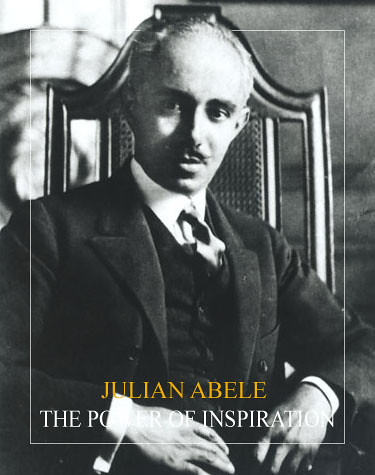
Julian Abele, Architect

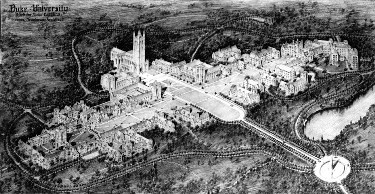
The great architects of the Beaux Arts tradition relied heavily on the power of their own drawing ability to visualize their unfolding design process. Julian Albele (1881-1950) was a master of this craft. His surviving drawings of what many consider to be the most beautiful building in the state of North Carolina would be impressive for their archival record alone. Abele  is a man who deserves to be studied further for his accomplishments; for his is one of the great stories of America.

Albele was born in 1881, the youngest of eight children in a Philadelphia family. He showed great abilities in mathematics as a child and attended the Quaker-run Institute for Colored Youth, which later became Cheyney University. He completed a two-year architectural drawing course at the Pennsylvania Museum School of Industrial Art, earning the nickname: "Willing and Able." Julian Abele was the first African American student to enroll in the Department of Architecture at the University of Pennsylvania, and became the department's first black graduate in 1902. His studio partner was Louis Magaziner, the only Jewish student in the department, who was of Hungarian descent. The two became lifelong friends.

In 1906, Abele joined the firm of Horace Trumbauer as assistant to chief designer Frank Seeburger. In 1909 Seeburger left the firm and Abele became the chief designer in his place. He was the second highest paid employee in the firm. During the years of the Great Depression and the World War, commissions were few and far between. but in Durham, North Carolina, the Julian S. Carr and Washington Duke family fortunes would fund the Duke Endowment. A great gothic campus would be build, designed by Julian Albele, in a commission won by the Philadelphia firm.

In the segregated South, the impeccably dressed francophile, Albele, was once reportedly denied lodging by a Durham hotel. In those days attribution was scarcely given to team members so the Trumbaurer firm name was credited as the architect of record. It wasn't until late in the Twentieth Century that proper attribution was accorded Albele and a portrait of the architect was displayed at the university. His legacy is an incredible one. The chapel he designed is considered by many one of the most beautiful buildings in the region!

Abele_Drawing_Tower1
Julian Abele's rendering for the tower of Duke University Chapel in Durham, North Carolina.

Abele_001
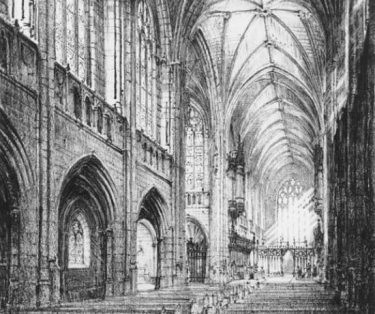
Julian Abele's rendering for the interior of the Duke University Chapel.

Albele_002
Julian Abele's rendering of the Duke University Campus.

Monday, December 29, 2014

A Beloved Christmas Story's Story

With Six Children to Feed, the Author Needed a Miracle

Francis_Alexander_-_Charles_Dickens_1842
Frances Alexander's 1842 painting of the famous author.

A Milestone Monday Feature

The Year was 1843 and he needed a miracle. With six children to feed and a large house in London to maintain, his slipping sales as a writer were of great concern. His installment novel: Martin Chuzzlewit, was selling poorly, unlike earlier works like Nicholas Nickleby, which had given him some measure of success.

Christmas was coming as he bitterly confided to a friend that his checkbook was empty. Walking the streets, he came up with a 'Ghost of an Idea' and set to work. He published 6000 copies in time for Christmas distribution. They sold out, but because he had splurged on hand-coloured illustrations by John Leech he barely broke even. [1.] Yes, even in Nineteenth Century England, good illustration cost you something! [2.]

Fortunately the little work went on to be a classic. It reinvigorated the career of its creator. Today we still love A Christmas Carol and its author: Charles Dickens, not only as a writer, but as one who helped to bring about much needed social reforms in his day.

Thursday, December 25, 2014

Unpacking The Twelve Days of Christmas

You Will Never Look at this Song the Same Way Again

THYME0701
"Partridge."

I always assumed the song: "The Twelve Days of Christmas" to be a simple frivolous song of celebration. Not so!, this song is instructive in basic truths of the Christian Faith! Here is the explanation by Father Edward Dowling:

“The Twelve Days of Christmas” celebrates the official Christmas season which starts liturgically on Christmas Day and ends twelve days later on the Feast of the Epiphany. “My true love” refers to God, “me” is the individual Catholic. The “twelve lords a leaping” are the twelve basic beliefs of the Catholic Church as outlined in the Apostles Creed. The “eleven pipers piping” are the eleven Apostles who remained faithful after the treachery of Judas. The “ten ladies dancing” are the Ten Commandments. The “nine drummers drumming” are the nine choirs of angels which in those days of class distinction were thought important. The “eight maids a milking” are the Eight Beatitudes. The “seven swans a swimming” are the Seven Sacraments (or the Seven Gifts of the Holy Spirit) [click to read]. The “six geese a laying” are the Six Commandments of the Church or the six days of creation. The “five golden rings” are the first five books of the Old Testament called the Torah which are generally considered the most sacred and important of all the Old Testament. The “four calling birds” are the Four Gospels. The “three French hens” are the Three Persons in God or the three gifts of the Wise Men. The “two turtle doves” represent the two natures in Jesus: human and divine or the two Testaments, Old and New. The “partridge” is the piece de resistance, Jesus himself, and the “pear tree” is the Cross."

Here is More Historical Background [click to read] from Father Dowling. h/t Kristina Elaine Greer

PONTIFUS_Banner

Saturday, November 29, 2014

THYME Magazine Special Advent Edition

Citizen Journalism with a Better Flavor

advent
Volume VIII, Issue XXIII

The Forgotten Season

The turkey leftovers were still cooling when the much media hyped 'Black Friday' events began. In a Long Island Wal Mart, a young associate was trampled to death as bargain hunters literally broke down the doors. A young man had to die because twenty dollars could be saved on flatscreens. Managers closed the store and someone actually was irate that he couldn't get in. Come on, if a colleague has died, its 'Game Over' on the shopping frenzy. Close the store and try to help the poor man's significant others. To hell with reopening for the remainder of the day! Management reopened the store at one o'clock that afternoon. Satirical publication 'The Onion' came out with a story where thousands were 'reported' to have died in Black Friday shopping. I did not find it funny. One death to satisfy the greed gods is too many. Our prayers go out to the family and friends of this young man. May they find comfort.

Lost in the madness of Black Friday, Cyber Monday and yes, even Small Business Saturday is the wonderful celebration of Advent. The high churches still celebrate it. It is a time of waiting and preparation for the miracle to come. It is so un-modern! It ties us to history. The traditions of Judaism are full of waiting. Abraham and Sarah saw the child of promise when they were way past the age of child bearing. I sometimes think of one-hundred year old Sarah as a preschool parent and join her in her laughter! Then there was Joseph and his imprisonment, followed by hundreds of years of exile in Egypt. We often think about the Promised Land, but we forget that all Promised Lands seem to require a prep!

In fact, there came a time when people forgot the lessons of the brick kilns and lost the Promised Land to the Babylonians and the Persians. The Temple, center of worship, was destroyed. But it was in this time of living as expats that the community of the Synagogue strengthened the people anew. Ezra and Nehemiah presided over a return to the land of promise. Again, the promise required a prep. As the exiles built the prosperity of Persia, they prepared themselves for the time when they would build their own.

A second Temple was built. The exiles returned. Then came the great empires of the Greeks and the Romans. The Temple was rebuilt, but the heavy hand of Roman rule presided over a time of trouble. Many looked to the future Messiah to put things aright. Indeed, there were many who claimed to BE Messiah. They came and went. But in a time when Heaven seemed so distant, there came another child of promise... to a couple way past child bearing. John the Baptist, a "Voice crying in the wilderness," came saying: "Prepare ye the way of the Lord." At the same season of history, his mother Elizabeth's cousin Mary came to visit.

Mary had been visited by an angel and told that she, a virgin, would bear the child of promise. Though this was an incredible blessing, she faced the prospect of unwed motherhood... in a culture that stoned you for it. Her betrothed, however, had also been given a message from Heaven, that he should take her for his wife. What incredible faith and love! When I chose my Confirmation name, as a boy, I took the name Joseph. It was not that I ever thought I could match such selfless love, but that I so admired it! Even to this day, some of the people I admire the most are those men who have stepped into the lives of children they did not physically father, and yet have earned the name Dad nonetheless! These men live as both an example and a challenge to me. Some of them are my juniors in years, but they far surpass in their maturity!

Such are the lessons we miss if we merely content ourselves with instant gratification. There is an old saying: "Rome wasn't built in a day." Indeed our own nation cast off from its sure position as an English colony to pursue an uncertain future. In 1812 England returned to burn the young country's capital. The White House is so called because its sandstone outer walls had to be painted after the burning left them permanently blackened. By the middle of the Nineteenth Century, however, Isambard Kingdom Brunel was building great ships to strengthen Bristol's trade with America. A hundred years after barely surviving her revolution, the nation we know had taken her place as a world power.

Why Advent is Important to Artists [click to read]

We do well to celebrate Advent, though it is largely forgotten in the popular narrative, because it causes us to pause and prepare. In a world where preparation is limited to four years it does us good to remember the lessons of centuries. Advent allows us to step back from our busy lives and ponder timeless truths... like the man that the Bethlehem baby grew to be. He too died, some say on a Friday, but his death was not just his own. Did He indeed carry the sins of the world? The account of His Resurrection causes us to ponder mysteries far greater than ourselves and our puny wants. In our next issue of THYME we will ponder more wonders and present some compelling evidence that we should indeed consider the life of this man. (to be continued)

Photos Around Staunton

Edgewoodnew
Snow highlights this house in Staunton, Virginia, designed by noted architect T. J. Collins. Photo by Bob Kirchman

IMG_4032
The firm of T. J. Collins also designed The Church of the Good Shepherd which was built in 1924. The sanctuary originally had oil lamps. Photo by Bob Kirchman

smileWeb
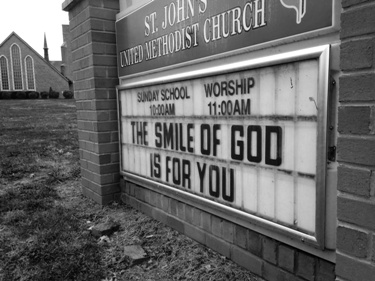
Isn't this a great message! When I saw this, I smiled back!  
Photo by Bob Kirchman

Paul Smith's Typewriter Art


A man with severe cerebral palsy creates amazing compositions on a typewriter!

Saturday, November 22, 2014

THYME Magazine: The Vision of Charles Carroll

Citizen Journalism with a Better Flavor

THYME0821A
Volume VIII, Issue XXIa

The Vision of Charles Carroll

July 4, 1828 the last surviving signer of the Declaration of Independence took part in an important ceremony as he turned the first spade of earth at the symbolic laying of the first stone of the Baltimore and Ohio Railroad. Fifty-two years after he put his name to the document that began our nation, Charles Carroll of Carrollton participated in an event that looked to her future. Indeed, inspired by the Ellicott Brothers [click to read], Carroll had already diversified agriculture on his large estate in Howard County, Maryland. He had helped build flour mills and limestone mills that in turn helped to create a more sustainable agriculture. The Quaker Ellicotts had migrated to this "picturesque wilderness" from Bucks County, Pennsylvania and partnered with Carroll, a Catholic, to move the region away from single crop plantations and enrich the soil with ground limestone, a practice that continues to this day. Now the ninety year old patriot was breaking ground for the prototype railroad. It was not exactly like the modern rails on cross ties we are familiar with, but rather iron straps laid on top of two continuous granite "curbs." The first motive power was horsepower. Horses actually pulled the carriages along the rails. A wind powered wicker car was even experimented with before the famous "Tom Thumb" steam engine gave challenge to a horse drawn train carriage in the now legendary race. [2.]

I consider this among the most important acts of my life, second only to my signing the Declaration of Independence, if even it be second to that.” Carroll said of the moment. The stone, laid in a field outside Baltimore, was also a time capsule, into which were placed a copy of the company's charter, newspapers of the day and a scroll bearing the words: "This Stone is deposited in commemoration of the commencement of the Baltimore and Ohio Railroad. A work of deep and vital interest to the American people. Its accomplishment will confer the most important benefits upon this nation, by facilitating its commerce, diffusing and extending its social intercourse, and perpetuating the happy Union of these, Confederated States. The first general meeting of the citizens of Baltimore to confer upon the adoption of proper measures for undertaking this magnificent work, was on the second day of' February 1827…” [1.]

The railroad would eventually do all of these things as a vast nation would be joined together by her steel rails. The Nineteenth Century would see her span from sea to sea to become a country her founders could scarcely have imagined!

Charles Carroll had been born in September 1737 in Annapolis. He attended Jesuit colleges in Maryland and France, before going on to study law in Paris and London. In 1765 he returned to Howard County and took charge of the Carroll family's vast estate there. Catholics in Maryland before independence were not allowed to participate in politics, practice law or vote, but Carroll became influential as a writer of tracts against taxation without representation under the pseudonym "First Citizen." In 1776 he was appointed to the Continental Congress. Although he was not present for the vote for independence, he was one of the first signers. He added the distinct identifier: "of Carrollton" to distinguish himself from a number of relatives having the same name. After independence was won, Carroll became a Maryland State Senator in 1777 and eventually became a United States Senator representing that state.

In 1800 he left political service and was instrumental in building canals and the establishment of the Baltimore and Ohio Railroad Company. His farm in Howard County became a model of improvements in agriculture. He died in Baltimore in 1835 at the age of 95.

Wednesday, September 24, 2014

THYME Magazine: Motherhood and Invention

Citizen Journalism with a Better Flavor

THYME0813
Volume VIII, Issue XIII

How the Gilbreths Changed Work

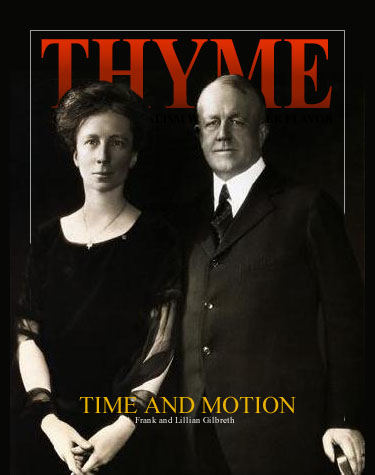
When my children were younger one of the things we enjoyed was reading the story: Cheaper by the Dozen. We later found Belles On Their Toes and continued our adventures with the Gilbreth family. The books tell the actual story of Frank Bunker Gilbreth, Sr. and his wife Lillian Moller Gilbreth from the perspective of two of their twelve children. The books focus on the life of a very interesting family, to be sure, but touch briefly on a most amazing and inspiring couple and how they changed the way we work.

Frank Gilbreth was born in 1868 in Fairfield, Maine where his father ran a hardware store. Frank's formal education ended with high school and he became a bricklayer's apprentice. It was as a bricklayer that Gilbreth began his life's work improving the way we work.


Film of Frank Gilbreth's work to improve bricklaying.

Noticing that a lot of time was spent reaching down to pick up bricks from the scaffolding below, Gilbreth devised a work level height platform for staging the bricks. The result was improved efficiency in performing the job, but an added benefit was that the workers received less fatigue from the reduction in repetitive motion. Frank Gilbreth went on to become a building contractor, but he also developed and patented a number of such innovations that improved efficiency and workflow.

He became sought after as a consultant and became involved in the engineering process for many industrial processes. He lectured at Perdue University and founded his own consulting firm with his wife Lillian as collaborator. Together they studied how work was done in factories and offices and devised better ways to accomplish it. Their office is described in Cheaper by the Dozen. Gilbreth Inc. consisted of Frank and Lillian sitting across from each other at a colossal table/desk where they performed their analysis.

When the Simmons Harware Company built their large warehouse in Soux City, Iowa, they hired the Gilbreths to design and manage the flow of work and materials, a process often taken for granted as part of construction design today. When  World War I began, Frank Gilbreth went to work developing procedures for rapidly assembling weapons, reducing it to a relatively simple series of steps. He developed a system whereby soldiers could train blindfolded and successfully assemble their rifles, allowing them to smoothly do so in total darkness if required to later.

The Gilbreth's work even led to improvements in medicine. It was their idea to have a "caddy" hand instruments to a surgeon during operations. The Gilbreths employed motion picture technology to analyze and identify essential motions. Then they refined them. These "Therbligs" (Gilbreth spelled somewhat backwards) became the building blocks of improved workflow. It is worth noting that while their contemporary Frederick Winslow Taylor sought to reduce the time it took to DO each process, the Gilbreths sought to reduce the number of processes and so make the worker more productive through the wise focus of their energy.

"Blessed is the man who makes two blades of grass grow where only one grew before. More blessed is he who multiplies the harvests of toil not merely two-fold, but three-fold or more-fold, for he virtually lengthens life when be adds to its fruitage. Such a man is Frank B. Gilbreth who tells in this book just how he wrought this wonder. For years he has closely watched workers at tasks of all kinds ; he has discovered how much they lose by moving unprofitably hither and thither, by neglecting to take the shortest and easiest paths. In the ancient trade of bricklaying he has increased the output almost four-fold by doing only what must be done, and using a few simple devices of his own invention."

--George Iles (1917) in: "Introduction" of Applied Motion Study

"Management practitioners today largely ignore Frank and Lillian Gilbreth, possibly because the principles of motion study they pioneered are now very unfashionable. Motion study entailed the detailed examination of the movements individual workers made in the process of carrying out their work. It was, however, just one of the concepts the Gilbreths developed. Through Frank's concerns that the efficiency of employees should be balanced by an economy of effort and a minimisation of stress, and Lillian's interest in the psychology of management, their work laid the foundations for the development of the modern concepts of job simplification, meaningful work standards and incentive wage plans."

--Editors Of Perseus Publishing (2002) Business: the ultimate resource. p. 994

Frank Gilbreth died of a heart attack on June 14, 1924. He was 55. He died as he was talking on the telephone at the Lackawanna railway station in Montclair, New Jersey. Lillian Gilbreth continued in the work that they had shared. She was a brilliant person in her own right, having received an undergraduate degree from the University of California in English. She went on to obtain her Phd. in Industrial Psychology in 1915 from Brown University. Her dissertation subject: Some Aspects of Eliminating Waste in Teaching.

Most of us are familiar with the fact that the Gilbreths had twelve children, carting them about in the Pierce Arrow nicknamed "Foolish Carriage." Cheaper by the Dozen has indeed immortalized this family. Perhaps what is forgotten is the contribution they made to American life, enriching the way we live and work.

20th Anniversary of Opus 24
An Evening of Beautiful Music Offered to the LORD

pipeorganfront2
The organ at Christ Lutheran Church in Staunton.

Friends of Christ Lutheran Concert Series; Celebrating the 20th anniversary of the Taylor and Boody Pipe Organ installed at Christ Lutheran Church with a Choral and Organ concert. This will be Sunday, September 28th at 4pm. We will be presenting Bach's Cantata 80 "A Mighty Fortress is our God" with professional soloists and instrumentalists. The choir will also be singing Cantate Domino by Pitoni, César Frank's Psalm 150, and Nunc Dimittis by Ralph Vaughan Williams.

Does My Vote Really Matter?


The importance of One Vote!

In 2004, Christian voter turnout increased by 93 percent over the 2002 turnout, and 42 percent of voters identified abortion as an important issue. As a result:

• 63 percent of the freshman U.S. congressmen elected were pro-life.
• 77 percent of the freshman U.S. senators were pro-life.

By increasing pro-life representation in Congress in the 2002 and 2004 elections, America witnessed the first four major abortion-restricting bills enacted since Roe v. Wade:

• Infants Born Alive Protection Act
• Unborn Victims of Violence Act
• Partial-Birth Abortion Ban
• Fetal Farming Ban

In addition, those senators helped confirm strict constructionists John Roberts and Samuel Alito to the U.S. Supreme Court. By 2006, Christian voter turnout decreased by 30 percent from the 2004 numbers, and only 30 percent of voters said that abortion was an important issue. As a result:

• Only 31 percent of the freshman U.S. congressmen elected were pro-life.
• Only 10 percent of the freshman U.S. senators elected were pro-life.
• The Baltimore Sun labeled the 2007 Congress as “the most pro-choice Congress in the history of the Republic.”

Your vote does matter, and you have the opportunity to protect life, marriage and family. Will you commit to cast your vote in support of the family this November?

Virginia Voter Information:

State General Election: November 4, 2014
Virginia polling times: 6:00am to 7:00pm
Registration deadline October 14, 2014
Register Online [click to register].

Wednesday, September 10, 2014

THYME Magazine: Back to School Issue

Citizen Journalism with a Better Flavor

THYME0811
Volume VIII, Issue XI

 The Problem of Original Zinn

Last week THYME asked the question: Could it be that the modern activist narrative, perpetuated by writers like Howard Zinn, conveniently ignores the sin, violence and retribution that lies outside of 'Western' activity. His 776 page A People's History of the United States [click to read] is required reading on many college campuses. No doubt, his philosophy has influenced many an aspiring journalist in their own activism. But Zinn must be seen for the Marxist that he is, and his convenient 'omission' of important history needs to be corrected.The problem is that Zinn, not sin, has become the basis for the activism of men like Sharpton and Jackson, who for the media serve as icons of the Civil Rights Movement.

First of all, it must be noted that Zinn himself admits: “Once I was bar mitzvahed, and I had done my religious duty, and my family needn’t be ashamed of me anymore…. that was the end of my religiosity.” He further perpetuates the marginalization of Faith in his works. Bob Cheeks [click to read] writes: "Rhetorician Richard M. Weaver in his essay, Up From Liberalism, explained the spiritual discernment that gave birth to his intellectual epiphany: “Original sin is a parabolical expression of the immemorial tendency of man to do the wrong thing when he knows the right thing.” By acknowledging Original sin, Weaver, abandoned a youthful dalliance with what at that time (the 1930’s) was called liberalism. Unfortunately, historian/activist Howard Zinn had no such epiphany."

The problem is not so much that Zinn has a narrative,but that the academy has embraced Zinn's one-sided narrative as a base for understanding our culture. Daniel J. Flynn sums it up quite nicely: "Who is the most influential historian in America? Could it be Pulitzer Prize winners Arthur Schlesinger, Jr. or Joseph Ellis or David McCullough, whose scholarly works have reached a broad literary public? The answer is none of the above. The accolade belongs instead to the unreconstructed, anti-American Marxist Howard Zinn, whose cartoon anti-history of the United States is still selling 128,000 copies a year twenty years after its original publication. Many of those copies are assigned readings for courses in colleges and high schools taught by leftist disciples of their radical mentor."

That is the problem. Steeped in the narrative that the world was doing fine before the evil white oppressors arrived on the scene, Zinn ignores the sin that has plagued men of all colors and cultures since long ago. Raiding and retribution were seen in tribal cultures and are still seen today in the tragic breakdown of civil society in places like Rwanda. Somehow the only real 'evil' in Zinn's world is that of the Western 'Imperialist.' That is why history, like mapmaking, requires an honest telling. Even America's Romantic period Romanticised the "Noble Savage." Indeed a lot of bloody raiding and retribution was left out even then. Ironically the best anti-colonial emergence of all, the American Experiment, is lumped in with the great empires of Spain and Britian.

No doubt, this is possible because men like Zinn see America as simply a continuation of European Imperialism. What is missed is the bright hope that burned briefly in newly freed African nations who initially modeled themselves after our Constitutional government. I remember that time in the middle of the Twentieth Century where Africans in traditional garb met in gleaming new assembly halls to take their rule from their former colonizers. That seemed such a time of hope and promise. Later I was saddened to see the destruction of Uganda, once known as the 'Pearl of Africa,' by despotic leadership feeding off of the bad feelings and retribution culture of the old tribalism. Rwanda's bloody descent was a terrible playing out of the same scenario.

But the United States Constitution actually acknowledges quite clearly the weakness of man and his propensity to take advantage of his fellows. Thus it enumerates basic rights held by all and limits the restriction of those rights by the institutions of government. Within the framework of Constitution, slavery, long a part of human history, becomes problematic in a way that allows the work of a William Wilberforce to go forward. But, as Bob Cheeks writes: "Zinn’s ideals have a misanthropic ring to them. I don’t believe he loves humanity as he claims. I believe he worships the idea of a state that can transform Americans into that antiseptic android, the socialist’s “New Man.” Perhaps he is angry with a G-d who would allow pain and suffering in this world?"

That last thought of Cheeks, so well dramatized in the movie: G-d's Not Dead [click to read], appears to drive far too much of the narrative at the academy. That would explain the steady stream of socialist solutions coming out of that world and their antipathy for localized initiative outside of government oversight, as in the case of healthcare reform. It may be seen as well in the state's resistance to Faith-based solutions and the desire of the state to create 'compelling public interest' legislation to force businesses run by people of Faith (Hobby Lobby, Conestoga Wood Products) to provide coverage of abortion causing drugs or prohibiting them from refusing service to those who would force them, in providing such service, to violate their conscience (Elane Photography, Sweet Cakes by Melissa). Such is in keeping with the molding of the "antiseptic android," the "New Man." It can be no less than that.

Remembering September 11, 2001

Where Were You (When The World Stopped Turning)
Alan Jackson

Where were you when the world stopped turning on that September day?
Were you in the yard with your wife and children
Or working on some stage in L.A.?
Did you stand there in shock at the sight of that black smoke
Risin' against that blue sky?
Did you shout out in anger, in fear for your neighbor
Or did you just sit down and cry?

Did you weep for the children who lost their dear loved ones
And pray for the ones who don't know?
Did you rejoice for the people who walked from the rubble
And sob for the ones left below?
Did you burst out in pride for the red, white and blue
And the heroes who died just doin' what they do?
Did you look up to heaven for some kind of answer
And look at yourself and what really matters?

I'm just a singer of simple songs
I'm not a real political man
I watch CNN but I'm not sure I can tell
you the difference in Iraq and Iran
But I know Jesus and I talk to God
And I remember this from when I was young
Faith, hope and love are some good things He gave us
And the greatest is love

Where were you when the world stopped turning on that September day?
Were you teaching a class full of innocent children
Or driving down some cold interstate?
Did you feel guilty 'cause you're a survivor
In a crowded room did you feel alone?
Did you call up your mother and tell her you loved her?
Did you dust off that Bible at home?

Did you open your eyes, hope it never happened
Close your eyes and not go to sleep?
Did you notice the sunset the first time in ages
Or speak to some stranger on the street?
Did you lay down at night and think of tomorrow
Or go out and buy you a gun?
Did you turn off that violent old movie you're watchin'
And turn on "I Love Lucy" reruns?

Did you go to a church and hold hands with some strangers
Did you stand in line and give your own blood?
Did you just stay home and cling tight to your family
Thank God you had somebody to love?

I'm just a singer of simple songs
I'm not a real political man
I watch CNN but I'm not sure I can tell
you the difference in Iraq and Iran
But I know Jesus and I talk to G-d
And I remember this from when I was young
Faith, hope and love are some good things He gave us
And the greatest is love

Where were you when the world stopped turning that September day?


0911002
Lower Manhattan, New York, New York. Photo by Detective Greg Smedinger
 
0911007
Arlington, Virginia.
 
0911003
Shanksville, Pennsylvania.

The Southeast Reliability Project

gasline
"There are no simple solutions, only intelligent choices." -- Caterpillar Advertisement.

Intelligent Choices, that was the message of a series of advertisements by construction equipment giant Caterpillar in the 1960's. Of course Caterpillar had a vested interest in the construction industry moving forward, but the thought is a good one. Augusta County, Virginia now faces the need, in the case of Dominion Resources' 42 mile proposed pipeline route through the county, to make some intelligent choices.

"Pipelines tear up the land..." "Affordable Energy requires pipelines."
Those could be the conflicting sentiments in today's discussion, much like the opposing viewpoints highlighted in the Caterpillar advertisements. And they can guide us, as we consider the impact and opportunity of any project. A badly designed pipeline route will indeed affect us for years to come, but design is a beautiful process and through intelligent considerations we might indeed arrive at a very workable solution.

The first map of the proposed route simply cut across the expanse of George Washington National Forest without regard for terrain or sensitive natural areas. A second map corrected the route to reflect concern for sensitive areas in the National Forest, but cut a swath through the growing community of Stuarts Draft. The pipeline mappers now had created conflict with the county's comprehensive plan. Supervisor David Karaffa also pointed out the need to protect important underground aquifers in the Stuarts Draft area. Obviously more design is in order.

Pipelines are easiest to site in open country. After they are buried and the land is restored you can indeed farm right over them. They are problematic where there is heavy development. They require an open right of way where only roads may cross them and no structures may be placed over them. It might surprise you to know that a gas pipeline runs right through the Virginia Horse Center Complex outside of Lexington Virginia. At one point the center's designers considered covered walkways from stables to arenas and were stopped by the need to leave pipeline right of way uncovered.

Pipelines are least desirable where there is a dense community or in natural preservation areas. The 100' right of way MUST be maintained clear in order to perform necessary inspection and maintenance. Thus it is imperative that the route be sensitively threaded through the mountains by its designers. But that is certainly possible. Just North of Calf Mountain Shelter on the Appalachian Trail, one first crosses a very obvious swath cut for power line right of way. The electricity crackles in the lines overhead, supported by enormous towers... it is a bit eery... but walk a bit farther and you step into what appears to be a wildlife clearing just past Jarman's Gap. Wildflowers and butterflies abound.

You leave the trail and walk to the edge to take in the view a little better. Only then do you realize you are standing on a natural gas line right of way! You can see now that the cleared path extends on past the end of Buck's Elbow Mountain, far in the distance. I grew up with gas lines. In fact, as a boy I walked to my favorite lake, Triadelphia Reservoir, on the gas line right of way. The gas line actually ran right under the reservoir!

One resource I still have from my younger days is a copy of Ian McHarg's 1967 book: Design with Nature. It is a great guide to intelligently siting projects with sensitivity to their environment. McHarg used a series of semi-transparent overlays on which important natural features, historically important sites and existing communities are all colored in. The result of analyzing the composite of McHarg's overlays is the most environmentally responsible design. Such is the process we must insist be applied to the Southeast Reliability Project.

Samuel Truett Cathy: 1921-2014

samueltruett
Samuel Truett Cathy.

No goal is too high if we climb with care and confidence.”

Nearly every moment of every day we have the opportunity to give something to someone else – our time, our love, our resources. I have always found more joy in giving when I did not expect anything in return.”

“I’d like to be remembered as one who kept my priorities in the right order. We live in a changing world, but we need to be reminded that the important things have not changed, and the important things will not change if we keep our priorities in proper order.”

“You have to be very careful about what you say. More importantly, you have to be very careful about what you do. You never know how or when you influence people – especially children.”

“It is when we stop doing our best work that our enthusiasm for the job wanes. We must motivate ourselves to do our very best, and by our example lead others to do their best as well.”

“I believe no amount of business school training or work experience can teach what is ultimately a matter of personal character. Businesses are not dishonest or greedy, people are. Thus, a business, successful or not, is merely a reflection of the character of its leadership.”

Wednesday, September 3, 2014

THYME Magazine: Finding the C.U.R.E.

Citizen Journalism with a Better Flavor

THYME0810B
Volume VIII, Issue X

Finding the C.U.R.E.
Star Parker's Mission to Give People a Voice

As the wreckage of Watts smoldered in the wake of the riots of 1992, a young woman's dream lay shattered in the ruins. Star Parker had dreamed of creating an urban Christian magazine and that enterprise was now a casualty of the violence. As a teen she had had a troubled life, influenced by crime and drugs. She came to Los Angeles with a dream to become a dancer on Soul Train, but ended up as a single mother on welfare instead. Her life was forever changed when she gave it to Christ. She credits her G-d-given Faith for everything that happened after that.

Ms. Parker was motivated by her Faith to do more than simply cash her check and languish for the rest of her life on public assistance. She worked under the table and found a way to put herself through school, earning a degree in marketing. She launched her magazine, only to see her business destroyed in 1992. But Star Parker was only defeated temporarily. She continued her writing and her activism. Taking on the welfare system she had escaped, she wrote her autobiography, Pimps, Whores and Welfare Brats, published in 1997. Her second book, Uncle Sam's Plantation, was released in 2003.

Star Parker founded the Coalition on Urban Renewal and Education, or CURE, to: "provide a national voice of reason on issues of race and poverty in the media, inner city neighborhoods, and public policy." As a social policy consultant, Star Parker has given regular testimony before the United States Congress, and is a national expert on major television and radio shows across the country. She recently RAN for Congress but was unsuccessful. Star is a regular commentator on CNN, MSNBC, and FOX News. She has debated Jesse Jackson on BET; fought for school choice on Larry King Live; and defended welfare reform on the Oprah Winfrey Show.

Today Ms. Star regularly publishes compelling commentary on issues of the day. Many of them appear on the website of CURE [click to read] and provide a welcome contrast to the repetitive tomes of Jesse Jackson and Al Sharpton. Her story is amazing. Her writing is clear and lucid. She seems like a woman who has stepped out of the Harlem Renaissance and into our century! She is on a mission to inspire black pastors so that they might inspire their congregants.

So why don't we hear more about her? Her story of overcoming does not square well with the 'victim' narrative favored by so many contemporary activists. Also, her Christian Faith, the catalyst in her amazing life story, is problematic to modern Liberal narrative as well!

Could it be that the modern activist narrative, perpetuated by writers like Howard Zinn, conveniently ignores the sin, violence and retribution that lies outside of 'Western' activity. His 776 page A People's History of the United States [click to read] is required reading on many college campuses. No doubt, his philosophy has influenced many an aspiring journalist in their own activism. But Zinn must be seen for the Marxist that he is, and his convenient 'omission' of important history needs to be corrected.The problem is that Zinn, not sin, has become the basis for the activism of men like Sharpton and Jackson, who for the media serve as icons of the Civil Rights Movement.

First of all, it must be noted that Zinn himself admits: “Once I was bar mitzvahed, and I had done my religious duty, and my family needn’t be ashamed of me anymore…. that was the end of my religiosity.” He further perpetuates the marginalization of Faith in his works. Bob Cheeks [click to read] writes: "Rhetorician Richard M. Weaver in his essay, Up From Liberalism, explained the spiritual discernment that gave birth to his intellectual epiphany: “Original sin is a parabolical expression of the immemorial tendency of man to do the wrong thing when he knows the right thing.” By acknowledging Original sin, Weaver, abandoned a youthful dalliance with what at that time (the 1930’s) was called liberalism. Unfortunately, historian/activist Howard Zinn had no such epiphany."

The problem becomes most apparent when 'history' focuses on slavery in the Western world, conveniently forgetting its long-standing existence both ancient and primitive societies. Ignored is the fact that it was the Western world that created conditions for the dialogue and activism that largely ended the foul institution. Faith was the catalyst in the lives of men like John Newton and William Wilberforce. It was the catalyst for Martin Luther King's dream as well.

Indeed, Star Parker finds herself swimming upstream (as far as the academy is concerned) with her message of personal responsibility and empowerment. Her message and indeed her own life story serve to deconstruct the 'victim' narrative so essential to the perpetuation of the modern Liberal philosophy. Where they would focus on reforming 'corrupt' (as they see it) institutions, Parker seeks to reform the man! We would do well to remember that our great universities were founded on this principle, to bring the Gospel into practical practice in the hearts of individuals that make up our society. Star Parker is merely picking up their original mission in the work she does. Her message resonates with that of Martin Luther King's 1962 Speech, given at the Lincoln Memorial:

I am happy to join with you today in what will go down in history as the greatest demonstration for freedom in the history of our nation.

Five score years ago a great American in whose symbolic shadow we stand today signed the Emancipation Proclamation. This momentous decree came as a great beckoning light of hope to millions of Negro slaves who had been seared in the flames of withering injustice. It came as a joyous daybreak to end the long night of their captivity.

But one hundred years later the Negro is still not free. One hundred years later the life of the Negro is still sadly crippled by the manacles of segregation and the chains of discrimination.

One hundred years later the Negro lives on a lonely island of poverty in the midst of a vast ocean of material prosperity.

One hundred years later the Negro is still languishing in the comers of American society and finds himself in exile in his own land.

We all have come to this hallowed spot to remind America of the fierce urgency of now. Now is the time to rise from the dark and desolate valley of segregation to the sunlit path of racial justice. Now is the time to change racial injustice to the solid rock of brotherhood. Now is the time to make justice ring out for all of God's children.

There will be neither rest nor tranquility in America until the Negro is granted citizenship rights.

We must forever conduct our struggle on the high plane of dignity and discipline. We must not allow our creative protest to degenerate into physical violence. Again and again we must rise to the majestic heights of meeting physical force with soul force.

And the marvelous new militarism which has engulfed the Negro community must not lead us to a distrust of all white people, for many of our white brothers have evidenced by their presence here today that they have come to realize that their destiny is part of our destiny.

So even though we face the difficulties of today and tomorrow I still have a dream. It is a dream deeply rooted in the American dream.

I have a dream that one day this nation will rise up and live out the true meaning of its creed: 'We hold these truths to be self-evident; that all men are created equal."

I have a dream that one day on the red hills of Georgia the sons of former slaves and the sons of former slave owners will be able to sit together at the table of brotherhood.

I have a dream that one day even the state of Mississippi, a state sweltering with the heat of injustice, sweltering with the heat of oppression, will be transformed into an oasis of freedom and justice.

I have a dream that little children will one day live in a nation where they will not be judged by the color of their skin but by the content of their character.

I have a dream today.

I have a dream that one day down in Alabama, with its vicious racists, with its Governor having his lips dripping with the words of interposition and nullification, one day right there in Alabama little black boys and black girls will be able to join hands with little white boys and white girls as sisters and brothers.

I have a dream today.

I have a dream that one day every valley shall be exalted, every hill and mountain shall be made low, the rough places plains, and the crooked places will be made straight, and before the Lord will be revealed, and all flesh shall see it together.

This is our hope. This is the faith that I go back to the mount with. With this faith we will be able to hew out of the mountain of despair a stone of hope. With this faith we will be able to transform the genuine discords of our nation into a beautiful symphony of brotherhood. With this faith we will be able to work together, pray together; to struggle together, to go to jail together, to stand up for freedom forever, )mowing that we will be free one day.

And I say to you today my friends, let freedom ring. From the prodigious hilltops of New Hampshire, let freedom ring. From the mighty mountains of New York, let freedom ring. From the mighty Alleghenies of Pennsylvania!

Let freedom ring from the snow capped Rockies of Colorado!

Let freedom ring from the curvaceous slopes of California!

But not only there; let freedom ring from the Stone Mountain of Georgia!

Let freedom ring from Lookout Mountain in Tennessee!

Let freedom ring from every hill and molehill in Mississippi. From every mountainside, let freedom ring.

And when this happens, when we allow freedom to ring, when we let it ring from every village and hamlet, from every state and every city, we will be able to speed up that day when all of G-d's children, black men and white men, Jews and Gentiles, Protestants and Catholics, will be able to join hands and sing in the words of the old Negro spiritual, "Free at last! Free at last! Thank G-d almighty, we're free at last!"

The Divine Plan of Redemption

If my people, which are called by my name shall humble themselves, and pray, and seek my face, and turn from their wicked ways; then I will hear from Heaven, and will forgive their sin, and will heal their land." -- 2 Chronicles 7:14

The Great Depression of the 1930's in America...


What does redemption really look like? "The greater the struggle, the more glorious the triumph" -- Mr. Mendez.

"What this world needs is a little Wonder!" -- Mr Mendez

This beautiful short film has much to say about the mission of G-d's people in the world today. Do we grasp the wonder of Imago Dei in those around us? Do we seek to encourage and nurture it. The Butterfly Circus should be seen as a challenge to all of us in this regard.