Showing posts with label Belgian Pavilion. Show all posts

Tuesday, March 2, 2010

The Begian Pavilion from the 1939 Fair

At the End of the Last 'Lost Decade,' a Celebration of hope

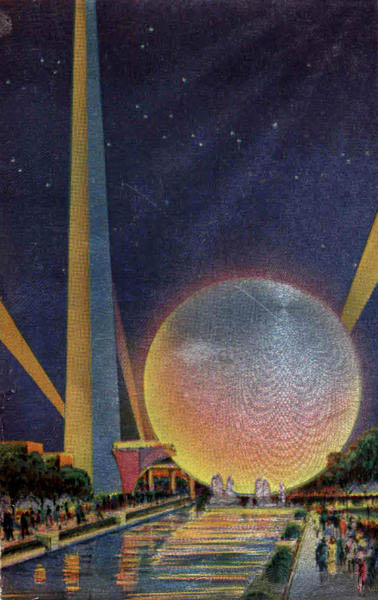
trylonperisphere
The Trylon and Perisphere as seen on a tinted postcard from the New York World's Fair.
vandervelde
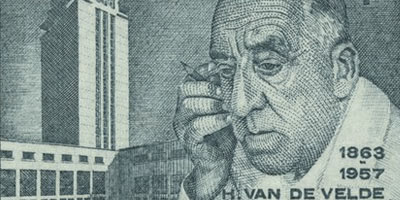
Henri Van De Velde, Art Nouveau architect, who designed the Belgian Pavilion for the 1939 World's Fair.

It was almost ten years since the beginning of the Great Depression. The United States still struggled with high unemployment and economic problems that arguably were prolonged by the policies of Herbert Hoover and FDR. Then the nations of the world came to Flushing Meadow Park in New York. The World's Fair would show a world of the future. New architecture, new roads, new appliances and a better life were portrayed in a variety of displays.

As powerful people in Europe schemed to remake the world under their forced leadership, companies such as General Motors rolled out their plan to remake the world with new technology. Grandma probably saw a new automatic washing machine at the fair but she wouldn't actually own one until the great war was over.

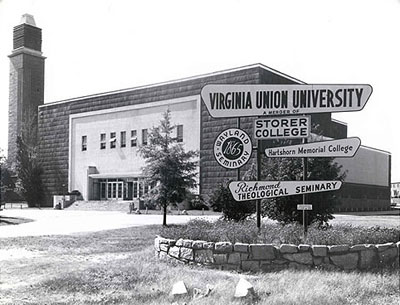
Belgium chose Art Nouveau pioneer Henri Van De Velde [1.] to design its pavilion at the fair. It's distinctive tower featured a 35 bell carillon. As the fair drew to a close in 1940, Europe was at war. Soon the world would be engaged in fierce conflict. Germany had occupied Belgium and the Belgian government was in exile. Virginia Union University obtained the pavilion and raised the money to reassemble it in Richmond.
belgian007
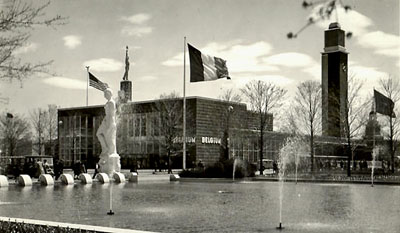
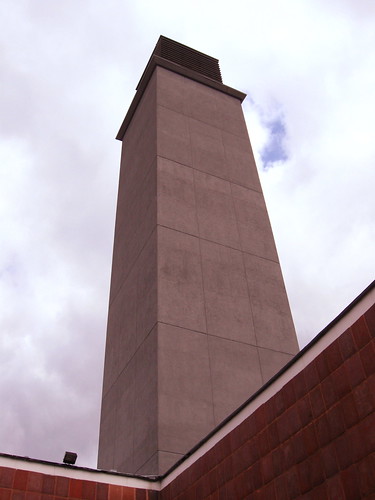
The Belgian Pavilion as it appeared in Flushing Meadow Park for the 1939 New York World's Far. Note Van De Velde's distinctive vertical glass block detail on the tower which has been lost in modern restorations of the building.
belgian008
The Belgian Pavilion as reconstructed at Virginia Union University. The tower's glass block detail is still visible.
Sunday, February 28, 2010

The Belgian Pavilion from the 1939 Fair

How it Ended Up at Virginia Union University

Belgian Pavilion
The Carillon of the Belgian Pavilion from the 1939 New York World's Fair. You can see it from interstate 95 driving through Richmond.

Constructed of native Belgian materials and designed by Henri van de Velde, the pavilion is a fine example of Art Nouveau architecture. My Mother used to point it out as we drove through Richmond. You could see the tower from the highway.

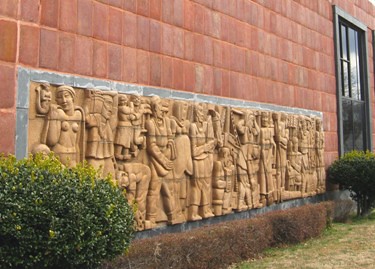
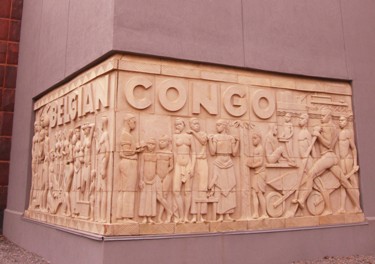
The exterior of the pavilion featured two large sandstone relief sculptures by Oscar Jespers and Henry Puvrez depicting Belgians at work and the Belgian Congo. These works were impressive in their own right.

But how did this significant piece of international architetural history end up in Richmond? The answer has to do largely with the situation in Europe. By the time the fair closed, Germany had occupied Belgium and the Belgian government was in exile. The original plan to ship the building and its 35 bell carillon back home was no longer possible. The Belgian government in exile decided to seek a fitting home for the building at an American institute of higher learning and Virginia Union University won the honor.

The President of the University, Dr. John Ellison, led the successful effort to raise the funds needed to move the building and the rest is history. The building housed a gymnasium, laboratories and the library. Today it houses athletic offices and a fitness center.

Sandstone relief by Oscar Jespers and Henry Puvrez
Sandstone Relief by Oscar Jespers and Henry Puvrez depicting life in the Belgian Congo.

Sandstone relief by Oscar Jespers and Henry Puvrez
Sandstone Relief by Oscar Jespers and Henry Puvrez of Belgians at Work.