Showing posts with label Vision. Show all posts

Wednesday, March 19, 2014

THYME Magazine: A Case for Vision

Citizen Journalism with a Better Flavor

vision
Volume VII, Issue XIII

A Case for Vision X

Over the past nine weeks we have been exploring the case for vision. The complete series may be seen here:

A Case for Vision I [click to read]
A Case for Vision II [click to read]
A Case for Vision III [click to read]
A Case for Vision IV [click to read]
A Case for Vision V [click to read]
A Case for Vision VI [click to read]
A Case for Vision VII [click to read]
A Case for Vision VIII [click to read]
A Case for Vision IX [click to read]

"We Can Build That"

The president’s statement two years ago that “You didn’t build that. Somebody else made that happen” is a very concise summary of the danger posed by modern progressive liberalism to the heart of the American idea and experience, as represented by its Constitution, founding principles, and the reasons for its modern success." -- C. Boyden Gray.

In an article entitled We Can Build That [click to read], in The American Conservative, Gray examines the often dismissed case for enlightened self interest and the Scottish Enlightenment's exploration of greed as a private vice, but a public benefit. He cites Bernard de Mandeville's The Fable of the Bees: or Private Vices,Public Benefits. Modern thought is quick to come down on "corporate greed," even as it promotes a hedonistic level of "self expression." Again, Gray's article shows that human nature is more like a spirited Arabian horse. The energy and spirit of the animal might well be gentled to some noble purpose. Indeed, Adam Smith asserts:

“It is not from the benevolence of the butcher, the brewer, or the baker that we expect our dinner, but from their regard to their own interest.”

But, earlier in this series, A Case for Vision, it was rightly stated that markets will provide slavery and destructive things as well as food, clothing and shelter. Just as a bridle is necessary if one is to employ the energy of a fine horse, the Golden Rule and the Rule of Law are essential components of the process. Perhaps the biggest myopia in progressive thinking is the thought that private morality is somewhat irrelevant. Corporations are evil because they operate in the realm of self-interest, but government is somehow going to operate on a higher plane because there is no "profit motive."

Perhaps the best way to illustrate the fallacy of such thinking is with an historical example. In the days of William H. Howland [click to read] the city of Toronto moved from a lawless society to one influenced by the private morality of its great mayor:

"Because of his great compassion for the poor, he was elected as Mayor of Toronto in 1885, with a strong mandate to clean up the city. Howland signaled his arrival in the mayor’s office by installing a twelve-foot banner on the wall, reading, "Except the Lord Build the City, the Watchman Wakes but in Vain". Despite fierce opposition, Howland was so successful, that Toronto became nicknamed "Toronto the Good". As champion of the poor, Howland and his Alliance friend, Rev. John Salmon, would tramp the lanes and alleys, feeding the poor, praying over the sick, and comforting the sad. With a population of just 104,000, Toronto had over 800 licensed and unlicensed saloons. Over half of all criminal offenses recorded in 1885 were related to drunkenness." -- Reverend Ed Hird

Reverend Hird goes on to document the work of Howland to enforce laws already on the books and improve sanitation services to the city. The work of Howland actually resulted in a decrease in saloon business. Now the interests of the people were redirected into the providing of nobler things. On the eve of his reelection, a group of saloon owners hired all the taxis in an effort to keep people from the polls. Women had recently been enfranchised, however, and great numbers of them trudged to the polls through the snow to give Howland a resounding victory.

The moral of the story is that Howland's private sense of morality led him to press against the corruption rampant in the city government. The revivals happening in the city enlightened the self-interests of citizens, who turned from drunkenness to the building up of community and home. It is a story that has often replayed itself in the affairs of humanity. It speaks of a balance we in our time might do well to regain. I recommend The Reverend Ed Hird's excellent article: William H. Howland [click to read] as an example we might emulate.

"Afterward he brought me again unto the door of the house; and, behold, waters issued out from under the threshold of the house eastward: for the forefront of the house stood toward the east, and the waters came down from under from the right side of the house, at the south side of the altar.

Then brought he me out of the way of the gate northward, and led me about the way without unto the utter gate by the way that looketh eastward; and, behold, there ran out waters on the right side.

And when the man that had the line in his hand went forth eastward, he measured a thousand cubits, and he brought me through the waters; the waters were to the ankles.

Again he measured a thousand, and brought me through the waters; the waters were to the knees. Again he measured a thousand, and brought me through; the waters were to the loins.

Afterward he measured a thousand; and it was a river that I could not pass over: for the waters were risen, waters to swim in, a river that could not be passed over.

And he said unto me, Son of man, hast thou seen this? Then he brought me, and caused me to return to the brink of the river.

Now when I had returned, behold, at the bank of the river were very many trees on the one side and on the other.

Then said he unto me, These waters issue out toward the east country, and go down into the desert, and go into the sea: which being brought forth into the sea, the waters shall be healed.

And it shall come to pass, that every thing that liveth, which moveth, whithersoever the rivers shall come, shall live: and there shall be a very great multitude of fish, because these waters shall come thither: for they shall be healed; and every thing shall live whither the river cometh.

And it shall come to pass, that the fishers shall stand upon it from Engedi even unto Eneglaim; they shall be a place to spread forth nets; their fish shall be according to their kinds, as the fish of the great sea, exceeding many.

But the miry places thereof and the marishes thereof shall not be healed; they shall be given to salt.

And by the river upon the bank thereof, on this side and on that side, shall grow all trees for meat, whose leaf shall not fade, neither shall the fruit thereof be consumed: it shall bring forth new fruit according to his months, because their waters they issued out of the sanctuary: and the fruit thereof shall be for meat, and the leaf thereof for medicine." -- Ezekiel 47:1-12

We are in need of a Great Miracle today. Other generations have faced times like this as well. In previous times of national peril, our LEADERS called for prayer. Today it is necessary for people of faith everywhere to pick up that fallen standard and lift it high. If we will prepare our own hearts, like soil for the planting, HE will plant the seed. If we will cultivate what G-d plants, nurturing it to maturity, HE will provide the bountiful harvest. If we will prepare the land, G-d promises to HEAL it. History (REAL history, that is) is filled with stories of just such promise being realized in the lives of ordinary men and women.

But to participate in promise requires a relationship. G-d is not some abstract concept, but rather He is the Author/Creator of the Universe. He has a NAME... a Name so Holy as not to be uttered lightly on Earth, but a Name, to be KNOWN by. And how shall I find this G-d? There are men and women in this world who converse with Him in prayer. It is through relationship with THEM that we may be introduced to the Magnificent One, the G-d of Redemption. I am at best a poor disciple of His, but I am His disciple. You should not be introduced to Him by some formula in the writings of man, but rather in the Inspired Words of His Own Testimony. That is why I, and many more of His disciples stand ready to open the Holy Scriptures WITH YOU. In them you will find the Life and Light I speak of. The Food Channel cannot actually nourish you. You must step into the room where the meals are served.

An Earthly author cannot see the 'Great Miracle' that you, the reader, desperately need. But we CAN go together to the Master, who indeed knows what will nourish each of us. It is highly likely that you know someone who knows the Master, who can take you to the place where He can meet you with healing and nourishment. As I write this I pray that that person might indeed come to mind. Before I came to faith I was keenly aware that there was a certain brightness and clarity about the lives of certain people I knew. Later I realized that some of them had indeed been praying for me. Yet, you might be reading this and G-d's Holy Spirit may be speaking to you and you are not sure who to go to. You may comment to this and it will not be published. I moderate all comments. Thus if you would like to know G-d as Reedemer, let me know in the comment block how to get in touch. It will not be made public. It is my desire that you be able to find the 'Living Water' that you so deeply desire.

The greatest miracle is not the parting of the sea or the feeding of thousands, it is the transformation of the human heart. That is the miracle that gives us access to G-d. It is in knowing G-d that we will find far more than we were looking for in the first place!

The Story of Amazing Grace
Wednesday, March 5, 2014

THYME Magazine: A Case for Vision VIII

Citizen Journalism with a Better Flavor

Thyme0711
Volume VII, Issue XI

A Case for Vision VIII
© 2014 The Kirchman Studio.

What model best advances a society? What will propel us to new frontiers in creativity and to meet the needs of humankind most effectively? Again, history provides examples to learn from. We know intuitively that the American Revolution didn't happen in a vacuum. We know that John Locke's writings provided a model for Jefferson, but like any great work there is more to its creation than first meets the eye. If one takes a magnifying glass and looks closely, what might we learn? Before Bristol could revitalize itself, before the good of eliminating slavery could be accomplished that would necessitate Bristol's revitalization, there was profound societal change that would usher it in. In their book The Poverty of Nations [click to read] Wayne Grudem and Barry Asmus present the story behind the story, as it were. In 1688 England experienced its Glorious Revolution, where leaders of Parliament asked William of Orange to invade England and take the throne from James II. With an army of fifteen thousand Dutch soldiers, William overthrew James II who did not even resist his removal. The Glorious Revolution had the effect of limiting the king's power while vesting the power to govern in Parliament. Here we have a representative body assume real power and a firm check against absolute monarchy. The result was a greater pluralism in representation and what Daron Acemoglu and James A. Robinson hail as: "the world's first set of inclusive political institutions" in their book: Why Nations Fail. [1.]

William of Orange had been schooled in the thought of the Reformation. That Revolution, though many think of it as 'merely' spiritual, actually caused a paradigm shift in the culture as men and women were encouraged to pursue relationship with the Divine through each one's reading of the Scripture. The result was that personal literacy was encouraged, education flourished and everyone in the society was now able to work with new ideas. Jewish culture already encouraged such individual study and those cities in Europe who encouraged their Jewish communities rather than surpress them enjoyed the fruits of inventiveness and industry as well. Conversely, those who's cultures maintained the creative sector in the hands of a powerful few often surpressed this wonderful culture of creativity. The pograms of Czarist Russia and the Inquisition of Spain ultimately had the effect of squelching the healthy freedom of inquiry and exchange of ideas that propelled Post-reformation Northern Europe forward. Religious Freedom was a necessary byproduct of Reformation. It did come into being in at least limited form in some countries of Northern Europe. The desire for Religious Freedom spurred a number of diverse Faith communities to come to the new world. New England's Pilgrims and Maryland's Catholics sought it. The Anabaptists and the Presbyterians who crossed Virginia's Blue Ridge did as well. [2.]

The advancement of human freedoms seen in the Eighteenth Century might well be seen in the light of the quest for Religious Freedom. The First Amendment of our Constitution, if you read it in its entirety (not just, as some do, for the 'Establishment' clause), places Religious Freedom as a basic right and prohibits government from infringing upon it. It is a 'Negative Liberty' to be sure, but an essential one. The First Amendment also protects thought and speech from government 'oversight.' That is why the recent selective enforcement actions of the Internal Revenue Service are so unconstitutional. In surpressing Conservative and Religious speech they have become an agency of the government to trample on a hard-won expression of a basic human right! [3.]

"Let thy work appear unto thy servants, and thy glory unto their children. And let the beauty of the Lord our G-d be upon us: and establish thou the work of our hands upon us; yea, the work of our hands establish thou it." -- Psalm 94:16, 17

In 1776, more than a hundred years after the Glorious Revolution, Adam Smith wrote in An Inquiry into the Nature and Causes of the Wealth of Nations: "That security, which the laws of Great Britian give to every man that he shall enjoy the fruits of his own labor, is alone sufficient to make any country flourish. The natural effort of every individual to better his own condition, when suffered to exert itself with freedom and security, is so powerful a principle, that it alone, and without any assistance, not only is capable of carrying on the society of wealth and prosperity but of surmounting a hundred impertinent obstructions with which the folly of human laws too often encumbers its operations; though the effect of these obstructions is always more or less either to encroach upon its freedom or to diminish its security. In Great Britain industry is perfectly secure; and though it is far from being perfectly free, it is as free or freer than in any other part of Europe."  [4.] The Eighteenth Century saw the results of mankind loosed from the bonds of serfdom where he toiled under the oversight of a Lord for protection and also loosed from the constraints of the 'Divine Right of Kings,' also a supposed provider of protection. The grim reality was that such 'protection' included the obligation to fight in the king's wars, be they righteous or capricious. Meno Simonsz had resisted this policy and he and his followers endured much persecution for it. [5.]

The American Experiment owes much to the migration of persecuted Religious people to her shores. The Pilgrims landed in Massachussetts and proceeded to build their community. At first they held all things in the commons, no doubt seeing it necesary to be unified in carving out a new life in the frontier, but after a disasterous start this changed. William Bradford assigned each family their own plot of ground and since everyone 'owned' his productivity; productivity soared. The starvation and lackluster participation of some citizens in the common agriculture was changed as each man pushed his own farm to thrive. [6.] The new model, seen in the Jamestown colony as well, placed the armory in the commons but placed industry in private hands. Now a man had incentive to learn better methods, since he and his family would literally reap the benefits. This was not so much 'rugged individualism' as modern writers often surmise, but a cooperation of free individuals each pursuing their own industry, but coming together to protect themselves from common threats and coming together to bring in their bountiful harvests. Next to the armory, in the center of the commons, was the church. Faith was even more essential than dry powder for the security of the community.

When the Moravians setled in the Piedmont of North Carolina to peacefully farm, they built the town of Bethabara. At the center of Bethabara was the Gemeinhaus, where the Moravians met for worship. There was a bell that was rung several times a day to remind the faithful to pray. Bethabara was never attacked by Native Americans and in fact developed good relationships with the surrounding tribes. They later learned that hostile factions in those tribes had indeed organized a number of attacks on Bethabara in its earlier days. Sneaking up on the little community they had assumed they had been scouted out when they heard the ringing of the village bell and they rapidly reatreated! The Moravians, in fact, long enjoyed good relations with nations like the Cherokee, since single Moravians lived as a longhouse people, much as the Native Americans. There was, in fact, a large Moravian Cherokee settlement in the pre-removal era. Sadly, they were massacred in the buildup to the Cherokee Removal. The Moravians became for a time a major force in world evangelism, living the promise of the Gospel among people around the globe. [7.]

Acemoglu and Robinson note that some institutions produce great freedom and advancement while others do not. They seem to argue that institutions can be perfected but are at a loss as to how this actually happens. In the Nineteen-sixties nations around the world seemed poised to participate in the American Experiment. Colonialism was coming to an end. In African nations freed from colonialism. Beautiful African delegates in traditional robes met in gleaming new assembly halls as they proudly presided over an entire Continent emerging from Colonialism. The U. S. Constitution was frequently used as a model as these nations set a new course. National Geographic photos and articles from the period paint the picture of a bright future emerging. But as Uganda, once the 'Pearl of Africa' sank into horrible despotism; tribalism intermixed with 'anticolonial' Marxist politics resulting in the wholesale slaughter of millions; much of Africa descended into a new Post-Colonial period of darkness. Hutus and Tutsis warred in a costly conflict that destroyed their society. What happened? The models were good. But something was lacking in the foundation. Acemoglu and Robinson have no explaination as to why some institutions succeed and other, similar institutions fail. Asmus and Gruden present a compelling case that the whole model includes soundness in the culture, a soundness rooted in faith. (to be continued)

MASS00001

MASS00002

MASS00003
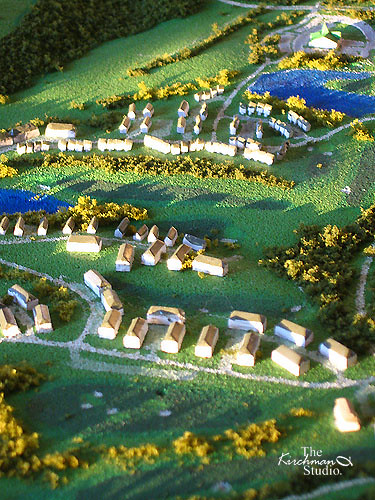
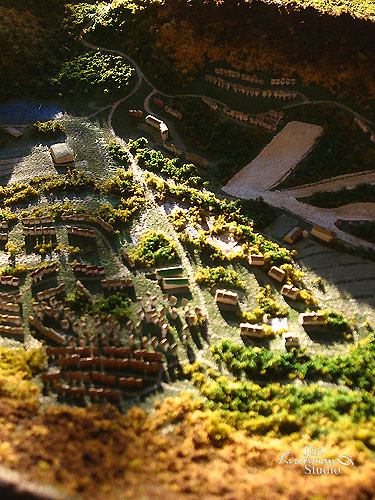
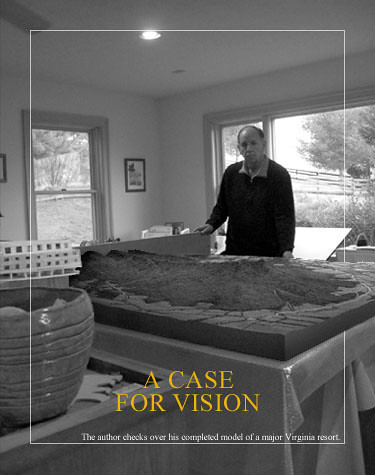
Scale model of Massanutten Resort by the Kirchman Studio.

Wednesday, February 26, 2014

THYME Magazine: A Case for Vision VII

Citizen Journalism with a Better Flavor

THYME0709
Volume VII, Issue X

A Case for Vision VII
© 2014 The Kirchman Studio.

Our nation is in need of an I. K. Brunel's vision today.  Our situation is no less dire than that of Bristol in the Nineteenth Century and we need to find direction, both in spirit and economically, if we are to emerge successfully. [1.] Looking at what is happening in North Dakota it is imperative that we find similar opportunity for people in every state of the union. Where shall we look for a vision of the future? Certainly not to an administration that sees massive unemployment and underemployment as a good thing! Many of us have seen our hopes and dreams take a serious hit from the policies of this administration. The marketplace has less resources available to support the creative endeavors we are now supposedly 'free' to pursue. Just ask anyone actually selling fine art these days. People need to be making money in order to spend it! If you are looking to the National Endowment for the Arts to fund your work, guess what? Diminishing tax revenues means less money to fund 'public' art. In fact, the government will be hard pressed to meet obligations such as Social Security and Medicare.

The current administration has no intention of encouraging the true creative sector in this country. In fact, it is becoming quite clear that they WANT us discouraged. Our discouragement is essential for them to implement their 'fundamental change' to the country we live in. That is why we must not succumb. I would like to, in the spirit of Theodor Herzl's Aultneuland, give you reason for hope and reason to stay in the fight as well! Herzl was a man with a vision. In Altneuland he was spot-on in describing the nation that was born, or reborn, if you will in the creation of modern day Israel. When Herzl wrote his novel the land was securely in the hands of the Ottoman Empire. In 1917 England's foreign secretary Arthur Balfour wrote a declaration stating that this land should indeed be given as a homeland to the people who had inhabited it since ancient times. World War I saw the end of the empire and British control. It wasn't until 1947 that Israel was truly 'reborn' in the wake of that terrible war.

So, it is essential for us in our time to keep the vision alive that created our own republic. We need to teach our young people, instructing them in the Faith and values that are the true foundation of America's remarkable story. Just like Bristol, England in the Nineteenth Century, we need to look beyond our immediate boundaries and see new possibilities. I believe that ultimately the unseen hand of creativity and human ingenuity can prevail. Will we live to see new wonders? I believe in G-d. I believe in inspiration, and I believe in Imago Dei... the knowledge that in creation G-d did indeed give mankind a small spark of His own creative energy. When Samuel Morse telegraphed: "What hath G-d wrought?" he was correct in his attribution even as he worked with his own hands to make the device. Now we need to be open to the same sort of inspiration. There are things we can make again (or for the first time)!

Consider the more recent story of R. G. LeTourneau, who's company had been awarded a contract to build a machine to lift airplanes by the government during the great war. No one had ever built such a machine before, and the engineers were stumped. Wednesday evening rolled around and LeTourneau announced to his stunned team that he was going to a prayer meeting. "But, sir,... We've got a deadline on this thing!" The great industrialist replied: "But I have a deadline with G-d." LeTourneau went to the prayer meeting. He sang praises and poured out his heart in earnest prayer. He said that walking back to his office from the prayer meeting, he 'saw' the design he was seeking for the machine clearly in his head! What if a modern-day Brunel were indeed to create new dorways for American commerce, as American ingenuity continues to finds new sources for energy to power that commerce. Just think, new geothermal resources powering new frontiers in American inventiveness.

I, for one, refuse to believe that the age of inspiration is past. I do believe that it is essential that we return to the roots of Faith and freedom that have given birth to the American experiment and sustained it. It is not enough to be brilliant in business if we squander the return it gives us in a false sense of entitlement: "For unto whomsoever much is given, of him shall be much required." -- Luke 12:8 So, come with me, in the spirit of Aultneuland, to an America not too far in the distant future. Let us visit a land where a greater vision prevails than simply profit or personal reward. In my youth we once rode the train into Philadelphia from Baltimore. At the time, when you entered into Pennsylvania from Delaware, you were greeted by a large sign that read: "What Chester Makes Makes Chester." The city of Chester was at the time a center of manufacturing and it indeed saw itself in terms of its contributions to the world.

Would that we would see ourselves as contributors to the world once more! If Herzl were to step into his beloved Zion today, he would be amazed to see the center of advanced technology she has become. He would wonder at technologies being developed there that might one day give sight to the blind! Though he forsaw them, the modern cities such as Tel Aviv would still astound him! He would see the amazing works of irrigation that have made Israel the garden state of the world. The flowers we had at our wedding in 1980 came in boxes that proudly proclaimed that they were grown in Israel. Abraham the Patriarch was given the promise in Genesis 22:18: "And in thy seed shall all the nations of the earth be blessed; because thou hast obeyed my voice." What wonderful contributions might we as a people make to the world if we will ourselves heed the voice of the One who created creativity itself?

chesterport2
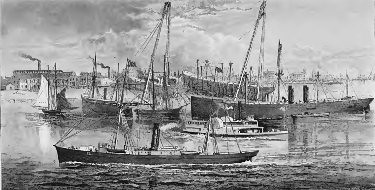
The waterfront of Chester, Pennsylvania in 1875.

Wednesday, February 5, 2014

THYME Magazine: A Case for Vision IV

Citizen Journalism with a Better Flavor

THYME0707
Volume VII, Issue VII

A Case for Vision IV

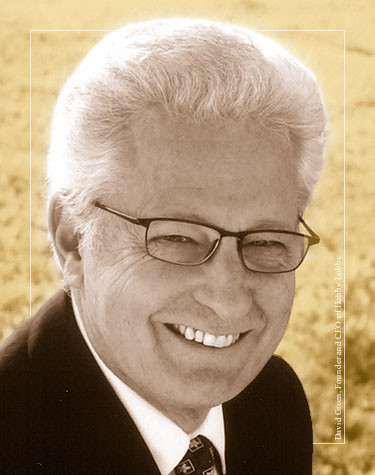
A recent buzz on social media was one to the effect that Hobby Lobby was planning to close stores in response to the Obamacare insurance contraceptive/abortificant mandate. The rumor was not new. The company is actively fighting this regulatory infringement upon its right of conscience. Founder and CEO David Green was quick to respond to the news piece in which he is reported to have announced the downsizing [1.]. Actually Mr. Green said that the company had plans to build 30 or more new stores this year. Doing the news involves checking facts and we found Mr. Green's actual statement in a report issued in conjunction with receiving an award from a major university this past April [2]. The reasons for the award actually spoke volumes about the life and vision of David Green. From the news articles it would appear that Mr. Green was quietly doing what CEOs all do, just running his company to make a profit, when all of a sudden he became the object of Federal regulation. The fact of the matter is that David Green's work itself springs from, and is dedicated to, a higher vision.

Dr. Henry Smith, President of Indiana Wesleyan University said in conferring the honor: "I am excited to announce that Dr. David Green, founder and CEO of Hobby Lobby Creative Centers, has accepted our invitation to the Society of World Changers as our 2013 inductee. David Green is a business leader, an entrepreneur, a philanthropist, an author, a patron of scholarship and culture but above everything else, he is a servant of Christ like any one of us, a saved sinner dependent upon the grace of God and the guidance of the Holy Spirit. He attributes any success he has had to his trust in G-d, and acknowledges that G-d has used that success as a platform to minister to the world. IWU recognized David Green and his achievements previously through the conferral of an honorary doctorate in 1999."[3.]

FORBES notes: "There are very few members of The Forbes 400 who bring religion to work. Most notable are Chick-fil-A's Truett Cathy and Forever 21's Jin Sook and Do Won Chang, born-again Christians who keep Bibles in their office and print John 3:16 on the bottom of each shopping bag. More typical is Warren Buffett, who admits to being agnostic. Green joined Buffett’s Giving Pledge in 2010: His public letter doing so quotes 2 Corinthians ('Each of you should give what you have decided in your heart to give, not reluctantly or under compulsion, for God loves a cheerful giver'). And that's about all that Buffett and Green have in common philanthropically." Green has a vision to change the world and it plays itself out in the way he conducts his business. He does not see any part of his life as outside of G-d's oversight: "You can't have a belief system on Sunday and not live it the other six days."[4.]

Green is the son of a preacher who's small congregations in Oklahoma barely supported their family. He wore hand-me-down clothes and ate many a meatless meal with his siblings. His five siblings all became pastors (or pastors' wives). Green took "the road less travelled," struggling through school and eventually becoming a stock boy in a general store. FORBES says of him: "Green spent most of his time sweeping floors and unloading boxes for 60 cents an hour, but he fell in love with the romantic idea of buying something for 10 cents and selling it for 20." He served in the Air Force Reserve, and was working as a manager at TG andY stores when he borrowed $600.00 to buy some picture frame making equipment. He and his wife Barbara and another manager literally started the business working on his kitchen table. Their first product was miniature picture frames which they began selling in 1970. In 1972 they opened their first 300 square foot retail location.

Green credits the bead buying craze of the hippies for growing his business to the point that he was able to quit his day job and open a larger store in 1975. Barbara was not thrilled. Those days he was doing about $100,000 in sales and TG andY was doing two billion. Today Hobby Lobby makes well over three billion dollars annually. He speaks candidly of the businesses' struggles and near failure. In 1985 the business was overleveraged and struggling under the weight of bad inventory decisions. Green says of that time: "It was a pride problem, and I had to get rid of it. It's sort of like God says to me, because I was arrogant, 'I'm going to let you have it by yourself.'" Green prayed, worked hard, cut costs and negotiated with his creditors. In the end his perserverance paid off and the company not only survived, but thrived.

Hobby Lobby stores close on Sundays to allow staff time to worship and enjoy time with family. He starts employees well above minimum wage and sees the company's profitability as a gift from G-d. He has given much to further the work of the Gospel and Christian education. Green says: "I want to know that I have affected people for eternity. I believe I am. I believe once someone knows Christ as their personal savior, I've affected eternity. I matter 10 billion years from now." Dr. Henry Smith says of him: "We thank God for David Green's example precisely for that reason: because he sees his wealth as God's possession rather than allowing himself to be possessed by it; because he judges himself by the standards of Heaven and not of earth; and because he recognizes that his own efforts are in vain unless he trusts and depends upon the Holy Spirit." [5.]

A Vision For Work and the World

"Let thy work appear unto thy servants, and thy glory unto their children. And let the beauty of the Lord our God be upon us: and establish thou the work of our hands upon us; yea, the work of our hands establish thou it." -- Psalm 90:16-17

I am reading The Poverty of Nations, A Sustainable Solution [click to read] by Wayne Grudem and Barry Asmus. It examines the reasons successful nations are successful and how successful nations can forget the roots of their success and fall into decline. Like Alvin Schmidt's Under the Influence [click to read], the book does not hide the influence of Biblical principles in advancing the state of humanity. As many in the academy and the media today criticize free markets, Grudem and Asmus point out that the flaws are not necessarily a flaw in free markets, but in human morality. If a people have no moral barrier to it, markets will indeed deliver drugs, slaves and a host of evils, but that is not necessarily a fault of a free market. Indeed the attempts of government to control such evils will inevitably cost far more than imagined and have far less effect on curtailing the evils than proponents of such action desire. Thus the authors show how the Rule of Law, Respect for Property and Good Leadership are all essential for national prosperity... these things being rooted in values presented in the Bible.

Markets, influenced by morality, are actually quite fertile for creativity. When the slave trade was ended in England by William Wilberforce, the initial result was the economic decline of the port of Bristol. Creativity responded to the need as Isambard Kingdom Brunel built the Great Western Railway and steamships to link Bristol to America. The heart of George Müller ministered to Bristol's cast off children, but it was possible largely due to the creativity that linked Bristol to the economic pulse of the world. In fact, Grudem and Asmus point out that a wonderful coming together of talents and resources occurs in markets that requires no huge agency of oversight. In a simple little story called I Pencil, the beauty of this phenomenon is wonderfully illustrated.


I Pencil.

"No single person on the earth could make a pencil without the help of countless others."

Read, Leonard E., "I, Pencil: My Family Tree as told to Leonard E. Read." [click to read] 1999. Library of Economics and Liberty. 5 February 2014.

Friday, January 1, 2010

Virginia's Tomorrow

With the Right Vision it Could Be Bright Indeed!

Floating Biosphere
Innovative structures might house offshore energy workers. The towers turn to catch the advantage of sun and wind...

Virginians resoundingly voted for a new tomorrow [1.] this past November.The election of Bob McDonnell alone would signify that. The sweep byMcDonnell, Bolling and Cuccinelli is more like a mandate. There is clearly support for a Reagan-like revolution in the direction of stateleadership. Here is a look at what the future might hold for the Commonwealth.

1. A Push for Energy Independence

It’s no secret that Governor McDonnell wants to see Virginia’s natural resources, including offshore drilling rights, fully exploited. In a letter to Ken Salazar [2.] he makes that very clear. Offshore drilling can be done safely and would provide new jobs in the energy sector for the state. Drilling revenues would energize the state’s economy and, if managed well, lead to sustained economic health.

Cheaper, locally produced energy must be a priority. North Anna’s remaining reactor needs to be built. A healthy mixture of ‘new’ and old technologies must be put into play to ensure reasonably priced and readily available power.

2. Leaner Government Expenditures

The states in the Union with the worst economic situations such as California and New York are the ones with the most unsustainable spending. The only alternative to cutting spending is a round of job-killing tax hikes which create reduced revenues in the long run as industry is hobbled by rising costs.

With surveys showing that the average government worker salaries are higher than those in the private sector it is time for some wage freezes in government. Some functions would be more affordable if outsourced to private contractors. A hard eye needs to be applied to requests for ‘new’ computer systems to ‘increase efficiency.’ Often the new system creates learning curve inefficiency and incompatibility issues. It might make more sense to procure smaller ‘off the shelf’ solutions for known issues. By doing so you reduce the learning curve loss to one department and target the solution. The ensuing ‘compatibility issues’ are of a much more manageable size.

3. Private Enterprise Taking Over

In the socialist country of France, one sees fine highways and bridges that have been built and are operated through private companies that are contracted to build and maintain them. Virginia already has the Dulles Toll Road operating under a similar contract. Interstate 66 from the beltway into Washington presents a similar opportunity.

A private contractor should be charged to operate the facility with congestion tolls and elimination of the HOV only status. Additional lane capacity should be considered and paid for by bonds to be retired through the toll.

Privatization of ‘public’ transportation should be considered as well.

4. Freedom and Market Principles in Education

Educational choice should become a real force in Virginia’s preparation for her future. Tax credits for those pursuing alternatives to public education would put real market competition into play. More importantly, this move would put real opportunity inthe hands of Virginia students.

5. Medical Reimbursement Reform on a State Level

The state can promote policies such as tort reform and increased market competition in the insurance industry. Medical savings accounts should be not only encouraged but rewarded through tax treatment.

Floating Biosphere
...and provide new alternatives to building on agricultural land.

Never Forget
Virginia's greatest resource is a creative and diverse population. Xaver Wilhelmy, a transplanted Austrian, developed these innovative glass organ pipes...

Sound Sculpture
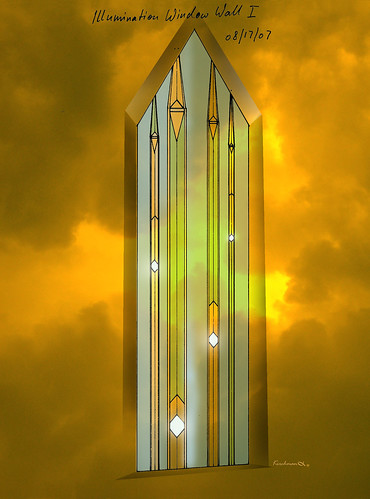
...and even envisioned them integrated into church windows!

Green Building
This piece of innovative architecture captures water that would ordinarily be lost to the street and storm drain.

afton001
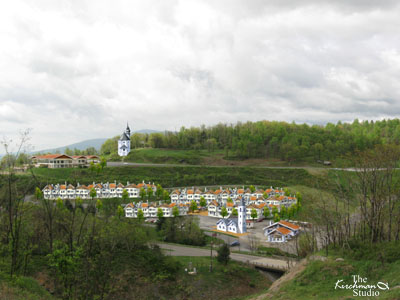
Projects like the Village at Afton [3.] would create jobs and encourage tourism in our area.

1. Based on 'New York's Tomorrow' special edition of City Journal. Many of the principles outlined therin would be applicable to Virginia's future.