Showing posts with label World War II. Show all posts

Saturday, February 7, 2015

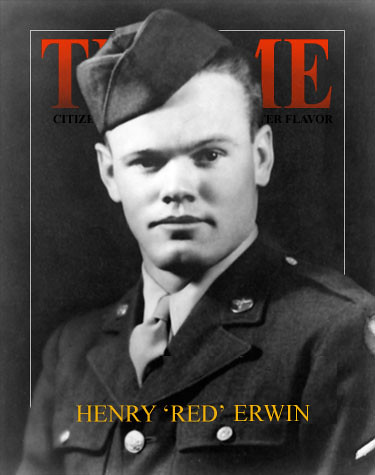
THYME Magazine: Henry 'Red' Erwin

Citizen Journalism with a Better Flavor

THYME0905A
Volume IX, Issue Va

An Extraordinary Hero

Henry Eugene Erwin was born in Docena, Alabama in 1921. His coal miner father died when he was ten. Gene, as he was called then, was the oldest child and he went to work in the company store to help his struggling family. At the height of the depression, Erwin joined the Civilian Conservation Corps and later went to work in a steel mill in Birmingham. He was now his family's main breadwinner. In 1943 young Erwin joined the army. He qualified for the Air Corps and after training on the B-17 Flying Fortress he became a radio operator on the new B-29. This new Superfortress would soon strike deep into Japanese territory in the Pacific.

After getting married to his wife Betty on furlough in 1944, Erwin and his crew were assigned to Guam. Here their plane, the City of Los Angeles would make bombing runs on the main islands of Japan. On April 12, 1944, the City of Los Angeles led a formation of B-29s striking Koriyama.  Part of Irwin's job was to launch phosphorous smoke bombs to lead the other planes in to their targets. As Erwin pushed the smoke bomb into the chute, something went terribly wrong. It either jammed or was blown back, exlpoding in Erwin's face. He was blinded. His flesh was burning and the plane filled with smoke. The smoke bomb, burning at 1300 degrees, had lodged itself among the bombs in the plane!

The pilots could not see. The plane began a dive. It was certain that death would come, but would it be from the certain crash or the explosion from the munitions? Then the crew saw what had to have seemed to them an apparition as Irwin, totally aflame, located the burning phosphorus bomb and grabbed it with his right hand! Holding the white-hot canister against his rib cage, he somehow made his way towards a plane window by the navigator's station. The navigator's table blocked his progress and the seconds it took to raise it must have seemed like an eternity. Fellow crewmen remember Erwin saying: "Excuse me." as he stumbled past them into the cockpit to throw the bomb out the window.

Henry 'Red' Erwin then collapsed to the floor. He was totally aflame and his distinctive red hair was burned away. The crew put out the fire and administered morphine to the man they thought to be at death's door. But Erwin never lost consciousness. In agony, he asked: "Is everybody else alright?" The plane flew to Iwo Jima where there was a hospital.

"I Don't Say I'm a Hero"
-- Henry Eugene 'Red' Erwin


'Red' Erwin talks about the events of April 12, 1944.

Now began the most difficult set of challenges for Erwin. The doctors did not expect him to live, the phosphorous in his eyes would eventually blind him if he did. He was burned over most of his body. Ironically, his Mae West (life jacket) protected his chest as he clutched the red hot bomb. He was required to wear the life jacket during missions because he couldn't swim! Doctors began removing the phosphorous from his eyes. It was a painful process as the substance had a tendency to ignite when exposed to oxygen.

Major General Curtis E. Le May rushed a recommendation for the Medal of Honor through channels, hoping to present it to Erwin while he was still alive. There was only one problem. The only Medal of Honor in the Pacific was in a locked display case in Honolulu. General Le May had been awakened at 5:00 am to sign the Medal of Honor Citation. A special plane had been dispatched to obtain the medal. Finding noone to unlock the case, the airmen assigned to the mission broke the glass, absconded with the medal, and slipped back to their waiting plane.

Erwin had been flown to the hospital on Guam, where General Le May personally pinned the medal on him, saying: "Your effort to save the lives of your fellow airmen is the most extraordinary kind of heroism I know." Through the bandages covering his wounded face, Erwin responded: "Thank you, sir."

Erwin would go on to endure 43 surgeries in the next thirty months. But what might be his greatest giving of himself was yet to come. He did survive. He and Betty raised four children and he lived to see seven grandchildren. Henry 'Red' Erwin, his right arm permanently disabled, could not go back to the steel mills. Harry Truman had issued orders that any Medal of Honor recipient, otherwise qualified, was eligible for a veterans' benefits job. Erwin went to work for the Veterans Administration as a veterans' benefits counselor. For thirty-seven years he worked with wounded veterans, especially burn victims. Though the sight and smell of burned flesh brought back memories of his own intense pain, Erwin took a special interest in encouraging these heroes.

His son, Henry E. Erwin Jr. says of him: "Dad was a man of manners; He was always polite and courteous. He rarely got angry, but when he did, he meant business. He never yelled and screamed, but he had a firmness to his voice when he was angry. ...He embodied all the ideals of the Medal of Honor. He wore them like a well pressed suit. He was honest, thrifty, and patriotic. ...He never owed a debt, never got a ticket, never was sued. He obeyed the law, attended church, and treated everyone with courtesy and respect." On January 16, 2002, Henry 'Red' Erwin died at the age of eighty.
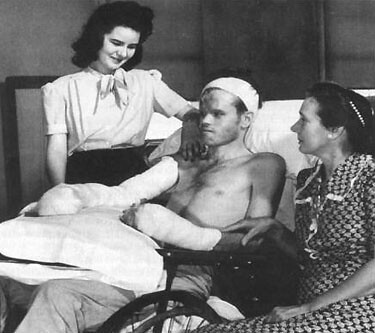
erwinfamily
Henry Erwin with his wife Betty and his mother.
Friday, June 6, 2014

The Longest Day

Remembering June 6, 1944

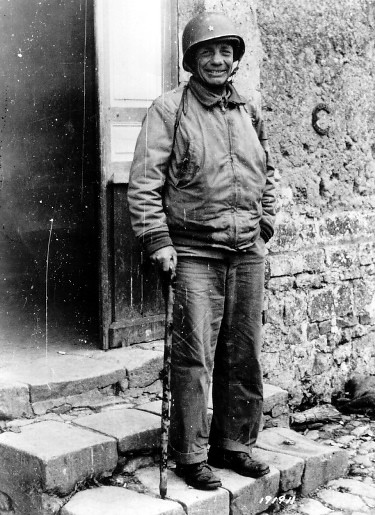
One of my favorite movies is "The Longest Day." My favorite scene in the movie is where General Theodore Roosevelt Jr., Son of the 'Rough Rider' President, pleads to be allowed to accompany his men in the invasion. If you love heroes, the scene will bring you to tears. Finally Roosevelt hears his commander say "permission reluctantly granted. Oh, by the way, how's your arthritis?" "Hasn't Bothered me in months," replies Roosevelt. As he leaves, you see him retrieve the cane he has hidden in some pipes as he heads off down the ship's passageway.

The true story of General Roosevelt is one all of us should know. He repeatedly led groups of men off the beach and achieved an impressively low casualty rate in the beginning of the invasion. He had trained these men and wanted to be with them when they faced the hard test.

trj2
General Roosevelt in France

He was the only general to come ashore in the first wave of the invasion, leading the men out of his landing craft. No doubt his leadership under fire saved many lives.

After battling their way ashore, the troops discover that they have drifted a mile from where they should have landed. It was then that General Roosevelt personally scouted their situation and uttered these famous words: "We'll start the war from right here!"

"Ted Roosevelt on Utah Beach"

Those were the words of Omar Bradley when asked to name the single most heroic action he had ever seen in combat. Major General "Tubby" Barton had reluctantly assented to this plea from Roosevelt:

"The force and skill with which the first elements hit the beach and proceed may determine the ultimate success of the operation... With troops engaged for the first time, the behavior pattern of all is apt to be set by those first engaments. [It is] considered that accurate information of the existing situation should be available for each succeeding element as it lands. You should have when you get to shore an overall picture in which you can place confidence. I believe I can contribute materially on all of the above by going in with the assault companies. Furthermore I personally know both officers and men of these advance units and believe that it will steady them to know that I am with them."

Barton thought he would never see Roosevelt in this life again when he cut those fateful orders. When Barton later came ashore and met up with Roosevelt, he had this to say: "while I was mentally framing [orders], Ted Roosevelt came up. He had landed with the first wave, had put my troops across the beach, and had a perfect picture (just as Roosevelt had earlier promised if allowed to go ashore with the first wave) of the entire situation. I loved Ted. When I finally agreed to his landing with the first wave, I felt sure he would be killed. When I had bade him goodbye, I never expected to see him alive. You can imagine then the emotion with which I greeted him when he came out to meet me [near La Grande Dune]. He was bursting with information."

A month after the invasion, Ted Roosevelt died of a heart condition which would have disqualified him from leading in the first wave. He was buried in France alongside his brother Quenton who had died in World War I. His Medal of Honor citation reads as follows:

"For gallantry and intrepidity at the risk of his life above and beyond the call of duty on 6 June 1944, in France. After 2 verbal requests to accompany the leading assault elements in the Normandy invasion had been denied, Brig. Gen. Roosevelt's written request for this mission was approved and he landed with the first wave of the forces assaulting the enemy-held beaches. He repeatedly led groups from the beach, over the seawall and established them inland. His valor, courage, and presence in the very front of the attack and his complete unconcern at being under heavy fire inspired the troops to heights of enthusiasm and self-sacrifice. Although the enemy had the beach under constant direct fire, Brig. Gen. Roosevelt moved from one locality to another, rallying men around him, directed and personally led them against the enemy. Under his seasoned, precise, calm, and unfaltering leadership, assault troops reduced beach strong points and rapidly moved inland with minimum casualties. He thus contributed substantially to the successful establishment of the beachhead in France."

Remembering Theodore Roosevelt Jr.

It is worth noting that Roosevelt, while a very effective officer, was not liked by everyone he met. Serving in the North Africa Campaign in 1942 under Major General Terry Allen he drew the ire of George S. Patton. Both Allen and Roosevelt went against Patton's spit-and-polish mentality and were seldom seen in dress uniform. Roosevelt was too much of a "hands on" type of guy to strut around avoiding the hard stuff. Patton relieved both Allen and Roosevelt of their commands. Roosevelt went on to fight in Sicily and Italy. He became chief liaison officer to the French Army in Italy for General Dwight D. Eisenhower.

Great men have often struggled in the process of becoming the heroes we remember and that is worth remembering along with their mighty deeds.

The Wind Talkers, Their Code Couldn't Be Cracked

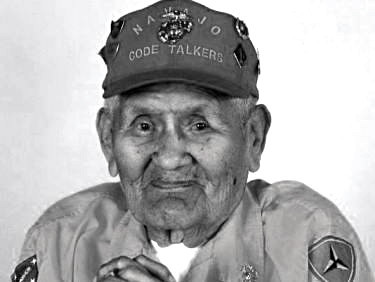
The Last of the Navajo Code Talkers Has Passed Away

navajo
The last of the original 29 Navajo Code Talkers of World War II has died. Chester Nez, died this morning at the age of 93. ht/John Pembroke

The story of the Navajo Code Talkers begins in 1940 when a small group of Chippewas and Oneidas became a part of the radio communications 32nd Infantry Division. Soon after, Sac and Fox tribes joined in the ranks as combat radiomen. The complexity of Navajo linguistics allowed it to become an ideal choice to be used in code due to the lack of documentation made available for learning to speak the language and ability for the same words to mean multiple things based on sound. The Japanese were unable to crack this code for those very reasons.

Saturday, May 24, 2014

Memorial Day in Washington and Arlington

Remembering Those Who Died Defending Liberty

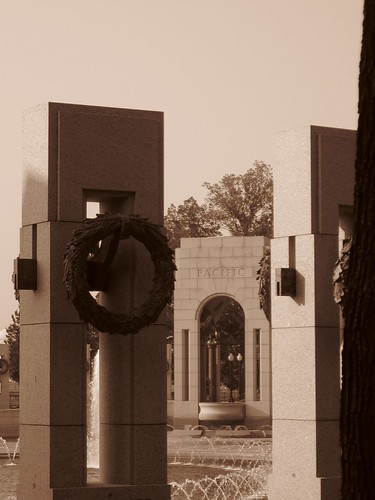
Pacific
The World War II Memorial.

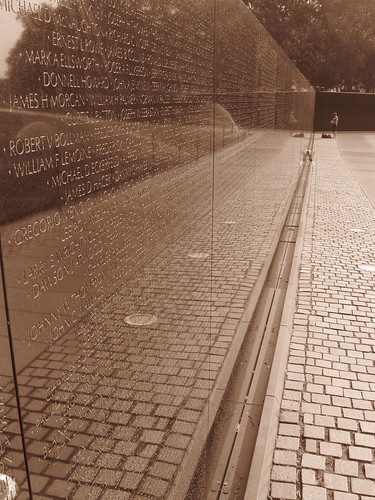
Vietnam Memorial
Vietnam Memorial...

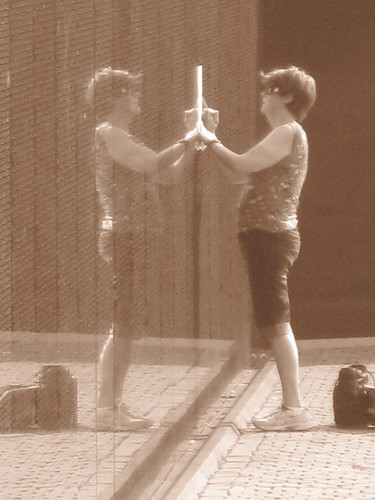
Vietnam Memorial
...and a hero remembered.

IMG_2858
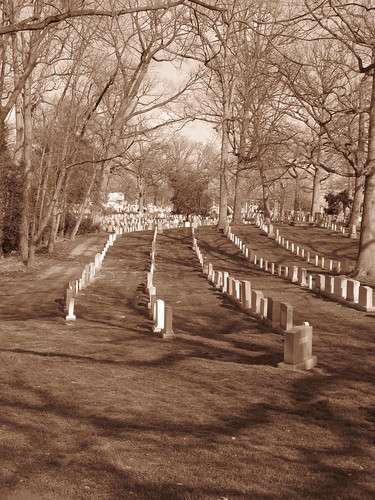
This is the view of Arlington Cemetery from the Old Post Chapel at Ft. Meyer.

IMG_2705
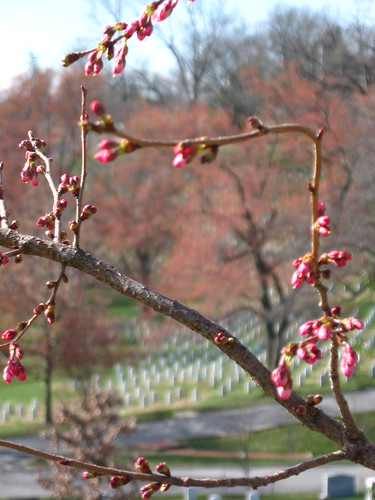
Spring buds in Arlington National Cemetery.

Wednesday, October 2, 2013

A Time When America Faced Her Real Enemies

The Debt We Owe to the Defenders of Liberty

Pacific
The World War II Memorial.

There was a time, in our recent past Century, where the world faced the ugly fact that there was a great evil set to overtake it. The Greatest Generation stormed Omaha Beach and fought long and hard to turn the tide. America's survival was NOT inevitable. Indeed, the Axis powers stood ready to dominate the planet.

After Pearl Harbor our fleet had been battered, and our resolve would be well-tested by the years to come, but our fathers pressed on to take the high ground. Does such resolve still exist in our time? Indeed the news that WWII Veterans [click to read] refused to allow their Memorial to be shut off from them proves that great men still walk our land.

Israel's Prime Minister Binyamin Netanyahu.

As America's President  talks tough about honest opposition to his unpopular healthcare legislation and refuses to allow Congress to fund government operations all would agree on, compare and contrast his rhetoric with the straightforward message of Binyamin Netanyahu. The world has seen the likes of Hassan Rouhani before. Netanyahu, an astute historian, knows how to address them.

America's leadership needs to take a lesson from that of Israel. With Rouhani, "Distrust and verify" is a wise option, but Americans who have pointed out real flaws in the President's "Affordable Care Act" are reasonable and should be negotiated with. The American people have real concerns about this legislation. Holding government services hostage is the worst sort of grandstanding.

Indeed many Americans long for leadership that will take Rouhani to task while opening real constructive dialogue about the problems we face at home.

Thursday, January 20, 2011

End of the World, or a New Golden Age?

It is Wise to Be Prepared for the Possibilities of Both

bering2
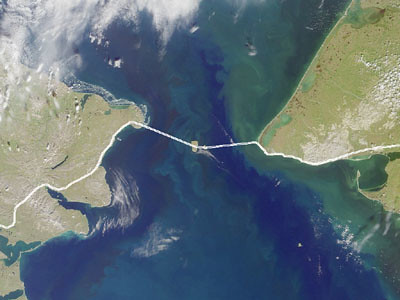
The dream of a bridge between the Americas and Asia has been a staple of publications like Popular Science for years. Will the next generation make it a reality?

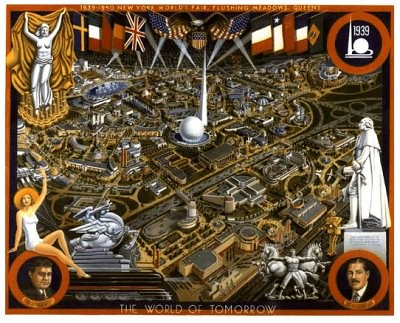
Our parents lived through the Great Depression. Then they saw a war that practically destroyed the Continent of Europe. Our Country had barely survived its birthing and was almost destroyed by Civil War in the Nineteenth Century. Now rising powers across great oceans threatened our continued existence. Still, in the midst of the Depression, the 1939 World's Fair showed us the world of the Twentieth Century.

A few years later the National Socialists in Germany were busy creating Hell on Earth. Surely to a person of faith at that time, the World was ending. For over six million people it did. The attempt to install a new order and a Master Race almost destroyed Western Civilization.

Faith gives us hope in the midst of such dark terror. Certainly the hope expressed in Isaiah 60 and Revelation 21 is necessary to anchor us in such desparate times. One day the Divine will establish His Kingdom. A kingdom that is without end.

Mankind has moved through ages of deep depravity and times that we have come to know as Golden Ages as well. What will we do with the time that is ours?

The great irony is that Heavenly minded men and women, far from being "no Earthly good," have often been the catalysts for building a better life for their fellows. Alvin Schmidt documents this in his book "Under the Influence." Many advances in compassion and society are the result of people like England's William Wilberforce, who championed the abolition of slavery for years, and Charles Dickens, who changed the way society responded to the needy among them.

With our eyes set firmly on the "hope of things to come," will we bring the touch of G-d to our age?, or will we surrender to our dark demons?

Now is not the time for quitting.

CablestayedBSB
The Bering Straight Crossing might have cable stayed sections to allow ships to pass...

bering3
...and miles of floating piers.

Bering_Straitweb
Is the human ability to dream big dreams a gift from the Divine? I believe it is.

I wish a buck was still silver and it was
back when the country was strong
Back before Elvis and before the Vietnam war came along
Before the Beatles and yesterday

when a man could still work and still would
Is the best of the free life behind us now
And are the good times really over for good

Are we rolling downhill like a

snowball headed for hell
With no kind of chance for the flag or the liberty bell
I wish a Ford or a Chevy

would still last ten years like they should
Is the best of the free life behind us now
And are the good times really over for good

I wish Coke was still cola

and a joint was a bad place to be
It was back before Nixon lied to us all on TV
Before Microwave ovens

when a girl could still cook and still would
Is the best of the free life behind us now
And are the good times really over for good

Stop rolling downhill like a snowball headed for hell
Standup for the flag and let's all ring the liberty bell
Let's make a Ford and a Chevy

that'll still last ten years like they should
The best of the free life is still yet to come
And the good times ain't really over for good

--Lyrics by Merle Haggard

beringbridgeUSAweb1
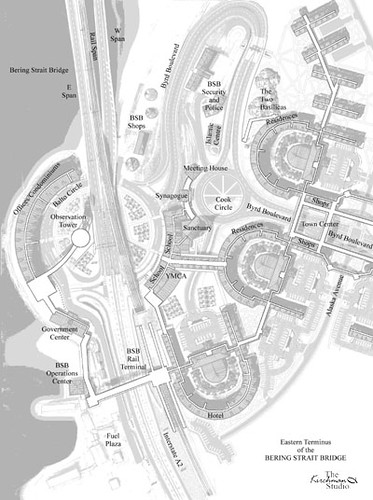
Soon I'll be working with the boys at the Field School again, challenging them to imagine and draw things they might not have imagined before. Here is the Eastern terminus of a Bering Strait crossing...

beringbridgemapweb2
...begun as a prefabricated construction camp. It features an indoor passageway system for times of severe weather.

1939fair
The 1939 World's Fair.

Thursday, June 17, 2010

War Memorial, Halifax, Virginia

Striking Simple Classical Form Gives Tribute

Halifax County War Memorial
Driving into Halifax I noticed this beautiful memorial.

Monday, May 31, 2010

The Longest Day

Remembering June 6, 1944

One of my favorite movies is "The Longest Day." My favorite scene in the movie is where General Theodore Roosevelt Jr., Son of the 'Rough Rider' President, pleads to be allowed to accompany his men in the invasion. If you love heroes, the scene will bring you to tears. Finally Roosevelt hears his commander say "permission reluctantly granted. Oh, by the way, how's your arthritis?" "Hasn't Bothered me in months," replies Roosevelt. As he leaves, you see him retrieve the cane he has hidden in some pipes as he heads off down the ship's passageway.

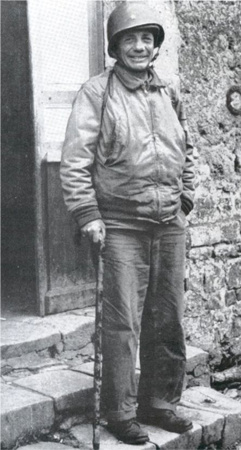
The true story of General Roosevelt is one all of us should know. He repeatedly led groups of men off the beach and achieved an impressively low casualty rate in the beginning of the invasion. He had trained these men and wanted to be with them when they faced the hard test.

Ted_Cane_France
General Roosevelt in France

He was the only general to come ashore in the first wave of the invasion, leading the men out of his landing craft. No doubt his leadership under fire saved many lives.

After battling their way ashore, the troops discover that they have drifted a mile from where they should have landed. It was then that General Roosevelt personally scouted their situation and uttered these famous words: "We'll start the war from right here!"

"Ted Roosevelt on Utah Beach"

Those were the words of Omar Bradley when asked to name the single most heroic action he had ever seen in combat. Major General "Tubby" Barton had reluctantly assented to this plea from Roosevelt:

"The force and skill with which the first elements hit the beach and proceed may determine the ultimate success of the operation... With troops engaged for the first time, the behavior pattern of all is apt to be set by those first engaments. [It is] considered that accurate information of the existing situation should be available for each succeeding element as it lands. You should have when you get to shore an overall picture in which you can place confidence. I believe I can contribute materially on all of the above by going in with the assault companies. Furthermore I personally know both officers and men of these advance units and believe that it will steady them to know that I am with them."

Barton thought he would never see Roosevelt in this life again when he cut those fateful orders. When Barton later came ashore and met up with Roosevelt, he had this to say: "while I was mentally framing [orders], Ted Roosevelt came up. He had landed with the first wave, had put my troops across the beach, and had a perfect picture (just as Roosevelt had earlier promised if allowed to go ashore with the first wave) of the entire situation. I loved Ted. When I finally agreed to his landing with the first wave, I felt sure he would be killed. When I had bade him goodbye, I never expected to see him alive. You can imagine then the emotion with which I greeted him when he came out to meet me [near La Grande Dune]. He was bursting with information."

A month after the invasion, Ted Roosevelt died of a heart condition which would have disqualified him from leading in the first wave. He was buried in France alongside his brother Quenton who had died in World War I. His Medal of Honor citation reads as follows:

"For gallantry and intrepidity at the risk of his life above and beyond the call of duty on 6 June 1944, in France. After 2 verbal requests to accompany the leading assault elements in the Normandy invasion had been denied, Brig. Gen. Roosevelt's written request for this mission was approved and he landed with the first wave of the forces assaulting the enemy-held beaches. He repeatedly led groups from the beach, over the seawall and established them inland. His valor, courage, and presence in the very front of the attack and his complete unconcern at being under heavy fire inspired the troops to heights of enthusiasm and self-sacrifice. Although the enemy had the beach under constant direct fire, Brig. Gen. Roosevelt moved from one locality to another, rallying men around him, directed and personally led them against the enemy. Under his seasoned, precise, calm, and unfaltering leadership, assault troops reduced beach strong points and rapidly moved inland with minimum casualties. He thus contributed substantially to the successful establishment of the beachhead in France."

Remembering Theodore Roosevelt Jr.

It is worth noting that Roosevelt, while a very effective officer, was not liked by everyone he met. Serving in the North Africa Campaign in 1942 under Major General Terry Allen he drew the ire of George S. Patton. Both Allen and Roosevelt went against Patton's spit-and-polish mentality and were seldom seen in dress uniform. Roosevelt was too much of a "hands on" type of guy to strut around avoiding the hard stuff. Patton relieved both Allen and Roosevelt of their commands. Roosevelt went on to fight in Sicily and Italy. He became chief liaison officer to the French Army in Italy for General Dwight D. Eisenhower.

Great men have often struggled in the process of becoming the heroes we remember and that is worth remembering along with their mighty deeds.

Sunday, February 7, 2010

A Hero Remembered...

...But Almost Forgotten!

Here's a Story [click to read] from SWAC Girl that happened because a couple of young people took the time to care.

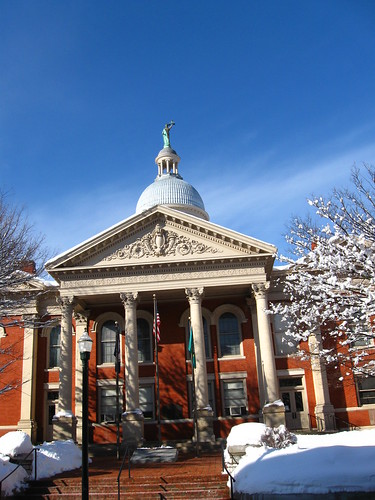
Augusta Court House
Augusta County Court House.

Monday, December 7, 2009

December 7th, September 11th

Never Never Forget...

Phil Reminds Us of the Day that will Live in Infamy {click to read].

Our parents could tell us EXACTLY what they were doing and where they were when they learned of the attack on Pearl Harbor.

On a bright September day I decided to get in a run before work. It was a beautiful blue-sky day. I looked up and thought it would be a day to be flying... It would certainly turn out to be not a good day for flying! When I got to the office the news of the plane hitting the first tower was out. I watched the television in horror as another plane struck and the towers fell. The Pentagon was hit and a plane augered in to a field near Shanksville, Pennsylvania.

Just how big was this attack. Was the world we knew being brought down before our very eyes? All of us prayed.

In the days that followed the sky was eerily quiet. There was not a plane in the sky save for an occasional military craft. I remember sticking my lunch money into a firefighter's outstretched boot. We understood the danger then, as our parents did so long ago. Do we understand the danger today?

Wednesday, November 11, 2009

When Hollywood Honored Veterans

Jimmy Stewart is Who We Need More Of Right Now

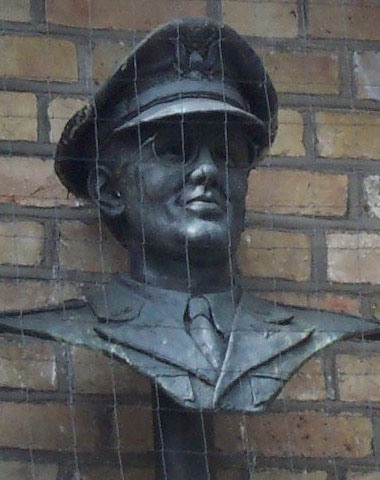
Glenn Miller Bust Bedford
Bust of Glenn Miller in Bedford, England. He played a concert there.

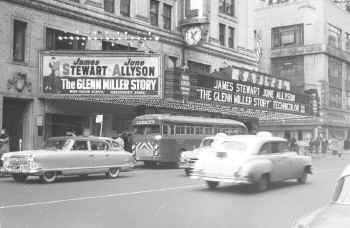
There is nothing like a good film with Jimmy Stewart. My wife and I watched The Glenn Miller Story not long ago. When we watch Jimmy Stewart she wants romance [as in Donna Reed, Wonderful Life], I want Aviation [as in Spirit of Saint Louis, Highway in the Sky or The Flight of the Phoenix]. Wou get the picture. The Glenn Miller Story has a bit of both.

In real life Jimmy Stewart was an Air Corps General. In this tribute to band leader Glenn Miller he portrays Miller working to bring the troops some of the music they loved from back home. The band plays at a British hospital and softly plays 'String of Pearls' as a V-1 'buzz bomb' roars overhead. When the engine stops and the foul device dives in, Miller continues to play softly as the men duck and cover. When it explodes in the distance, the band plays their heart out at full volume to finish the number.

Miller's band was a great morale builder. It continued to do so for months after Glenn Miller's death in a plane crash [or possibly he was shot down] as he flew to France to make advance arrangements for a tour.

GMS-photo7

Thursday, November 5, 2009

Doug Hoffman and Ted Lawson

An interesting Comparison

B-25 Mitchell Doolittle's Raiders
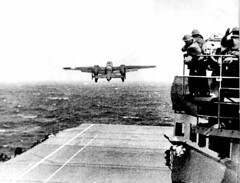
B-25 Mitchell taking off with Doolittle's Raiders.

Fishersville Mike Made This Observation [click to read] about NY 23.

"I'd like to think of his [Hoffman's] campaign as Jimmy Doolittle's raid early in World War II. It was a heroic undertaking to show Japan we were coming and we were going to kick their butts. Democrats take note."

I like the analogy. I remember reading Ted Lawson's book about the raid as a boy. Lawson was the pilot of "The Ruptured Duck" and the B-25 he flew featured nose art of Disney's Donald and crossed crutches. Lawson had come in at the wrong angle in a training flight and scraped the tail of the aircraft, hence the name. New York Republicans may be able to identify with this type of thing.

The plan was to fly over Japan, drop the bombs and land in China. It was a risky plan with no margin built in and Lawson had to ditch his craft. He lost his leg as a result of his injuries.

It is a great story and a great analogy.

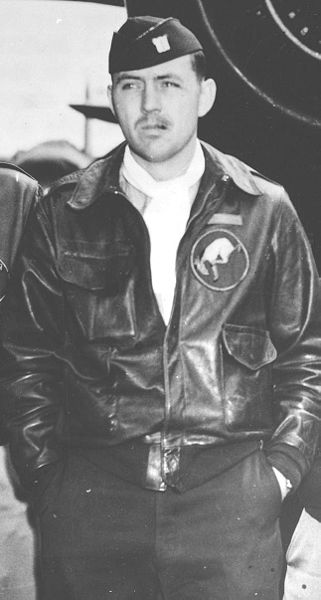
Ted W. Lawson, Crew 7
Ted W. Lawson, Crew 7, "The Ruptured Duck."

Thursday, October 29, 2009

B-24 Taking Off from SHD

On to Lynchburg...

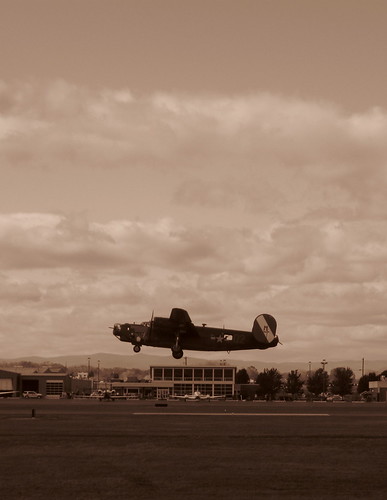
B-24 Liberator
The Liberator is the last plane to take off as the historic aircraft continue their tour.

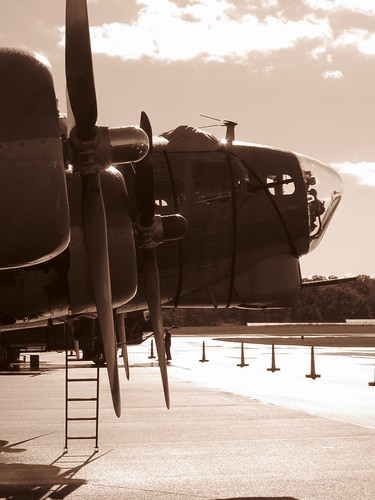
The first thing you notice upon entering the aircraft is how tight things are. Making our way through the bombers we try to imagine what it was like for the young men who flew in them.

The crews were made up of pretty young men. 25 was an old man in this crowd! Many came from America's heartland and were tough men, used to hard work. But what did it feel like to slip down into that ball turret and defend your craft from attackers? If only those old aircraft could talk...

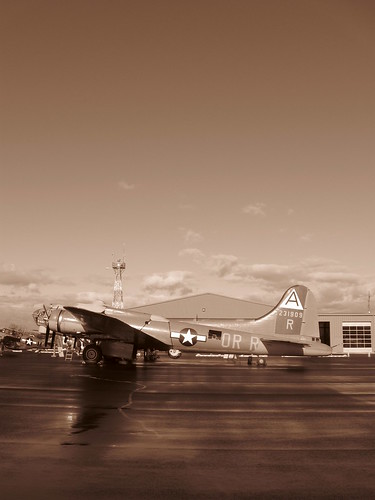
B-17 Flying Fortress
B-17 Flying Fortress.

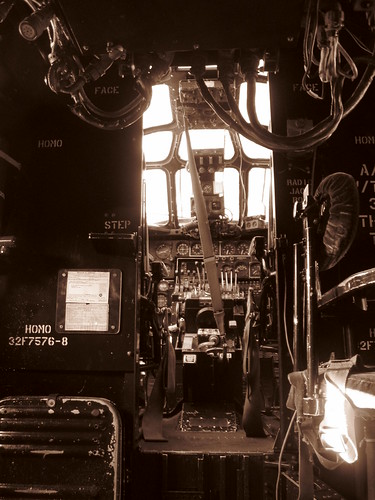
B-24 Liberator
B-24 cockpit.

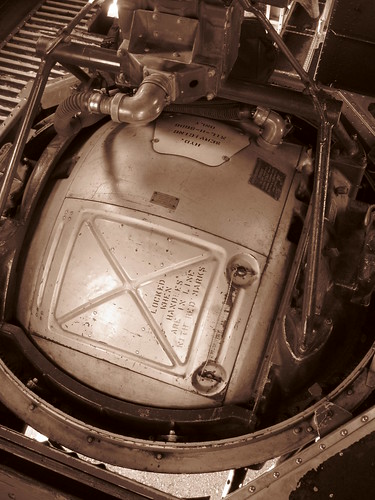
B-24 Liberator
Ball turret.

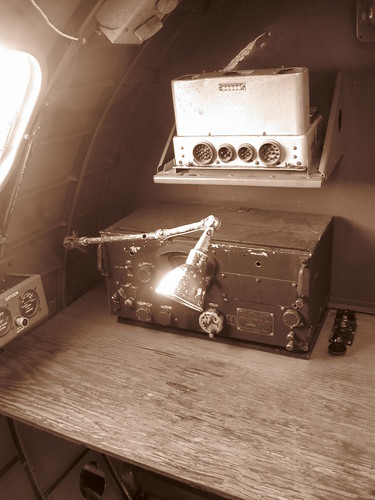
I used to have breakfast in the old Crozet Pool Room when I lived on the other side of the mountain. One of the 'regulars' was a gentleman who had been the radio operator on a B-24 liberator. He told some hair-raising stories! When I saw his station in the aircraft it looked pretty much as I imagined...

Radio
The plane's radio.

Wednesday, October 28, 2009

World War II Aircraft Visit Valley

The Mustang, Liberator and Flying Fortress

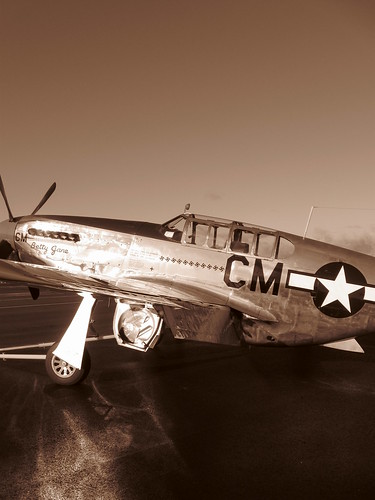
P-51 Mustang
A beautifully restored, flying P-51 Mustang.

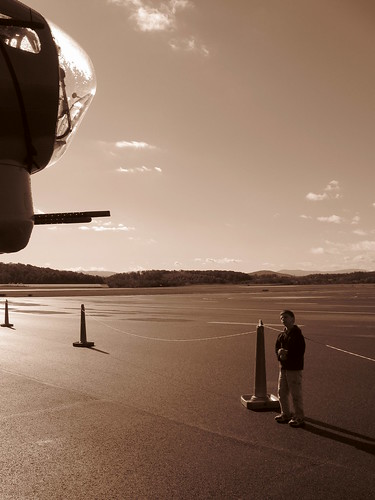
B-17 Flying Fortress
A young American meets a B-17 Flying Fortress.

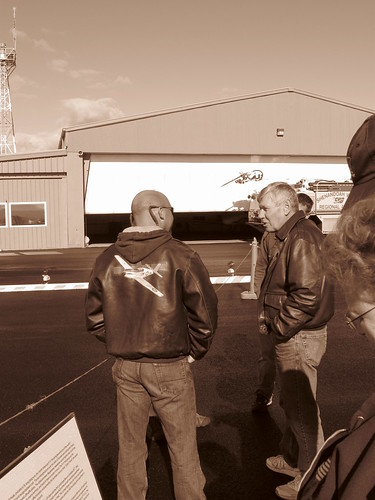
Pilot Talk
Pilot talk.

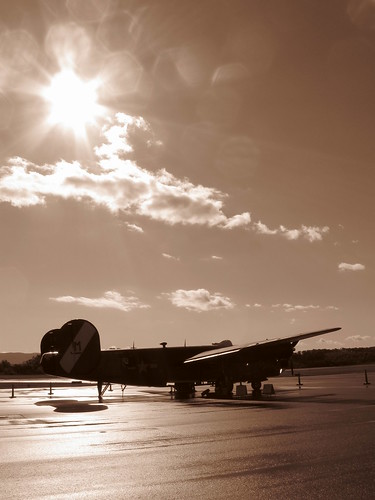
B-24 Liberator
A B-24 Liberator.

B-17 Flying Fortress
B-17 Flying Fortress.

P-51 Mustang
P-51 Mustang.

Sunday, May 24, 2009

Frank Woodruff Buckles

America's Last Surviving WWI Veteran!

The Last Surviving WWI Veteran Shares His Thougths [click to read] at Yankee Phil's Blog.

Wednesday, September 10, 2008

Thoughts as We Approach September 11

The Cost of Peace and Freedom

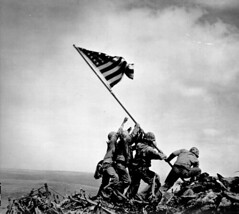
iiwojima
Raising the flag on Iwo Jima

This Piece by Paul Greenberg in Jewish World Review was thought provoking. We are sure forgetful when it comes to our deliverance from evil in generations past. When G-d instituted the Passover Meal it was with this human tendency in mind. Each item of food and glass of wine recalling a specific part of the freeing of the people from tyranny.

I had dinner last week with a man who flew as a navigator on C46's during the great war. He pulled out his photo album after we had eaten and brought life to the faces rendered in black and white. Every young man was part of an amazing story. One pilot emails the other guys every day. It is sad to think that these vivid memories are unshared by so many of us.

Members of the Greatest Generation are getting fewer. Who will remember their stories and show us pictures of the crosses on Iwo Jima when they are gone?

Thursday, July 3, 2008

'Don't Know Much About History'

Those Who Rewrite History Risk Falling into a Well Marked Pit

When I was very young, and perhaps in answer to one of my youthful impolite questions, my mother explained to me one day the origin of the tattoos. I must have noticed them on some ladies' arms and as gently as she could, Mom explained the hideous and well orchestrated death of six million people. Before I was born we fought a war that brought an end to the killing, but the horror lingers on in pictures I later saw of what went on in the camps.

There is a movement afoot in intellectual circles to dismiss our role in preserving civilized society that time. This Piece by Jonathan Tobin is required reading as we celebrate this Independence Day. I know Charles Linbergh and other notable individuals argued against our involvement in the war, thinking Hitler would counterbalance Stalin. Appeasement didn't work with Hitler and Europe was on the verge of becoming a reincarnation of the Roman Empire.

The war was not without blunders on the part of the allies, but it must be noted that an American reporter in Leningrad in the seventies was surprised by the warm greeting he received from an older lady there. Clearly the Americans have been the liberators many times and there are those who remember their liberators with great kindness.

Honest history will do well to remember as much!

Tuesday, April 22, 2008

An Inconvenient Observation

The Order of the Universe is Problematic for Some

I saw 'Expelled' this past weekend and it was a pretty powerful documentary. G-d is getting some pretty bad press these days from esteemed writers such as Richard Dawkins and Christopher Hitchens. The Intelligent Design movement, though it is not specifically theistic, is uniformly vilified in the academy. Why is an inquiry into the observable order of the universe so dangerous, especially when open inquiry is such a cherished part of scientific investigation? Perhaps such 'open inquiry' inevitably leads to the 'wrong' conclusions.

Theodore Dalrymple writes in City Journal: "What the New Atheists are Missing." Himself a non-believer, he points to a time when a teacher's hypocrasy led him to question. Dalrymple does not, however, reject the realm of faith as a force in creating and ordering societies. He see's naturalistic explainations and philosophies quite insufficient for dealing with all of human existence. Richard Dawkins' assertions that religious education is tantamount to child abuse, for example seem to Dalrymple no more than the rebellious ranting of a child who's just learned that his parents are not perfect. All of us have experienced some sort of disillusionment in our youth. I remember a time when a nun of the 'Sisters of Mercy' punished me for some infraction I had not [at least in my recollection] committed. I too questioned a lot of things. The Cuban missle crisis fueled more unanswered anxiety as I careened into adolescence.

But something happened in my teenaged years that is etched firmly in my memory. It was a dark and stressful winter day when I decided to walk in the woods near Triadelphia Reservoir. Something spoke to me that afternoon that was more eloquent than the ranting of hormones and the perceived unfairness of life. The buds of the trees were growing fat. here was the hope of spring and new life. Clearly spring would come. The buds gave evidence of an event hoped for. They were indeed the substance of something yet unseen!

"For the invisible things of him from the creation of the world are clearly seen, being understood by the things that are made, even his eternal power and Godhead; so that they are without excuse:" -- Romans1:20 KJV

Holy writ makes the point that the order and beauty of the creation speaks eloquently of the creator. Thus Intelligent Design, though it merely points out the complex mechanisms of nature, leads one to seek the source of such wisdom. I look to that time in the trees as an affirmation of personal faith in a creator. Though at that point it was pretty detatched and intellectual at best.

"...for he that cometh to G-d must believe that he is, and that he is a rewarder of them that diligenly seek him." Hebrews 11:6b KJV

As a young adult I embraced faith in Christ as redeemer and rewarder. The journey of faith had begun with the fat buds years before though.Therefore I must conlude that those who consider the design of the universe dangerous information have good reason if they fear that others may follow the path I have walked. Dawkins would prefer me to credit space aliens with seeding life to this planet and thus push the hard questions of origin to another world.

Darwinism, in its purest form, rejects the idea that this world is some sort of intentional creation. Of course this leads to the rejection of theism and ultimately the rejection of certain absolutes. 'Expelled' takes a good look at 'eugenics' and how it is supported by a darwinian world view. In the first half of the Twentieth Century certain proponents of eugenics sought to speed evolution along by eliminating the reproduction of certain undesirable types of persons. The results were forced sterilization of the mentally ill and the holecaust. Contrast that movement with Dorethea Dix and others who, motivated by Christian faith, improved conditions for the mentally ill.

Alvin Schmidt makes a good case in his book 'Under the Influence' that faith is a builder of society rather than a force to destroy it. Dalrymple the non-believer would concur. Thus the danger of Intelligent Design leading to dangerous conclusions is much inflated. One might even conclude that the free discussion of order and design,wherever it is found, is wholesome. Certainly there is no basis for its exclusion from the academy.

The argument will no doubt be made: "what about the crusades, what about jihad, religion is dangerous?" Yes, it is certainly something that may be missused, but that must be countered with an honest look at how the so-called "good" science of evolution was the foundation of eugenics. Millions of people were killed in this misguided attempt to improve humanity. Ironically, such brilliant men as Albert Einstein met the criteria for elimination. We reduce the world to only naturalistic explainations at our own peril. The argument for open inquiry stands.

New Maple

"When through the woods,and forest glades I wander,
and hear the birds sing sweetly in the trees;
when I look down,from lofty mountain grandeur,

and hear the brook and feel the gentle breeze"
-- "How Great Thou Art" Verse 2

Wednesday, April 2, 2008

Ethical Considerations of 'Custom Time' II

"Back to the Future" Got it Right

Does anyone else remember those old Back to the Future movies with Michael J. Fox? The movies revolved around a DeLorean that had been converted into a time machine.

Biff Tannen, the movie's villian, manages to get his hands on a sports almanac from the 21st Century and you don't have to use too much imagination to figure out what he does with it. Tannen makes a fortune betting on sports events and builds a giant casino, complete with cheezy museum devoted to the "Life of Biff Tannen," the man who has an uncanny gift for picking winners.

USS Nimitz
USS Nimitz, Photo courtesy United States Navy

But, so far, is Biff Tannen really much different from Mr. Owens in The Final Countdown where the aircraft carrier Nimitz is transported back to Pearl Harbor in history [right as Japanese planes roar in to attack] and back to modern times again. Mr. Owens gets "left behind" when the ship returns to the 20th Century and you see him meeting the ship at the end of the movie, stepping out of a large black car. Presumably Mr. Owens played the stock market very well having come from the 20th Century.

Here, I might add, who wouldn't have used such information for gain. I mean, who hasn't dated a check a bit earlier at least once in his life to "look" timely.

Biff Tanner clearly uses his new-found fortune to manipulate the lives of others. Mr. Owens appears to have restrained himself and while enriching himself caused no one else any harm. Who wouldn't want to own Mr. Owens' stock portfolio?

Both movies do a great job of examining the ethical considerations of altering history and are worth mentioning in light of any attempt to "bend time."

Special thanks to: Temporal Anomalies in Time Travel Movies Website written by M. Joseph Young.