Showing posts with label Transportation. Show all posts

Monday, March 21, 2011

Coal Fired Fashion Fantasies

The Gown And the Volt Share this in Common

coalfiredfashion
Coal Fired Fashion! Photo by Laney Riley.

Consumer Reports Tests Coal Powered Car

Most of our electricity is generated by coal fired power plants. That is not news. April's Consumer Reports got its hands on a Chevy Volt. I eagerly opened the magazine to see the bastion of consumer information's opinion of the newest coal fired automobile. To my surprise, there were no big surprises.

The volt is a plug-in hybrid. (Think 'Hack your Prius' technology here). You charge it up by plugging it in to your electric service overnight. The car claims to offer 25 to 50 miles of range on this charge, then a gasoline generator kicks in and extends the range to about 300 miles. Consumer reports has been getting the low end of the electric only range: 23 -28 miles. To be fair, they blame the low distance on the unusually cold winters. They say: "The car's electric range is very susceptible to cold weather, primarily because the heater runs on electricity. We also found that an extended highway cruise shortens the electrical range."

Obviously your driving needs will determine how efficient the Volt is for you.

Mike lives in Fishersville and works in Charlottesville. He has a mountain between him and his place of employment. Most days he'll be lucky to get to Crozet on his electric charge. Then he'll be getting about 30mpg. I'll cruise by him in my 1991 Mazda getting around 38. Since electricity isn't free, I doubt Mike would get any real savings from buying a Volt.

Consumer Report's Volt cost them $48,700. I paid several thousand for the Mazda. Who's ahead, especially when you consider the Volt's heavy government subsidies?

Consumer Reports concludes: "So far, the Volt works as an electric car with a gas backup, but it's not really much of a money saver in many places. Cheaper electricity or more expensive gas could tip the scales in its favor. For now, it seems that owning a Volt is an expensive way to be green." -- a FASHION STATEMENT, perhaps?

Wednesday, February 23, 2011

'But Smooth the Road...'

Recognizing Transportation's Role in Virginia's Vitality

"But smooth the road once, and make easy the way for them, and then see what an influx of articles will be poured upon us; how amazingly our exports will be encreased by them, and how amply we shall be compensated for any trouble and expence we may encounter to effect it." -- George Washington in a letter to Virginia Governor Benjamin Harrison, October 10, 1784

_N4O3090
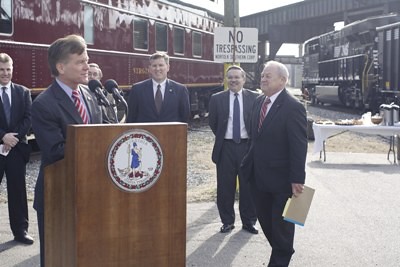
Governor Bob McDonnell announced that Norfolk Southern Railway Company is acquiring 1,500 new railcars from Chicago-based FreightCar America, Inc . The high-capacity coal cars will be manufactured at FreightCar America’s facility in Roanoke beginning in May of 2011. The order totals more than $100 million.

In the early days of our history, men like George Washington saw the need for a strong transportation system. Washington served as a director of the Chesapeake and Ohio Canal Company. Later the railroads would create the smooth road West that Washington saw as so essential. Claudius Crozet would later pioneer the construction of railroads through Virginia's mountainous regions. The region's prosperity in the decades that followed owes much to the forward thinking of such leaders.

Modern Virginia Governors do well to be equally committed to 'smooth the road' for Virginia's commerce. Governor Bob McDonnell, through a number of initiatives, is showing that the current administration shares in the vision of men like Washington and Crozet.

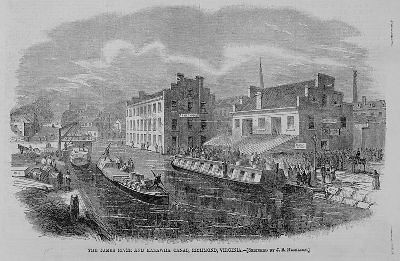
James River and Kanawha Canal
James River and Kanawah Canal.

Mount Vernon, October 10, 1784.

Dear Sir:

Upon my return from the western Country a few days ago, I had the pleasure to receive your favor of the 17th. ulto. It has always been my intention to pay my respects to you before the chance of another early and hard winter should make a warm fireside too comfortable to be relinquished. And I shall feel an additional pleasure in offering this tribute of friendship and respect to you, by having the company of the Marqs. de la Fayette, when he shall have revisited this place from his Eastern tour; now every day to be expected.

I shall take the liberty now, my dear sir, to suggest a matter, which would (if I am not too shortsighted a politician) mark your administration as an important era in the Annals of this Country, if it should be recommended by you, and adopted by the Assembly.

It has been long my decided opinion that the shortest, easiest, and least expensive communication with the invaluable and extensive Country back of us, would be by one, or both of the rivers of this State which have their sources in the Apalachian mountains. Nor am I singular in this opinion. Evans, in his Map and Analysis of the middle Colonies which (considering the early period at which they were given to the public) are done with amazing exactness. And Hutchins since, in his topographical description of the Western Country, (a good part of which is from actual surveys), are decidedly of the same sentiments;
as indeed are all others who have had opportunities, and have been at the pains to investigate and consider the subject.

But that this may not now stand as mere matter of opinion or assertion, unsupported by facts (such at least as the best maps now extant, compared with the oral testimony, which my opportunities in the course of the war have enabled me to obtain); I shall give you the different routs and distances from Detroit, by which all the trade of the North Western parts of the United territory, must pass; unless the Spaniards, contrary to their present policy, should engage part of it; or the British should attempt to force nature by carrying the trade of the upper Lakes by the river Outawaies into Canada, which I scarcely think they will or could effect. Taking Detroit then (which is putting ourselves in as unfavourable a point of view as we can be well placed, because it is upon the line of the British territory) as a point by which, as I have already observed, all that part of the trade must come, it appears from the statement enclosed, that the tide waters of this State are nearer to it by 168 miles than that of the river St. Lawrence; or than that of the Hudson at Albany by 176 miles.

Maryland stands upon similar ground with Virginia. Pennsylvania altho’ the Susquehanna is an unfriendly water, much impeded it is said with rocks and rapids, and nowhere communicating with those which lead to her capital; has it in contemplation to open a communication between Toby’s Creek (which empties into the Alleghany river, 95 miles above
Fort Pitt) and the west branch of Susquehanna; and to cut a canal between the waters of the latter, and the Schuylkill; the expence of which is easier to be conceived than estimated or described by me. A people however, who are possessed of the spirit of commerce, who see, and who will pursue their advantages, may achieve almost anything. In the mean time, under the uncertainty of these undertakings, they are smoothing the roads and paving the ways for the trade of that western World. That New York will do the same so soon as the British Garrisons are removed, which are at present, insurmountable obstacles in their way, no person who knows the temper, genius, and policy of those people as well as I do, can harbour the smallest doubt.

Thus much with respect to rival States; let me now take a short view of our own; and being aware of the objections which are in the way, I will enumerate, in order to contrast them with the advantages.

The first and principal one is, the unfortunate Jealousy, which ever has and it is to be feared ever will prevail, lest one part of the State should obtain an advantage over the other part (as if the benefits of trade were not diffusive and beneficial to all); then follow a train of difficulties viz: that our people are already heavily taxed; that we have no money; that the advantages of this trade are remote that the mostdirect rout for it is thro’ other States, over whom we have no controul; that the routs over which we have controul, are as distant as either of those which lead to Philadelphia, Albany or Montreal; That a sufficient spirit of commerce does not pervade the citizens of this commonwealth; that we are in fact doing for others, what they ought to do for themselves.

Without going into the investigation of a question, which has employed the pens of able politicians, namely, whether trade with Foreigners is an advantage or disadvantage to a country. This State as a part of the confederated States (all of whom have the spirit of it very strongly working within them) must adopt it, or submit to the evils arising therefrom without receiving its benefits; common policy therefore points clearly and strongly, to the propriety of our enjoying all the advantages which nature and our local situation afford us; and evinces clearly that unless this spirit could be totally eradicated in other States, as well as in this, and every man made to become either a cultivator of the Land, or a manufacturer of such articles as are prompted by necessity, such stimulas should be employed as will force this spirit; by shewing to our Countrymen the superior advantages we possess beyond others; and the importance of being upon a footing with our Neighbours.

If this is fair reasoning, it ought to follow as a consequence, that we should do our part towards opening the communication with the fur and peltry trade of the Lakes; and for the produce of the Country which lies within; and which will, so soon as matters are settled with the Indians, and the terms on which Congress means to dispose of the Land, and found to be favourable, are announced, settle faster than any other ever did, or any one would imagine. This then when considered in an interested point of view, is alone sufficient to excite our endeavours; but in my opinion, there is a political consideration for so doing, which is of still greater importance.

I need not remark to you Sir, that the flanks and rear of the United States are possessed by other powers, and formidable ones too; nor how necessary it is to apply the cement of interest, to bind all parts of the Union together by indissoluble bonds, especially that part of it, which lies immediately west of us, with the middle States. For, what ties, let me ask, shou’d we have upon those people? How entirely unconnected with them shall we be, and what troubles may we not apprehend, if the Spaniards on their right, and Gt. Britain on their left, instead of throwing stumbling blocks in their way as they now do, should hold out lures for their trade and alliance. What, when they get strength, which will be sooner than most people conceive (from the emigration of foreigners who will have no particular predilection towards us, as well as from the removal of our own citizens) will be the consequence of their having formed close connexions with both, or either of those powers in a commercial way?
It needs not, in my opinion, the gift of prophecy to foretell.

The Western settlers, (I speak now from my own observation) stand as it were upon a pivot; the touch of a feather, would turn them any way. They have look’d down the Mississippi, until the Spaniards (very impoliticly I think, for themselves) threw difficulties in their way; and they looked that way for no other reason, than because they could glide gently down the stream; without considering perhaps, the fatigues of the voyage back again, and the time necessary to perform it in; and because they have no other means of coming to us but by a long Land transportation and unimproved roads. These causes have hitherto checked the industry of the present settlers; for except the demand for provisions, occasioned by the increase of population, and a little flour which the necessities of Spaniards compel them to buy, they have no incitements to labour. But smooth the road once, and make easy the way for them, and then see what an influx of articles will be poured upon us; how amazingly our exports will be encreased by them, and how amply we shall be compensated for any trouble and expence we may encounter to effect it.

A combination of circumstances makes the present conjuncture more favourable for Virginia, than for any other State in the Union, to fix these matters. The jealous and untoward disposition of the Spaniards on one hand, and the private views of some individuals, coinciding with the general policy of the Court of Great Britain, on the other, to retain as long as possible the Posts of Detroit, Niagara, and Oswega &c. (which, tho’ done under the letter of the Treaty, is certainly an infraction of the spirit of it, and injurious to the Union) may be improved to the greatest advantage by this State; if she would open the avenues to the trade of that Country, and embrace the present moment to establish it. It only wants a beginning; the Western
Inhabitants wou’d do their part towards its execution. weak as they are, they would meet us at least half way, rather than be driven into the arms of, or be made dependant upon foreigners; which would, eventually, either bring on a separation of them from us, or a war between the United States and one or the other of those powers, most probably with the Spaniards.

The preliminary steps to the attainment of this great object, would be attended with very little expence, and might, at the same time that it served to attract the attention of the Western Country, and to convince the wavering Inhabitants thereof of our disposition to connect ourselves with them, and to facilitate their commerce with us, would be a mean of removing those jealousies which otherwise might take place among ourselves.

These, in my opinion are; to appoint Commissioners, who from their situation, integrity and abilities, can be under no suspicion of prejudice or predilection to one part more than to another. Let these Commissioners make an actual survey of James river and Potomack from tide-water to their respective sources. Note with great accuracy the kind of navigation, and the obstructions in it; the difficulty and expence attending the removal of these obstructions; the distances from place to place thro’ the whole extent; and the nearest and best Portages between these waters and the Streams capable of improvement which run into the Ohio; traverse these in like manner to their junction with the Ohio, and with equal accuracy. The navigation of this river (i.e., the Ohio) being well known, they will have less to do in the examination of it; but nevertheless, let the courses and distances of it be taken to the mouth of the Muskingum, and up that river (notwithstanding it is in the ceded lands) to the carrying place with Cayahoga; down the Cayahoga to Lake Erie, and thence to Detroit. Let them do the same with big Bever creek, although part of it is in the State of Pennsylvania; and with the Scioto also. In a word, let the Waters East and West of the Ohio, which invite our notice by their proximity, and the ease with which Land transportation may be had between them and the Lakes on one side, and the rivers Potomac and James on the other, be explored, accurately delineated, and a correct and connected Map of the whole be presented to the public. These things being done, I shall be mistaken if prejudice does not yield to facts; jealousy to candour, and finally, that reason and nature thus aided, will dictate what is right and proper to be done.

In the mean while, if it should be thought that the lapse of time which is necessary to effect this work, may be attended with injurious consequences, could not there be a sum of money granted towards opening the best, or if it should be deemed more eligible, two of the nearest communications, one to the Northward and another to the Southward, with the settlements to the westward? And an act be passed (if there should not appear a manifest disposition in the Assembly to make it a public undertaking) to incorporate, and encourage private
Adventurers if any should associate and sollicit the same, for the purpose of extending the navigation of Potomac or James river? And, in the former case, to request the concurrence of Maryland in the measure. It will appear from my statement of the different routs (and as far as my means of information have extended, I have done it with the utmost candour), that all the produce of the settlements about Fort Pitt can be brought to Alexandria by the Yohoghancy in 304 Miles; whereof only 31 is land transportation: And by the Monongahela and Cheat river in 300 miles; 20 only of which are land carriage. Whereas the common road from Fort Pitt to Philadelphia is 320 miles, all Land transportation; or 476 miles, if the Ohio, Toby’s Creek, Susquehanna and Schuylkill are made use of for this purpose: how much of this is by land, I know not; but from the nature of the Country it must be very considerable. How much the interests and feelings of people thus circumstanced would be engaged to promote it, requires no illustration.

For my own part, I think it highly probable, that upon the strictest scrutiny (if the Falls of the Great Kanhawa can be made navigable, or a short portage be had there), it will be found of equal importance and convenience to improve the navigation of both the James and Potomac. The latter I am fully persuaded, affords the nearest communication with the Lakes; but James river may be more convenient for all the settlers below the mouth of the Gt. Kanhawa, and for some distance perhaps above, and west of it: for I have no expectation that any part of the trade above the falls of the Ohio will go down that river and the Mississippi, much less that the returns will ever come up them; unless our want of foresight and good management is the
occasion of it. Or upon trial, if it should be found that these rivers, from the beforementioned Falls, will admit the descent of Sea vessels; in which case, and the navigation of the former’s becoming free, it is probable that both vessels and the cargoes will be carried to foreign markets and sold; but the returns for them will never in the natural course of things, ascend the long and rapid current of that river; which with the Ohio to the Falls, in their meanderings, is little if any short of 2000 miles. Upon the whole, the object, in my estimation is of vast commercial and political importance: in these lights I think posterity will consider it, and regret (if our conduct should give them cause) that the present favourable moment to secure so great a blessing for them, was neglected.

One thing more remains, which I had like to have forgot, and that is the supposed difficulty of obtaining a passage tho’ the State of Pennsylvania. How an application to its Legislature would be relished, in the first instance, I will not undertake to decide; but of one thing I am almost certain, such an application would place that body in a very delicate situation. There is in the State of Pennsylvania at least 100,000 souls west of the Laurel hill, who are groaning under the inconveniences of a long land transportation; they are wishing, indeed they are looking for the improvement and extension of inland navigation; and if this cannot be made easy for them, to Philada (at any rate it must be lengthy), they will seek a mart elsewhere; the consequence of which would be, that the State, tho’ contrary to the policy and interests of its Sea-ports, must submit to the loss of so much of its trade, or hazard not only the trade but the loss of the Settlement also; for an opposition on the part of Government to the extension of water transportation, so consonant with the essential interests of a large body of people, or any extraordinary impositions upon the exports or imports to, or from another State, would ultimately bring on a separation between its Eastern and Western Settlements; towards which, there is not wanting a disposition at this moment in that part of it, which is beyond the mountains. I consider Rumsey’s discovery for working Boats against stream, by mechanical powers (principally) as not only a very fortunate invention for these States in general, but as one of those circumstances which have combined to render the present epocha favourable above all others for fixing, if we are disposed to avail ourselves of them, a large portion of the trade of the Western Country in the bosom of this State irrevocably.

Lengthy as this letter is, I intended to have written a fuller and more digested one, upon this important subject, but have met with so many interruptions since my return home, as almost to have precluded my writing at all. What I now give is crude; but if you are in sentiment with me, I have said enough; if there is not an accordance of opinion I have said too much and all I pray in the latter case is, that you will do me the justice to believe my motives are pure, however erroneous my judgment may be on this matter, and that I am with the most perfect esteem etc.

IMG_2572
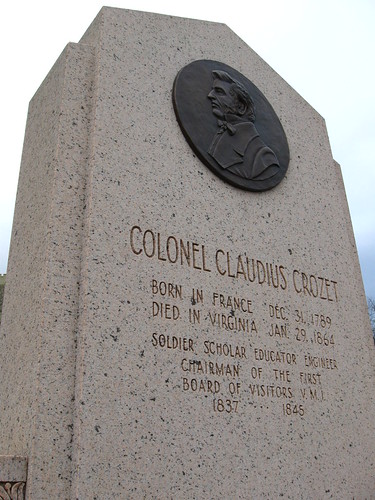
Claudius Crozet first pushed the railroad through Rockfish Gap in the Blue Ridge Mountains. His Monument may be seen today on the grounds of the Virginia Military Institute.

Friday, November 19, 2010

Heavy Trucks on the Haul Road

Alaska's Road to the Arctic Oil Fields

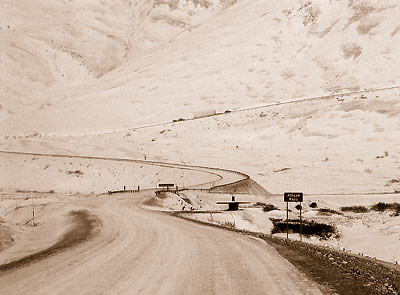
Atigun Pass
Atigun Pass in the Brooks Range. It is a challenge for both men and machinery. Alaska Heavy Haul photo.

"This website was created to share the experience of trucking in Alaska. Alaska Heavy Haul is not a formal organization. We're just here to show you what kinds of situations we face getting the important stuff from here to there. Arctic transport can be quite an adventure!"

Alaska Heavy Haul [click to view].

Wednesday, October 20, 2010

A Ride Through History on the BBRR

Buckingham Branch Railroad Follows Historic Path
Original Blue Ridge Tunnel
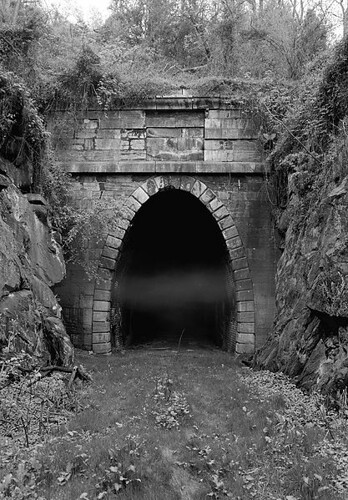
Claudius Crozet's Original Blue Ridge Tunnel. Library of Congress Image.

The Virginia Central Railroad was a major feat of engineering in its day as Claudius Crozet built a series of four tunnels under the Blue Ridge Mountains in 1856. Today the crews that operate the Buckingham Branch Railroad carry on the tradition.

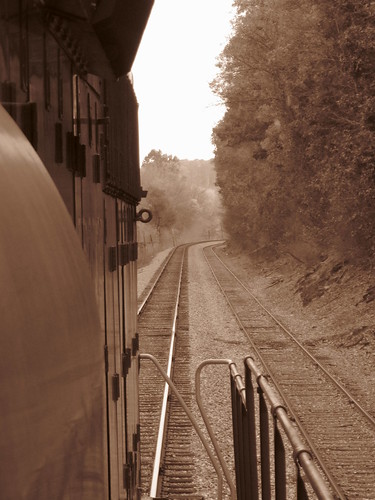
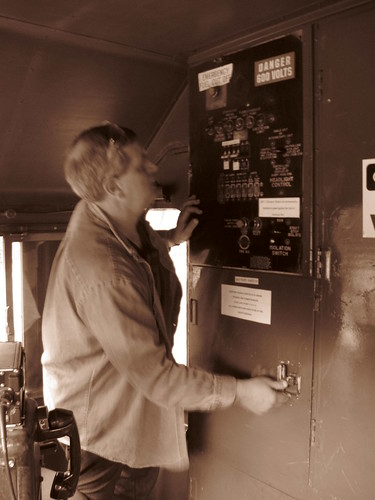
We're riding on BB6, a GP40 diesel-electric locomotive, out of The Flats. Our crew, Don and Zane, are making the run across the mountain to Charlottesville. A number of businesses along the track depend on the railroad for bulk shipments.

We roll through Staunton and make our way to Transit Mix Concrete to deliver a car. Although much of a railroad's operation is computerized, the process of making up trains and taking them apart is still a mixture of chess game, choreography and hard work on the part of the train crew.

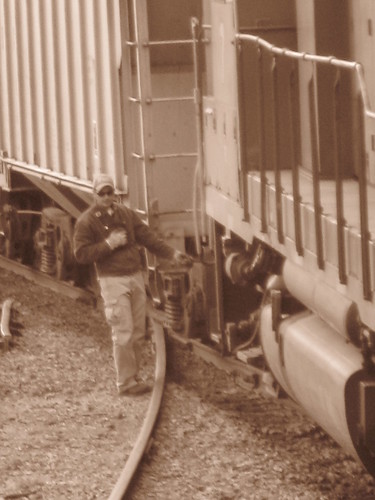
Switches must be unlocked and thrown, hand brakes set and unset and safety measures attended to. It looks like fun on a balmy october day as Zane moves about performing these tasks, but you have to imagine what it is like when he's doing the same job in last Winter's big snow or driving rain. A railroad man's job was tough in the Nineteenth Century and this part of it hasn't changed.

It takes a bit of leverage to throw a switch on a good day, so think of what it must be like when snow is piling up around you. We back into the first siding. It has tight curves that make for slow going. We've left most of our cars on the main line and are pushing the cement car into place. Then we need to return and couple up those we've left. We pull forward and back the entire train onto the Transit Mix siding to clear the track for a Westbound CSX train. The switch must be opened for the main line and locked before the track is considered clear.

Then you wait. Safe operation depends on constant communication and a permitting system to ensure that no Eastbound train tries to share a track with a Westbound. There are work trains to be accounted for too. A long line of empty coal cars passes. When the track is cleared we begin again. Our next stop is Augusta Coop. We will be bringing them another car from Charlottesville, so we drop one car for them on their siding. We'll put it in the fertilizer pit area later when we return.

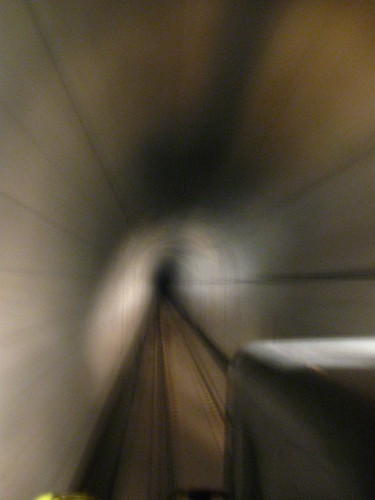
Now we make our way out to Fishersville. We roll through Waynesboro and Basic City. We start climbing the mountain and enter the almost mile-long Blue Ridge Tunnel. This is a parallel tunnel to Crozet's original Blue Ridge Tunnel that was built in 1942 for larger wartime rail cars. We emerge at Afton and head down seven miles of descending grade that will take us to the town of Crozet.

The train moves through a series of tight curves where the track follows the original route, You can imagine what it must have been like to cut that grade through the stone by hand. We move through this section under 25 miles per hour. The Rock tunnel is next. Here is an uncased tunnel that was built by Crozet. It looks about the same as it did in the Nineteenth Century.

We pass through open cuts where the Greenwood tunnel and another tunnel have been bypassed. Then its on through Crozet. We pass the now defunct Westvaco wood lot in Ivy. "This would be a great place for a business," Don says. "Good luck on that, this is Albemarle County," I reply. When I lived in Crozet, some of my neighbors worked for Westvaco. There were the Morton's Frozen Foods plant and Acme Visible Records plant in the town itself. Both are shuttered now as well.

We enter Charlottesville where the train must crawl through town at 10 miles per hour and cannot blow her horn at grade crossings. I muse to Don about UVA students who cross streets [and railroad tracks] without looking: "What do you do about them," I ask. "You have to be ready to stop" is his answer. You are allowed to sound the horn in an emergency.

We switch cars in the Charlottesville yard by the fading evening light. There is a little preschool by the entrance to the yards and it gives me great pleasure to sit in a locomotive cab and wave to the kids. The teachers hold up some of the little guys to get a better look. I wave some more as we pass the school several times. I remember in my youth the Maryland and Pennsylvania Railroad had a track near our house. I liked to watch that train.

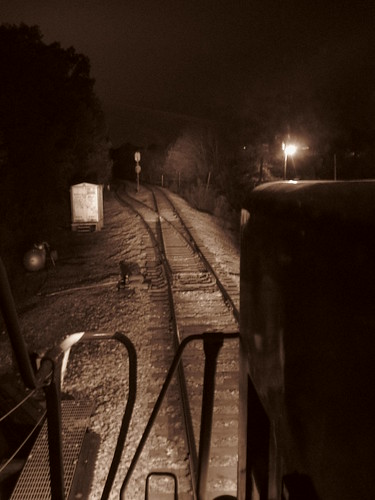
It is dark as we crawl back out of Charlottesville. Don spots a grey fox sitting on the track near the University of Virginia. He runs off and we spot a hole near the track. Later I spot an owl flying overhead as we run through Albemarle County. Deer are everywhere.

We return to Brand, just East of Staunton, where we shuffle around the other car we've picked up for Augusta Coop and push it into their siding. It's around 9:30pm when we return to the flats. There is paperwork to do for the crew. I pick up Don's bag of required operating manuals -- it is heavy. I'm grateful to have seen a part of the culture that built this country and to have shared it with the men who still live it.
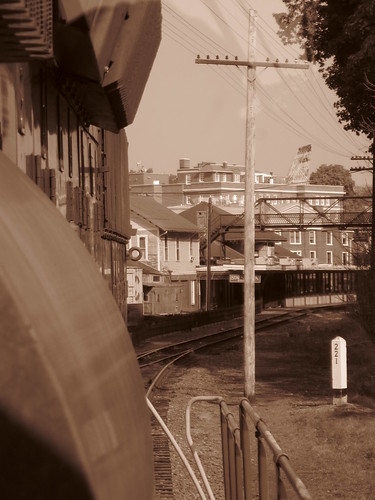
Staunton
BB6 Leaves the flats and heads through Staunton.
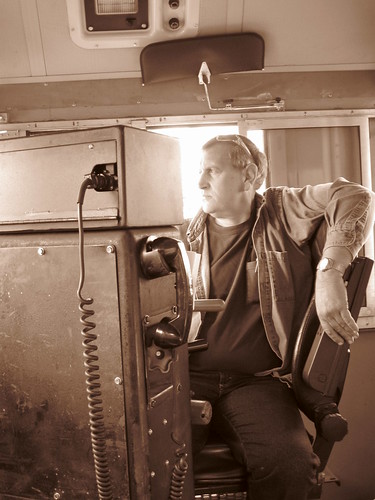
Don driving BB6
Don driving BB6.

Augusta Coop
Augusta Coop.

BB6
Rolling through Brand, heading East.

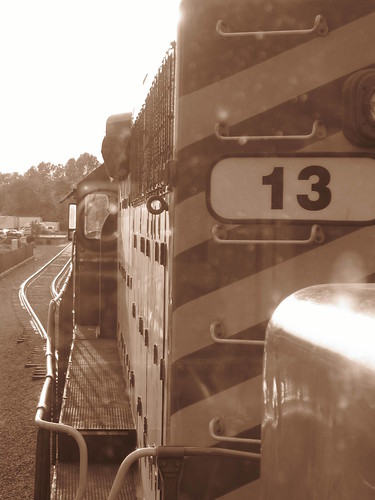
BB13
BB13.

Charlottesville
In the Charlottesville Yard.

Powering up BB7
Powering up BB7 for the return trip.

Blue Ridge Tunnel
Inside the Blue Ridge Tunnel.

Brand Siding
Back at Brand.

More Photos [click to view].

Tuesday, September 8, 2009

The Iron Road West...

...a Photographic Journey on the B&O Main Line

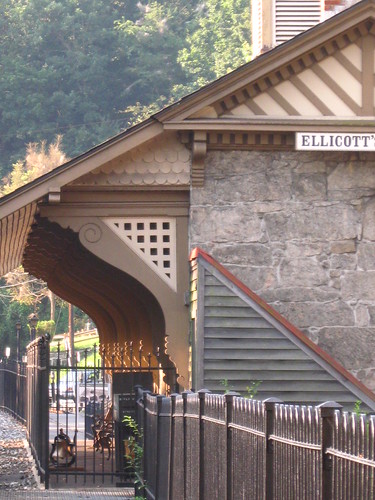
B&O Station
The B&O station in Ellicott City from the Oliver Viaduct.

Here is a Great Look [click to read] at the old Baltimore and Ohio Main Line compiled by Steven Okonski. Do great minds think alike? Here's a Taste of Steam [click to read] from SWAC Girl.

Friday, April 17, 2009

Rebuilding Community

Why Conservatives Should Care About Transit

This Piece [click to read] by David Schaengold makes a good case for thinking outside of the box.

"Public transit and walkable neighborhoods are necessary for the creation of a country where families and communities can flourish"

"A common misperception is that the current American state of auto-dependency is a result of the free market doing its work. In fact, a variety of government interventions ensure that the transportation “market” is skewed towards car-ownership."

Tuesday, March 10, 2009

No Rest Areas for the Weary

VDOT Wants You to 'Feel Their Pain'

The Virginia Department of Transportation has just announced plans to close 25 Interstate Rest Areas as a cost saving move. I wish I was making this up.

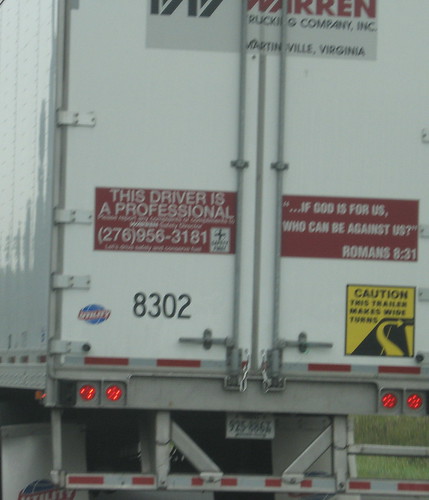
Ride up Interstate 81 in the wee [forgive me]! hours of a Monday Morning and you will see for yourself the folly of CLOSING such facilities. Many interchange ramps become 'unofficial' parking areas as drivers simply need a place to... um, ...rest! As one driver 'unoficially' pointed out, that trailer provides a pretty good privacy screen for... um, ...other needs, but its a pretty poor alternative considering the thousands these guys and ladies [professional drivers] pay in road use tax.

VDOT seems to have learned this from the Education sector, it has been pointed out on SWAC Girl and elsewhere. Your favorite Art and Music teacher get the axe first, then your aids and custodians... but tell me, when's the last time you heard of them downsizing the Central Office first? Anyhow, back to VDOT.

VDOT could take a few cues from their more sucessful projects. The Dulles Toll Road, for example, shows that market solutions can be brought to bear in high utilization scenarios. Dulles Toll Road to Virginia Route 7 is a wonderful alternative to the odd configuration of Interstate 66 during high traffic periods. If the portion of I 66 inside the beltway were to be made a toll road and 'demand' tolls charged, and let trucks on it like a real interstate, look at the profit center it could become.

Now lets look at those rest areas. Instead of closing them, why not look at developing some of them into service plazas similar to those on the Pennsylvania Turnpike. Let private contractors bid for the priviledge of operating limited fuel and food service. Use concession revenues to expand parking areas and perhaps consider pay parking for periods longer than two hours.

I would imagine that many of the operators of existing travel facilities would be the winners of such concessions and would operate them as an extension of their large interchange facilities. If you remember the Pilot Travel Plaza traffic problem at the Greenville interchange this might start to sound appealing.

Truck on I81
A truck on Interstate 81 heading North.

Monday, February 9, 2009

Stella's Streetcar

The Perley A. Thomas Story

Perley Thomas Survived Two Depressions and Created an Icon of American Literature.

Thomas 900
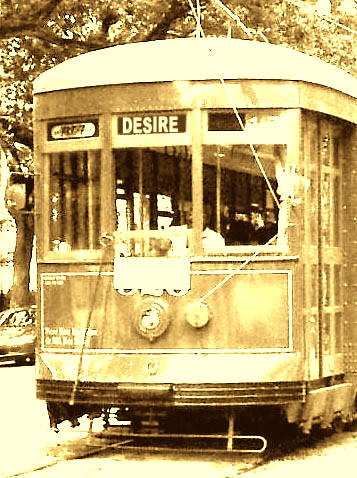
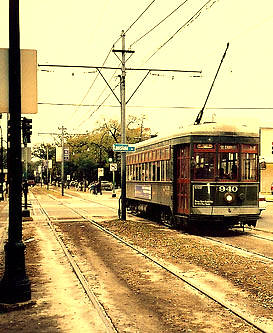
A Thomas 900 Series Streetcar in New Orleans. I photoshopped the line placard.

Perley A. Thomas was born in 1874. He was trained as a millsmith and his specialty was woodworking. He found employment with a streetcar manufacturer in Cleveland Ohio. Wanting to improve his situation, he studied engineering at Case Institute of Technology's night school. This background helped him as the industry moved from wood bodies to steel.

In 1910 he went to work for the Southern Car Company in High Point North Carolina. The company went out of business in 1916 but Thomas was able to get a contract on his own to renovate streetcars for the Charlotte North Carolina transit company. He used Southern Car Company's old plant and many of his former coworkers. A year later he founded Perley A. Thomas Car Works. The company sold its product to many American cities, among them was New Orleans. This company built the streetcars that were in use when Williams wrote his famous play.

As streetcars faded into history in the 1930's, Thomas transitioned his company into the manufacture of buses. In 1936 the company was actively manufacturing buses.

The depression cut demand and when orders were few Thomas survived by returning to his woodworking skills. If you visit some of the finer homes in High Point North Carolina you may find some particularly fine hand-carved mantle pieces that are the work of Perley A.Thomas.

The company was reorganized as the Thomas Built Buses Incorporated during this period. As orders increased the company grew to be one of the largest of its kind in the world. Today it is part of the Freightliner Group of Daimler/Chrysler.

Thomas continued to work for the company and was design advisor well into his eighties while his children actually ran the company. He died in 1958.

Thomas 900
Thomas 900 Series Streetcar.

Past Milestone Monday Features:

Dr. June McCarroll and the White Line
Henry "Box" Brown Ships Himself to Freedom
Richard Ankrom's 'Guerrilla Signage'
Preston Tucker and John DeLorean
General Theodore Roosevelt Jr. [1], [2], [3]
Meta Warwick Fuller
Franklin Graham [Son of Billy]
Francis Collins and Jedadiah Hotchkiss
Motherhood and Invention
Eric Liddell
Bob Childress
William H. Howland [Mayor Who Made a Difference]
Tolbert S. Dalton
Davy Crockett and Mark Warner
Noam Bedein
The Nehemiah Project
Perley A. Thomas

Warning: The above articles might prove inspirational to "Dangerous" Home Schoolers, as described in my piece: Public Servants Should Remember Who They Serve.