Showing posts with label Theodore Dalrymple. Show all posts

Thursday, September 23, 2010

The Persisting Problem of Evil

The Modern World Still Struggles With an Old Problem

Theodore Dalrymple [click to read] in City Journal discusses the age-old problem.

"The Enlightenment held out the hope that with enough of this “proper study,” man would come to know himself sufficiently to eliminate the evil and suffering that had always beset his existence. Man would obtain something like a Newtonian knowledge not only of the universe but of himself, with all the predictive and mechanical advantages that such understanding had brought in the study of inanimate nature."
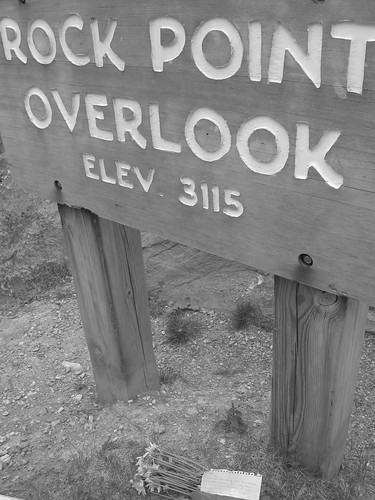
Rock Point
Flowers and a note at Rock Point Overlook remember Tim Davis, who died from injuries that resulted from a violent attack on him and a coworker. They were sitting at the overlook watching the sunset when a man attacked them with a shotgun.

Dennis Prager [click to read] in Jewish World Review has some clear observations about the direction the world seems to be heading.

If you follow Glenn Beck you know that post-Christian thought, guided by Socialist ideas, says that "mankind is evolving toward something better." The problem is that the path is quite bloody. My question to those who hold to that view is: "What happens if you are wrong?"

Prager says: "One of the many beliefs — i.e., non-empirically based doctrines — of the post-Christian West has been that moral progress is the human norm, especially so with the demise of religion. In a secular world, the self-described enlightened thinking goes, superstition is replaced by reason, and reason leads to the moral good."

Indeed, what if you have only succeeded in removing that which mitigates the evil that resides in the human heart? Prager's Observations [click to read] go hand in hand with those of Alvin Schmidt [click to read], who documents the positive effect of faith on human affairs through history. Prager deals honestly with those evils that have been done in the name of religion, and those that have been done in the name of G-dless regimes. Prager continues:

"Of course, it turned out that the post-Christian West produced considerably more evil than the Christian world had. No mass cruelty in the name of Christianity approximated the vastness of the cruelty unleashed by secular doctrines and regimes in the post-Christian world. The argument against religion that more people have been killed in the name of religion than by any other doctrine is false propaganda on behalf of secularism and Leftism."

As society has embraced a reletivistic approach to truth, the horrors we have seen in our own sphere have increased as well. Could Seung-hui Cho, Eric Harris, Dylan Klebold, Ralph Leon Jackson and George Huguely been saved from comitting the horrible things they did? The question is an honest one... it deserves an honest answer. The stakes are too high.

When Bob Childress [click to read] brought his ministry to Southwestern Virginia, he found a community wallowing in fatalistic despair. Disputes and murders were common and Childress brought faith to bear in the situations he encountered there. The legacy he left was one of faith and healing.

Thursday, August 13, 2009

Hate Crimes

Kenneth Gladney to File 'Hate Crimes' Charge

Remember Kenneth Gladney? He was the Africaan-american conservative beaten by union thugs at the St. Louis townhall meetings. Two of the perps were clearly associated with SEIU and Mr. Gladney is about to file a charge under 'hate crimes' statutes. Right on, Mr. Gladney!

One of my favorite commentators is Michelle Malkin. If you visit left leaning blogs you may find some slurs about her Asian heritage. Racism is alive and well, sad to say, and the people who promised to eliminate it seem to be in no hurry when it comes to trashing conservatives.

Just look at the recent attempts to tie Bob McDonnell to the 'evil' Confederate battle flag. The problem is one of integrity here. If you want to charge 'racism,' you'd best not practice it yourselves.

Mikchelle Malkin Discusses Robert Byrd [click to read].

Racism by Theodore Dalrymple [click to read], 'The charge for which there is no defense.'

Tuesday, April 22, 2008

An Inconvenient Observation

The Order of the Universe is Problematic for Some

I saw 'Expelled' this past weekend and it was a pretty powerful documentary. G-d is getting some pretty bad press these days from esteemed writers such as Richard Dawkins and Christopher Hitchens. The Intelligent Design movement, though it is not specifically theistic, is uniformly vilified in the academy. Why is an inquiry into the observable order of the universe so dangerous, especially when open inquiry is such a cherished part of scientific investigation? Perhaps such 'open inquiry' inevitably leads to the 'wrong' conclusions.

Theodore Dalrymple writes in City Journal: "What the New Atheists are Missing." Himself a non-believer, he points to a time when a teacher's hypocrasy led him to question. Dalrymple does not, however, reject the realm of faith as a force in creating and ordering societies. He see's naturalistic explainations and philosophies quite insufficient for dealing with all of human existence. Richard Dawkins' assertions that religious education is tantamount to child abuse, for example seem to Dalrymple no more than the rebellious ranting of a child who's just learned that his parents are not perfect. All of us have experienced some sort of disillusionment in our youth. I remember a time when a nun of the 'Sisters of Mercy' punished me for some infraction I had not [at least in my recollection] committed. I too questioned a lot of things. The Cuban missle crisis fueled more unanswered anxiety as I careened into adolescence.

But something happened in my teenaged years that is etched firmly in my memory. It was a dark and stressful winter day when I decided to walk in the woods near Triadelphia Reservoir. Something spoke to me that afternoon that was more eloquent than the ranting of hormones and the perceived unfairness of life. The buds of the trees were growing fat. here was the hope of spring and new life. Clearly spring would come. The buds gave evidence of an event hoped for. They were indeed the substance of something yet unseen!

"For the invisible things of him from the creation of the world are clearly seen, being understood by the things that are made, even his eternal power and Godhead; so that they are without excuse:" -- Romans1:20 KJV

Holy writ makes the point that the order and beauty of the creation speaks eloquently of the creator. Thus Intelligent Design, though it merely points out the complex mechanisms of nature, leads one to seek the source of such wisdom. I look to that time in the trees as an affirmation of personal faith in a creator. Though at that point it was pretty detatched and intellectual at best.

"...for he that cometh to G-d must believe that he is, and that he is a rewarder of them that diligenly seek him." Hebrews 11:6b KJV

As a young adult I embraced faith in Christ as redeemer and rewarder. The journey of faith had begun with the fat buds years before though.Therefore I must conlude that those who consider the design of the universe dangerous information have good reason if they fear that others may follow the path I have walked. Dawkins would prefer me to credit space aliens with seeding life to this planet and thus push the hard questions of origin to another world.

Darwinism, in its purest form, rejects the idea that this world is some sort of intentional creation. Of course this leads to the rejection of theism and ultimately the rejection of certain absolutes. 'Expelled' takes a good look at 'eugenics' and how it is supported by a darwinian world view. In the first half of the Twentieth Century certain proponents of eugenics sought to speed evolution along by eliminating the reproduction of certain undesirable types of persons. The results were forced sterilization of the mentally ill and the holecaust. Contrast that movement with Dorethea Dix and others who, motivated by Christian faith, improved conditions for the mentally ill.

Alvin Schmidt makes a good case in his book 'Under the Influence' that faith is a builder of society rather than a force to destroy it. Dalrymple the non-believer would concur. Thus the danger of Intelligent Design leading to dangerous conclusions is much inflated. One might even conclude that the free discussion of order and design,wherever it is found, is wholesome. Certainly there is no basis for its exclusion from the academy.

The argument will no doubt be made: "what about the crusades, what about jihad, religion is dangerous?" Yes, it is certainly something that may be missused, but that must be countered with an honest look at how the so-called "good" science of evolution was the foundation of eugenics. Millions of people were killed in this misguided attempt to improve humanity. Ironically, such brilliant men as Albert Einstein met the criteria for elimination. We reduce the world to only naturalistic explainations at our own peril. The argument for open inquiry stands.

New Maple

"When through the woods,and forest glades I wander,
and hear the birds sing sweetly in the trees;
when I look down,from lofty mountain grandeur,

and hear the brook and feel the gentle breeze"
-- "How Great Thou Art" Verse 2

Friday, April 4, 2008

Delusions of Virtue

Theodore Dalrymple is one of my favorite writers. As I was ruminating over the ethical considerations of some fictitious situations a very real one was brought to mind by This Article in City Journal. Not unlike Marty McFly, we see real-life persons trying to reinvent the past to favor their perception of their own virtue. Dalrymple states: "...the human mind is a subtle instrument, quite capable of uttering untruths by mechanisms other than lying. Sometimes we cannot distinguish among the possibilities." Thus he makes a case that people who might claim to have been named for a famous mountaineer before he ever scaled Everest, or inventing the internet must be seen in light of the modern concept of 'virtue.' Dr. Dalrymple describes what he calls the "...modern psychopathological symptom: The Delusion of Honesty. A delusional belief is impervious to reason or evidence. In societies like Britain and the United States, once steeped in Judeo-Christian culture, such convictions become common when a belief in Original Sin finds itself replaced by a belief in Original Virtue—particularly one’s own." Now that's profound!

Does such a world, in fact, look ever increasingly for mathematical models [such as Google algorithms] to assure that everyone's self-held belief directed actions don't collide. Sort of like a moral sequence of traffic signals. In the end, a post-Christian society such as Europe must discard the notion of some overall guiding virtue for a pragmatic set of traffic rules.

No doubt, many 'reworkings' of the past to favor one's own view of virtue are harmless. Still the Marxist assigns himself virtue but see's the entreprenuer throughout history as an evil force to be reckoned with. The 'movers and shakers' are his 'oppressors.' This is where reinvention of the past becomes very dark as a science. At some point a broad-brush judgement will impune everyone who is not like me. The Marxist may try to re-write the algorithm to always distrust the entrepenuer, whom he sees as an 'exploiter,' forgetting that it was risk-takers like Edison who brought us modern convenience which we all take for granted. The concept of 'Original Virtue' seems to have many exceptions!