Showing posts with label George Müller. Show all posts

Wednesday, June 24, 2015

THYME Magazine: The Bridge Builder's Tale IX

Citizen Journalism with a Better Flavor

Chapter9ds

Of all the wonderful feats I have performed, since I have been in this part of the world, I think yesterday I performed the most wonderful. I produced unaninimity among fifteen men who were all quarreling about that most ticklish subject -- Taste." -- Isambard Kingdom Brunel

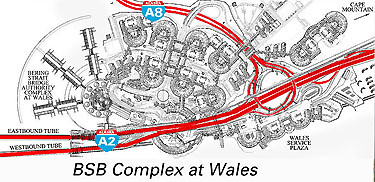
Zimmerman's complex at Wales was originally meant to be simply a construction camp and to continue as a port of entry to the Americas. It was a city in itself that seemed determined to outgrow whatever space was alloted to it. The buildings were fabricated in the same shipyards that produced the components of the great bridge. Indeed one felt like one was inside a cruise ship walking through the endless connecting corridors. Pat Zimmerman had come up with her husband in the early days but hated the hallways. Her poor circulation made the cold outside unbearable, but the "Labyrinth of Exile," as her husband called the sprawling complex, simply depressed her.

bsbcomplexweb
The "Labyrinth of Exile."

diomedemapweb

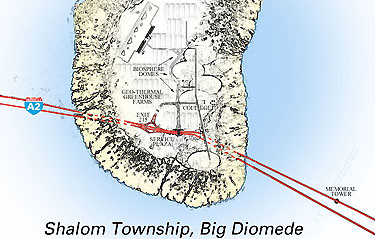
He'd taken the name from a biography of Theodor Herzl by that title and it stuck. It was a machine produced environment created of necessity. In great design rooms people like Pat's granddaughter were creating wonders like the Big Diomede Biospohere and the tundra farms. Still, if the design studios were a rich world, the connective tissue of the hallways and public spaces was an impoverished one. The small band of overachievers engaged in this great work required little in the way of diversions. Pat could not survive in such a sterile world. With great sorrow, Rupert resigned himself to the life devoid of family that so many of the world's great innovators seemed to be sentenced to.

The Biosphere and the calling of the Greenes was born largely out of a desire to correct this. Pat had been initially impressed when she visited and saw the richness of Kris' little house in contrast to Rupert's sterile hallways. She thought it an anomality though and didn't want to lose the circle of supportive friends she had in Virginia. The Biosphere was nice, but it was a small circle of light in a very large entity that seemed to Pat more like an oil camp on steroids. If she took notice of how Rupert seemed drawn to the Biosphere and its gardens, she must have been skeptical of it. Rupert had always befuddled his wife. He loved to photograph the flowers in their Virginia garden but often forgot to water them. He was her own real-life version of James Thurber's fictional "Walter Mitty," often seeming to inhabit another world. Unlike the fictional Mitty, Zimmerman was building his 'other world' and a world starved for such endeavors embraced him for it.

Zimmerman wondered at how such basic needs as breathing and the need to walk required no motivation, yet standing in a man's full potential eluded the ability to teach. He devoted himself to studying how men might develop the hunger to rise to the height of their potential and walk in it. He sparred often with Greene over how to inspire men. Marx had called religion the "Opiate of the Masses," yet Rupert thought it was more like the pills drivers took to keep them awake on the long road to Yakutsk. It was, to Zimmerman, a necessary boost in the driver's inate alertness. "Truck Wrecks on the Siberia Highway" were a macabre subject of continual fascination on the internet. The fact that these incidents were few and often photoshopped did nothing to shatter the myth. The road was truly dangerous.

Rupert pondered great moments in history. There was the Battle of Trenton where a band of weary patriots turned the tide of America's Revolution. The American response to the attack on Pearl Harbor and the resolve to win the world's most horrific war on multiple fronts preceeded the establishment of Herzl's vision. Yet in his own lifetime, Zimmerman had seen the 2001 attacks on New York and Washington met with an initial resolve that soon withered. America resigned herself to whatever forces the world would throw it. Such Fatalism went against Zimmerman's constitution. As students of engineering found their way to his studios, Zimmerman rounded out their education with a healthy dose of history... and that history full of the stories of overcomers!

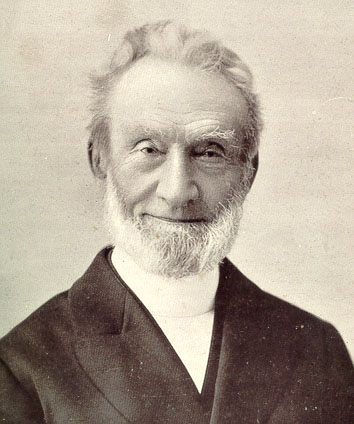
Rupert's school also looked at life through the Macro-lens as well. He learned that infants, no different from his granddaughter he surmised, had been placed in an orphanage in Tehran, Iran. The attendants of this place merely fed and changed the infants. There was no cuddling, no interaction, there simply wasn't time for that. An appalling percentage of these precious souls never sat up, never walked... they simply died. He studied long and hard the transformation in society's view of orphans in the Victorian Era. Men like Charles Dickens and George Müller had seen the wretched street urchins most people despised as jewels to be polished. Müller, relying solely on Divine provision, built five large houses for Orphans at Ashley Downs in Bristol, England. He trained the girls to be nurses, teachers, clerical workers and domestics. He apprenticed all the boys in various trades. He was excoriated for training these unwanted children "above their station." He ignored the critics.

George Müller
George Müller.

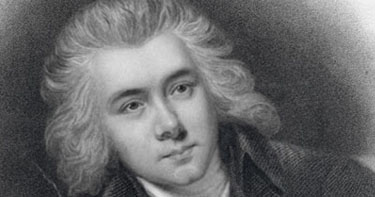
When William Wilberforce had ended the slave trade in the British Empire, he had thrown the city of Bristol into economic depression. The port there was heavily devoted to that wretched business and suffered heavily when it was brought to a sudden halt. The unintended consequence had been a rise in children condemned to a life of poverty. Ending the vile business of enslaving Africa's children had resulting in England's society spurning the needs of her own.

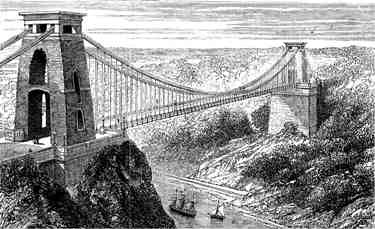
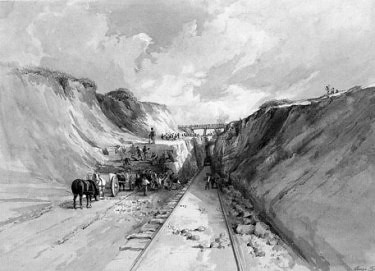
In 1831, 24 year old Isambard Kingdom Brunel was awarded a contract to bridge the Avon Gorge. It was the dream of a prosperous wine merchant who provided the initial funding. The completed bridge would become the symbol of the city, but lack of funding dogged the project. It took thirty years to complete it. For years only the towers stood completed. In 1833 Brunel began work on the Great Western Railway, which would become the instrument of Bristol's economic revitalization. The nicknames: "Great Way Round" and "God's Wonderful Railway" seem to describe well Brunel's great work.

suspension-bridge001
Brunel's Clifton Suspension Bridge became the symbol of the City of Bristol.

greatwesternrr001
Building the Great Western Railway.

Zimmerman and his apprentices studied the work of men like Brunel, who in the Nineteenth Century had built shipyards and had designed the first propeller driven transatlantic steamship. Like the steelworkers in Bodine's photographs, they seemed involved in the pouring of some fiery inventiveness beyond their ability to create on their own. In fact, the stuff of creativity seemed dangerous, its mishandling capable of reducing its handler to ash. The more Zimmerman accomplished, it is safe to say, the less ownership he felt of the work he'd seen accomplished.

mullerbldg006
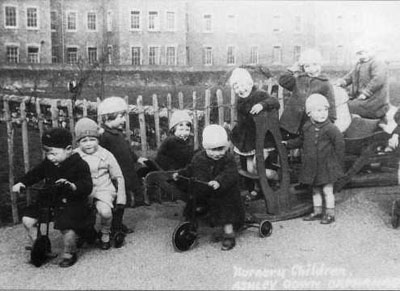
Children at Ashly Down.

mullerbldg008
Children at Ashly Down received education and training for future employment. the day started at 6am for the orphans, normal for working-class children of Victorian times.

mullergirls
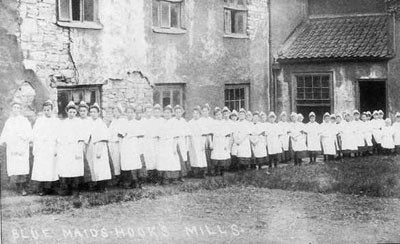
While boys would be placed in apprenticeships at age 14, the young ladies would remain until 17. They received training to be Nurses, Teachers and Domestic Servants [as the group in maids' uniforms above].

William-Wilberforce-006-570x300
William Wilberforce.

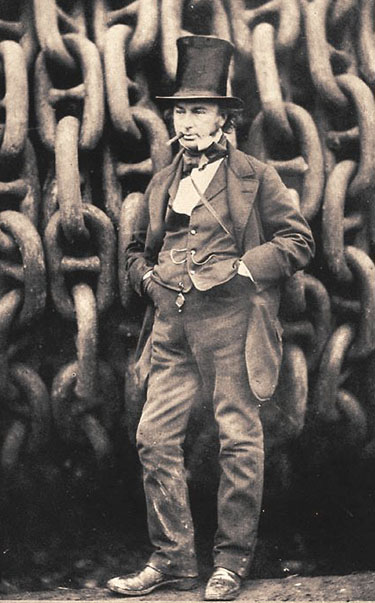
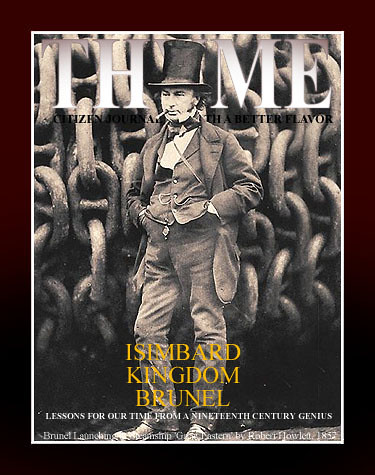
IKBrunelChains2
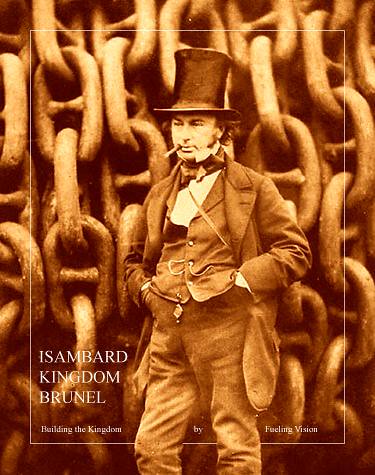
Isambard Kingdom Brunel.

(to be continued) [click to read]

Previous Chapter | Next Chapter
[click to read ]

Copyright © 2015, The Kirchman Studio, all rights reserved

Wednesday, April 1, 2015

THYME Magazine: Building the Kingdom III

Citizen Journalism with a Better Flavor

THYME0914
Volume IX, Issue XIV

The Ministry of Building Things

I'll bet if I asked you to think of some different types of ministry and ways to build the Kingdom of G-d, you probably wouldn't think of Economic Development. Pastor Tim Keller, in his book: Resources for Deacons, sees it clearly as a part of the Diaconal ministry. Our church helps women in Zambia get sewing machines. To be sure, the gift of the ability to earn their living as seamstresses is an act of ministry to these ladies.

But think bigger! THYME presents the story of how a nation turned from a great evil and one city suffered greatly in doing so. G-d provided a provider! Then G-d provided provision for the provider by inspiring great innovation that came to revitalize that great city. Should we dare to pray for such innovation and inspiration in our own day?

Isambard Kingdom Brunel
What a Nineteenth Century Innovator Can Teach Us Now
© 2013 The Kirchman Studio, All rights reserved.

They say that the condition for a miracle is difficulty, but the condition for a great miracle is impossibility” -- Angus Buchan, “G-d's Farmer”

When William Wilberforce [1.] had ended the slave trade in the British Empire, he had thrown the city of Bristol, England into economic depression. The port there was heavily devoted to that wretched business and suffered heavily when it was brought to a sudden halt. The unintended consequence had been a rise in children condemned to a life of poverty. Ending the vile business of enslaving Africa's children had resulting in England's society spurning the needs of her own. Into this world came George Müller [2.], who, relying on faith in G-d alone, provided redemption for thousands of orphans. Many of these children were cast-offs of a society in economic despair.

George Müller [3.] had seen the wretched street urchins most people despised as jewels to be polished. Muller, relying solely on Divine provision, built five large houses for Orphans at Ashley Downs in Bristol, England. He trained the girls to be nurses, teachers, clerical workers and domestics. He apprenticed all the boys in various trades. He was excoriated for training these unwanted children "above their station." He ignored the critics.

Müller looked to G-d alone, but Bristol needed an outfowing of Divine provision to provide for her children. G-d's provision for Bristol was to come in the form of inspiration and innovation, embodied in the work of a young pioneer of civil engineering. He also ignored his critics.

suspension-bridge001
Brunel's Clifton Suspension Bridge became the symbol of the City of Bristol.

greatwesternrr001
Building the Great Western Railway.

In 1831, 24 year old Isambard Kingdom Brunel [4.] was awarded a contract to bridge the Avon Gorge. It was the dream of a prosperous wine merchant who provided the initial funding. The completed bridge would become the symbol of the city, but lack of funding dogged the project. It took thirty years to complete it. For years only the towers stood completed. In 1833 Brunel began work on the Great Western Railway, which would become the instrument of Bristol's economic revitalization. The nicknames: "Great Way Round" and "G-d's Wonderful Railway" seem to describe well Brunel's great work.

Brunel was an innovator. He probably experienced as many failures as successes in his short lifetime. Born on April 9, 1806, the son of Sir Marc Brunel, he assisted his father in building a tunnel under the Thames. He would later become the resident engineer of that project. At twenty years of age, he designed a suspension bridge to cross the Avon river. A modified version of his plan was actually constructed.

At 26, Brunel was building the Great Western Railway, commissioned to maintain Bristol's importance as a port and position her for  trade with America. This wide-gauge railroad linked Bristol and Western regions of England to London. Bristol's prosperity as a port was assured and the work of Müller created solid citizens with strong spiritual foundations to benefit.

But Brunel was not content to simply build a better railway. He looked across the Atlantic, envisioning fleets of ocean greyhounds -- great steamships that would complete the linking of his Great Western Railway to America! The S. S. Great Britain was his creation. It was the first metal-hulled propeller-driven ocean ship and became the prototype for modern ocean liners.

Building the South Devon Railway as a spur to the Great Western, Brunel experimented with an alternative to steam engines -- Vacuum tube powered trains. Stationary vacuum plants evacuated tubes laid along the center of the track that powered the movement of trains.

atmosenginesmall
Brunel's 'Atmospheric Railway.'

The technology required the use of leather flaps to seal the vacuum pipes. The natural oils were drawn out of the leather by the vacuum, making the leather vulnerable to water, rotting it and breaking the fibres when it froze. It had to be kept supple with tallow, which is attractive to rats. The flaps were eaten, and vacuum operation lasted less than a year, from 1847 (experimental service began in September; operations from February 1848) to 10 September 1848.[45] It has been suggested that the whole project was an expensive flop. In Brunel's favour, it has been noted that he had the courage to call a halt to the venture instead of struggling on with it at greater cost." -- Wikipedia

Like alternative transportation prototypes of our day, the vacuum tube system was more expensive. The accounts of the SDR for 1848 show that atmospheric traction cost 3s 1d (three shillings and one penny) per mile compared to 1s 4d/mile for conventional steam power.Though considered a failure at the time, vacuum powered trains may have been a distant precursor to Evacuated Tube Technology [5.] which is now being developed to move entire transport capsules through large tubes -- essentially powered in the same way as Brunel's South Devon train. Brunel was simply two Centuries before his time on this.

What can we learn from Brunel today? Plenty! Inspiration and innovation are needed now as they were needed then. Brunel teaches us valuable lessons about expanding vision with proven technologies and wisely exploring alternatives (and abandoning them when they do not work as planned).

Praying people see the diaconate role of economic development as an integral part of G-d's provision. In “Resources for Deacons, Love Expressed Through Mercy Ministries,” [6.] Tim Keller states his belief in three “levels” of mercy in diaconal ministry:

The first Level Is Simple Relief: That is taking care of the immediate need.

The Second Level Is Economic Development: That is teaching the poor how to get out of poverty by teaching them how to handle money, property, etc. and furnishing them with the means to do so. “Not handouts, but ownership is the way to break the cycle of poverty.”

The Third Level Is Social Reform: Christians should be involved in the culture in an effort to change the social structure.

We see it very localized in a place like Zambia, where people of faith instruct widows to become seamstresses (and people in America gift them with sewing machines). But, can we believe G-d for ever greater inspiration? What vision would G-d give us for our family, our company of employment, our city and county... and beyond? Müller said "the age of miracles is not past." Angus Buchan [7.], in the turmoil of Zambia and South Africa, looked to G-d for inspiration. G-d met him in a corn field where he learned the power of prayer!

Buchan had packed his family up during the unrest in Zambia in the late 'seventies and moved them to South Africa. A successful farmer in Zambia, he felt that he would be happy if he could acquire another farm in South Africa. It didn't. Experiencing deep depression, Buchan was angry and confused. Wandering into a lay-witness Sunday at the local Methodist Church, Angus heard builders, tradesmen and fellow farmers tell of what Jesus meant in their lives. For the first time he saw men crying, he wept unashamedly himself as he responded to an altar call. He took the Lord seriously about the changed life promise.

Buchan went back to his farm and learned to pray in his own corn field. Then he sought to minister to his Zulu workers. His farm manager, Simeon Bhengu, told him: "that's women's religion..." But G-d met Angus and spoke through his friendship with Simeon. Today the men are brothers in faith and brothers in every way. "My children are his and his are mine." Angus says of his Zulu brother. Angus expanded his farming operations and G-d's miraculous provision was seen at every turn. The movie "Faith like Potatoes" is the true story of Angus Buchan and it is quite inspiring! Buchan used machinery but avoided totally mechanizing the farm, looking to provide steady employment to his Zulu neighbors.

In the early 1980's Buchan became aware of a new tragic development. AIDS was ravaging families and creating untold numbers of orphans. Buchan reached out to these orphans but had no place to house them. A local school had temporary classrooms they were going to demolish and Angus received permission to take them apart and reassemble them at Shalom, which he had named his complex at the farm. At first the children lived in dormitories but gradually Angus was able to create "houses" where one "mother" cared for a smaller number.

South Africa in her recent history has experienced much uncertainty and Buchan's experience is instructive as we look to address the turmoil in our own country today. Isambard Kingdom Brunel should serve as an inspiration as well.

Let no man despise thy youth; but be thou an example of the believers, in word, in conversation, in charity, in spirit, in faith, in purity." -- 1 Timothy 4:12

Passover
Dogwood Flower. Photo by Bob Kirchman

Passover and Passion
Stories of Divine Redemption

Why is this night different from all other nights?

On all other nights we eat leavened products and matzah, and on this night only matzah.

On all other nights we eat all vegetables, and on this night only bitter herbs.

On all other nights, we don't dip our food even once, and on this night we dip twice.

On all other nights we eat sitting or reclining, and on this night we only recline." [7.]

The meal begins with a child's questions. It is a celebration of Divine Redemption and it is told in the courses of the meal. This time of year is a special time of remembering G-d's hand in delivering his people! Remembering the hand of the Divine in our own lives and passing that knowledge along to our children is a Sacred thing. May this be a time of great blessing and significance for you.

Dogwoods
Dogwood Flowers. Photo by Bob Kirchman

Wednesday, March 25, 2015

THYME Magazine: Building the Kingdom II

Citizen Journalism with a Better Flavor

THYME0913
Volume IX, Issue XIII: William Wilberforce (1759-1833).
Portrait by Karl Anton Heckel, 1794


Building the Kingdom II

The term Social Justice is often used in the discussion of finding solutions to societal problems today. Jonah Goldberg describes what it often means today in the following video. But, has the noble quest for human rights and dignity been hijacked from its original purpose? Is there a proper application in the building of the Kingdom of G-d? Today the term is largely associated with government intervention and redistribution, but that was not always the case.

Jamie Casler, Director of Trevecca Nazarine University's J.V. Morsch Center for Social Justice [1.] believes there is indeed a place for Scriptural social justice, saying: "We draw our definition of social justice from the Scripture, not so much from the secular terminology, We try to be very careful to say we're about biblical social justice, not about secular social justice. What we call today 'social justice' the church has commonly called 'compassion ministries'-showing compassion to your neighbor and helping those in need." Casler seeks a return to the Church's role in fostering this sort of compassion.

Carlton Hayes wrote, "From the wellspring of Christian compassion, our Western civilization has drawn its inspiration, and its sense of duty, for feeding the hungry, giving drink to the thirsty, looking after the homeless, clothing the naked, tending the sick and visiting the prisoner." As one writer put it, missionaries and other Christians lived as if people mattered. Revolutionary!

Christianity exploded onto a brutal, heartless Greco-Roman culture. Believers in this radical new religion set a new standard for caring for the ill, downtrodden, and abused, even at risk of death. Through their transformed Christlike outlooks, they established countercultural ways that lead to later innovations: orphanages, hospitals, transcendent art and architecture, and systems of law and order based on fairness, to name a few. In the early church, every congregation had a list of needy recipients called a matriculum. Enormous amounts of charity were given. "Pagan society, through its excesses, teetered on the brink of extinction. Christianity, however, represented . . . a new way." [2.]

THYME presents here the lives of several reformers who's work was clearly rooted in the principles of Scripture.Their work should serve as a model for the building of the Kingdom in our own time.


Without foundations in timeless values, 'Social Justice' becomes simply an excuse for government intervention and redistribution.

The Abolition of Slavery
William Wilberforce

Born to privelege and prone to enjoy the pleasures his status afforded, William Wilberforce would have seemed an unlikely candidate for world changing reformer but G-d in his wisdom had bigger plans for the young dandy. He prepared himself for a life of politics while studying at St John's College, Cambridge.

Then, as now, religion was something considered good 'but not in excess.' Still Wilberforce found himself spiritually hungry and found faith. He sought out the council of John Newton, former slaver turned clergyman. Wilberforce was ready to forsake his place in Parliament to serve G-d but Newton convinced him that his service in Parliament could indeed be a great service to his Creator!

Wilberforce became convinced of two great missions: "the abolition of slavery and the reformation of manners." That is to say reform of society's priorities and treatment of people.

Wilberforce labored for almost half a century to end slavery in the British possessions. He pressed himself to exhaustion and stressed himself to the detriment of his health, but eventually he prevailed. The movie "Amazing Grace" tells of his life and gives a broader picture of the man. He was concerned about mistreatment of animals, healthcare, prison reform and a host of issues that press mankind still.

His work is far from finished. Human Trafficking [click to read] is an issue that modern day persons desiring to follow the lead of Wilberforce must step up to address.

Compassion for Orphans
The House that Faith Built Cared for Thousands

George Müller
George Müller.

What Can One Do, 
Motivated by G-d's Love?

Our small group has been discussing the book Crazy Love [1.] by Francis Chan. There is a brief mention of George Müller, the Nineteenth Century evangalist who is famous for his work with orphans. Müller's story begins in Prussia and continues as he comes to faith as a young man. Motivated by his love for G-d he moves away from some practices in the church such as 'renting' pews. In those days people of means would pay handsomely for the best seats and the Pastor would make a good living from these monies.

George Müller's love for G-d soon moved him to reliance on G-d. When he came to take a church in Bristol, England he declined the salary. He wanted to show people how vast and great G-d really is by trusting Him for his supply. Müller prayed and told his needs to no one, then ministered to the needs of his congregation. When his needs were supplied he gave G-d the glory. In times of waiting for supply he gave G-d the glory.

Seeing the needs of orphan children, George Müller went to his knees on their behalf and G-d provided the means for him to care for them. He eventually built five orphan houses and never once made an appeal for money!

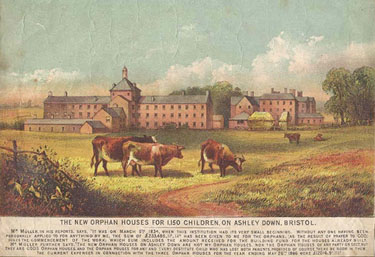
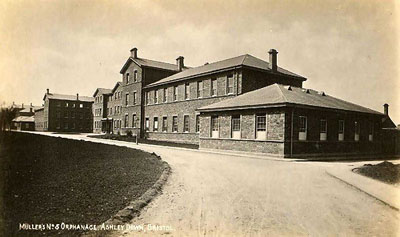
We often read of how G-d worked in the lives of the saints of old. We read Hebrews 11 and see how men and women motivated by the love of G-d lived out that love, but with George Müller's story we have photographs. Here are some old post card views of the orphan house at Ashly Down, built in 1849.

mullerbldg003
Nineteenth Century rendering of the house at Ashly Down.

mullerbldg002
The house at Ashly Down.

mullerbldg006
Children at Ashly Down.

mullerbldg008
Children at Ashly Down received education and training for future employment. the day started at 6am for the orphans, normal forworking-class children of Victorian times.

mullergirls
While boys would be placed in apprenticeships at age 14, the young ladies would remain until 17. They received training to be Nurses, Teachers and Domestic Servants [as the group in maids' uniforms above].

More on the Life of George Müller [click to read].

The George Müller Foundation [click to read].

Redefining 'Social Justice' [click to read] from World Magazine.

Beck vs Wallis [click to read]. More thoughts on 'Social Justice.'

mullerbldg007
The house at Ashly Down today. Although the building might seem austere by today's standards it featured high ceilings and three hundred large windows [all donated by a window maker]. By Victorian standards it was a bright environment.

The Story of George Müller
One Man's Journey of Faith Changed History

George was born in Prussia on September 27, 1805 and was in college studying to be a preacher when he became a Christian. In those days some young men saw preaching as a well paying job, not necessarily as a service to G-d. The University at Halle, where young George was studying was a place where one could find bad company.

His father was a tax collector for the government. He gave George a lot of money, and he spent it very foolishly. Young Mueller was known for his wild out of control lifestyle, But his life was transformed when he came to know Christ.

Therefore, if anyone is in Christ, he is a new creation; the old has gone, the new has come!" -- 2 Cor. 5:17

Müller turned from his old ways but still struggled in his desire to follow Christ. He finished his studies and headed for England to begin his career as a preacher.

Soon after coming to England Müller received a deeper Christian experience which entirely revolutionized his life. He became very ill and was at the point of death when he saw what a bad life he had led but realized all his sins were completely forgiven -- that he was washed and made clean, completely clean, in the blood of Jesus. The result of this was great peace. "I longed exceedingly to depart and to be with Christ..." he wrote.

He was sick for two weeks. Then his Doctor said he was better. He was sad. "I wanted to be in Heaven with the Lord, but he gave me grace to do his will.”

He became pastor of Ebenezer Chapel in Devonshire. His marriage to Miss Mary Groves, a Devonshire lady,followed. Their married life was a very happy one.

In those days the church ”rented” pews to the people. Rich families would pay for the best seats while the poorer brother sat in the far corner. Large salaries were paid to the minister.

George did not think this right. He ended the practice of collecting pew rent in his chirch and forsook a salary. He stated that he would look to the Lord he served to meet his needs, not to men.

He and his wife told their needs to no one but the Lord. Occasionally reports were spread that they were starving; but though at times their faith was tried, their income was greater than before. He and his wife gave away freely all that they had above their present needs, and trusted the Lord for their "daily bread."

For therein is the righteousness of God revealed from faith to faith:as it is written, The just shall live by faith." -- Romans 1:17

He and his wife eventually settled in Bristol, England, where they saw many orphans roaming the streets -- uncared for, unfed, often sick, and virtually guaranteed death at a young age. At this time writers like Charles Dickens and William Blake had not yet brought attention to the plight of these children, and NOTHING was being done to help them.

Müller began his labors in Bristol in 1832, as co-pastor with his friend Mr. Craik, who had been called to that city. Without salaries or rented pews their labors were greatly blessed at Gideon and Bethesda Chapels. The membership more than quadrupled in numbers in a short time. Ten days after the opening of Bethesda there was such a crowd of persons inquiring the way of salvation that it took four hours to minister to them.

George and Mary decided to start an orphanage that would be entirely free of charge, and for which they would never ask any money or support. When they had needs they would go to G-d alone, trusting that he would give them everything they needed.

Pure religion and undefiled before God and the Father is this, To visit the fatherless and widows in their affliction, and to keep himself unspotted from the world." -- James 1:27

Among the greatest monuments of what can be accomplished through simple faith in G-d are the great orphanages covering thirteen acres of ground on Ashley Downs, Bristol, England. When G-d put it into the heart of George Müller to build these orphanages, he had only two shillings (50 cents) in his pocket. Without making his wants known to any man, but to G-d alone, over a million, four hundred thousand pounds ($7,000,000) were sent to him for the building and maintaining of these orphan homes. At the time of Mr. Müller's death, there were five immense buildings of solid granite, capable of accommodating two thousand orphans. In all the years since the first orphans arrived the Lord had sent food in due time, so that they had never missed a meal for want of food.

Confess your faults one to another, and pray one for another, that ye may be healed. The effectual fervent prayer of a righteous man availeth much" -- James 5:16

But my God shall supply all your need according to his riches in glory by Christ Jesus." -- Phillipians 4:19

I have been young, and now am old; yet have I not seen the righteous forsaken, nor his seed begging bread." -- Psalm 37:25

Hundreds of children were saved from the mean streets. They knew love and happiness in the care of George and Mary.

In 1875, at the age of 70, the remarkable George Müller decided to devote the next period of his life to a world-wide ministry of preaching and teaching.

During his seventeen years of missionary travel he toured the United States of America three times, India twice and on three occasions toured Australia and the Colonies. In addition, George Müller preached in forty-two countries including China and Japan. By land and sea he traveled 200,000 miles, an extraordinary feat in the nineteenth century.

Charles Dickens
With Six Children to Feed, the Author Needed a Miracle

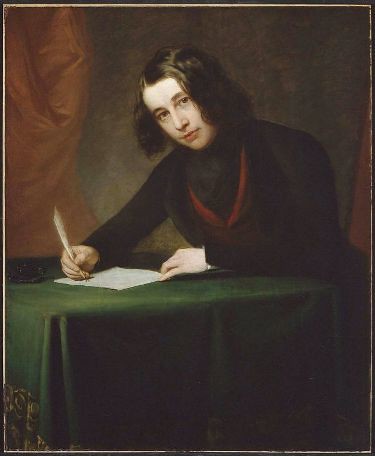
Francis_Alexander_-_Charles_Dickens_1842
Frances Alexander's 1842 painting of the famous author.

The Year was 1843 and he needed a miracle. With six children to feed and a large house in London to maintain, his slipping sales as a writer were of great concern. His installment novel: Martin Chuzzlewit, was selling poorly, unlike earlier works like Nicholas Nickleby, which had given him some measure of success.

Christmas was coming as he bitterly confided to a friend that his checkbook was empty. Walking the streets, he came up with a 'Ghost of an Idea' and set to work. He published 6000 copies in time for Christmas distribution. They sold out, but because he had splurged on hand-coloured illustrations by John Leech he barely broke even. [3.] Yes, even in Nineteenth Century England, good illustration cost you something! [4.]

Fortunately the little work went on to be a classic. It reinvigorated the career of its creator. Today we still love A Christmas Carol and its author: Charles Dickens, not only as a writer, but as one who helped to bring about much needed social reforms in his day.
______________________________________________

Binyamin Netanyahu's Big Win

Binyamin
Prime Minister Binyamin Netanyahu of Israel.

Early predictions had Binyamin Netanyahu and the Likud Party not likely to win a clear majority. Major media outlets were predicting a tie at best with the Zionist Party, meaning perhaps a rotating Prime Ministership. Still, as the actual voting occurred a week ago, as "official" exit polls hovered around a tie, The Prime Minister declared the race a victory and began the important process of building coalitions to govern. How could that be possible?

Phillip Pasmanick, who writes: Israel and Stuff [click to read] put it best: "Wait until the IDF votes are counted. He'll have thirty seats!" Sure enough, as the hard results started coming in on Wednesday, Likud had secured the promised thirty seats. You need to know something about Phillip. He's in the IDF and he's up defending the border with Lebanon. Alongside him are arabs; soldiers, also in the IDF. This should begin to give you a glimpse into the under-reported life of this amazing country the size of New Jersey.

It is indeed the only place in the Middle-East where the religious and political minorities live in peace with their majority neighbors, not only enjoying protection from persecution but representation in the Kenesset! Netanyahu's win, remaniscent of Ronald Reagan's unexpected win in 1980, says that there is solid support for his strong stance in defending the stability of the region. Those who truly desire peace in the region will do well to listen to him.

Ivote

vote
______________________________________________

Restoring Harmony

Harmonic


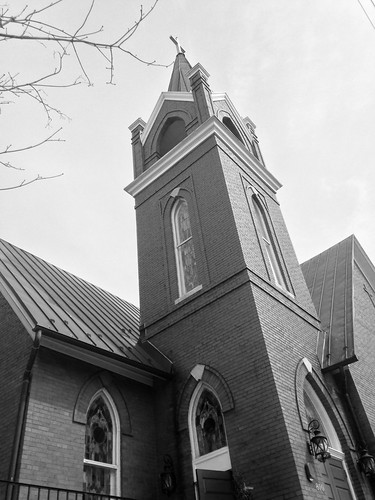
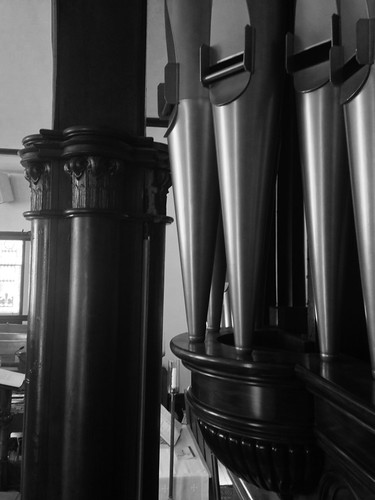
I have been in Stephens City much of the past week helping master restorer and organ builder, Xaver Wilhelmy as he restores the Estey pipe organ in Trinity Evangelical Lutheran Church. The instrument was likely built sometime in the early Twentieth Century, though we have no known opus number. Here are some photographs from the trip.

IMG_5643
The sanctuary itself was completed in 1906.
Photo by Bob Kirchman

IMG_5666
The church windows illuminated from within.
Photo by Bob Kirchman


IMG_5649
The organ itself was probably installed in the 1930's, having been moved from a church in Baltimore. Photo by Bob Kirchman

IMG_5669
Here are some of the motors that play the 1200 pipes.
Photo by Bob Kirchman


apipes
Front Pipes. Photo by Bob Kirchman

Wednesday, July 16, 2014

THYME Magazine: What Makes a Nation Great?

Citizen Journalism with a Better Flavor

thymerrrrrr
Volume VIII, Issue III

What Makes a Nation Great? II

In the end, the state of the Union comes down to the character of the people. I sought for the greatness and genius of America in her commodious harbors and her ample rivers, and it was not there. In the fertile fields and boundless prairies, and it was not there. In her rich mines and her vast world commerce, and it was not there. Not until I went into the churches of America and heard her pulpits, aflame with righteousness, did I understand the secret of her genius and power. America is great because she is good, and if America ever ceases to be good, America will cease to be great.
-- Attributed to Alexis de Tocqueville, though it is not a direct quote from his work: Democracy in America.

In the quest to restore and revitalize our great land, one often hears great solutions proposed but often very little in the way of addressing the real problem. We can create all the great economic models we want to, but if we allow greed and self-serving policies to prevail, we will see ever more of the type of destruction we saw in the mortgage crisis. If we attempt to spend our way out of our problems by creating more money, we will end up as a vassal to China. We need Revival! THYME has looked at the problem of Restoring the American Dream [click to read] before. Whether or not we can definitively find the quote in de Tocqueville's writings, the work of Alvin Schmidt [1.] and others documents well the evidence for Faith as a force in making better the human condition.

That is not to say that we don't need to seek and consider better ways to conduct our affairs. There is a practical side to problem solving that cannot be ignored. Consider how George Müller changed the lives of thousands of orphans in Bristol, England. First let us set the stage. The elimination of the slave trade by William Wilberforce in the Nineteenth Century destroyed not only a vile institution, but as an unintended consequence the city of Bristol, a major slave port, was thrown into decline. G-d had two chosen instruments to revitalize Bristol. There was Isambard Kingdom Brunel, [2.] who built bridges, railroads and great steamships to link Bristol to the world! But Bristol needed more than just economic development!

The city's decline had led to thousands of children either losing their parents or being put out on the streets by their desperate parents. George Müller was G-d's next instrument in the revitalization of Bristol. Young Müller came to the city as a minister of the Gospel. As he sought to minister to the soul of a great city, the plight of her orphans tugged at his heart. He, depending on G-d alone, was able to provide five large houses for these unwanted children. He apprenticed all the boys in various trades but took great pains to educate the young women as office workers, nurses, teachers and housekeepers. They stayed at the homes until they were seventeen. This was a practical policy that kept them from being exploited by those engaged in viler trades.

Those who seek to revitalize our own nation would do well to do no less. We must first address the poverty of our national soul before we set into the very necessary business of restoring her fortunes!

A Case for Faith 

On page 563 of his latest biography — John Quincy Adams: American Visionary — author Fred Kaplan (biographer of Abraham Lincoln, Charles Dickens, Mark Twain, and Gore Vidal among others) cites this insight of the sixth president:

Christianity had, all in all, he believed, been a civilizing force, “checking and controlling the anti-social passions of man.”

That insight is pretty much all an American needs to know in order to understand why the American Founders considered religion — specifically ethical monotheism rooted in the Hebrew Bible — indispensable to the American experiment; and why the America we have known since 1776 is in jeopardy." -- Dennis Prager.

In an article entitled: America Won't be Good without G-d [click to read] Prager lays out a pretty compelling argument. He writes:

"It is easy to respect secular Americans who hold fast to the Constitution and to American values generally. And any one of us who believes in God can understand why some people, given all the unjust suffering in the world, just cannot believe that there is a Providential Being.

But one cannot respect the view that America can survive without the religious beliefs and values that shaped it. The argument that there are moral secularists and moral atheists is a non sequitur. Of course there are moral Americans devoid of religion. So what? There were moral people who believed in Jove. But an America governed by Roman religion would not be the America that has been the beacon of freedom and the greatest force for good in the world."

Here Dennis Prager is spot-on in his analysis of the nature of man. The academy may tell us that we can effectively control the passions that drive us, but history, honestly pursued, tells us otherwise. Prager points out that: "Our prisons are filled with people whose consciences are quite at peace with their criminal behavior. As for reason, they used it well — to figure out how to get away with everything from murder to white-collar crime.

But our prisons are not filled with religious Jewish and Christian murderers. On the contrary, if all Americans attended church weekly, we would need far fewer prisons; and the ones we needed would have very few murderers in them."

Prager goes on to describe the wreckage of the great socialist experiments of the Twentieth Century, and the wreckage of "anything goes" philosophies that encourage casual sex and tell us that fathers are "unnecessary!" Indeed, if the academy would produce more honest studies of the results of the philosopies they have espoused, they might recoil at the burden they have placed on society.

Prager concludes with this sobering thought: "For proof of the moral and intellectual consequences of the secularization of America, look at what has happened to the least religious institution in America, the university. Is that the future we want for the whole country?"

The film: 'Expelled' is a pretty powerful documentary. G-d is getting some pretty bad press these days from esteemed writers such as Richard Dawkins and Christopher Hitchens. The Intelligent Design movement, though it is not specifically theistic, is uniformly vilified in the academy. Why is an inquiry into the observable order of the universe so dangerous, especially when open inquiry is such a cherished part of scientific investigation? Perhaps such 'open inquiry' inevitably leads to the 'wrong' conclusions.

Theodore Dalrymple writes in City Journal: "What the New Atheists are Missing." Himself a non-believer, he points to a time when a teacher's hypocrasy led him to question. Dalrymple does not, however, reject the realm of faith as a force in creating and ordering societies. He see's naturalistic explainations and philosophies quite insufficient for dealing with all of human existence. Richard Dawkins' assertions that religious education is tantamount to child abuse, for example seem to Dalrymple no more than the rebellious ranting of a child who's just learned that his parents are not perfect. All of us have experienced some sort of disillusionment in our youth. I remember a time when a nun of the 'Sisters of Mercy' punished me for some infraction I had not [at least in my recollection] committed. I too questioned a lot of things. The Cuban missle crisis fueled more unanswered anxiety as I careened into adolescence.

But something happened in my teenaged years that is etched firmly in my memory. It was a dark and stressful winter day when I decided to walk in the woods near Triadelphia Reservoir. Something spoke to me that afternoon that was more eloquent than the ranting of hormones and the perceived unfairness of life. The buds of the trees were growing fat. here was the hope of spring and new life. Clearly spring would come. The buds gave evidence of an event hoped for. They were indeed the substance of something yet unseen!

"For the invisible things of him from the creation of the world are clearly seen, being understood by the things that are made, even his eternal power and Godhead; so that they are without excuse:" -- Romans1:20 KJV

Holy writ makes the point that the order and beauty of the creation speaks eloquently of the creator. Thus Intelligent Design, though it merely points out the complex mechanisms of nature, leads one to seek the source of such wisdom. I look to that time in the trees as an affirmation of personal faith in a creator. Though at that point it was pretty detatched and intellectual at best.

"...for he that cometh to G-d must believe that he is, and that he is a rewarder of them that diligenly seek him." Hebrews 11:6b KJV

As a young adult I embraced faith in Christ as redeemer and rewarder. The journey of faith had begun with the fat buds years before though.Therefore I must conlude that those who consider the design of the universe dangerous information have good reason if they fear that others may follow the path I have walked. Dawkins would prefer me to credit space aliens with seeding life to this planet and thus push the hard questions of origin to another world.

Darwinism, in its purest form, rejects the idea that this world is some sort of intentional creation. Of course this leads to the rejection of theism and ultimately the rejection of certain absolutes. 'Expelled' takes a good look at 'eugenics' and how it is supported by a darwinian world view. In the first half of the Twentieth Century certain proponents of eugenics sought to speed evolution along by eliminating the reproduction of certain undesirable types of persons. The results were forced sterilization of the mentally ill and the holecaust. Contrast that movement with Dorethea Dix and others who, motivated by Christian faith, improved conditions for the mentally ill.

Alvin Schmidt makes a good case in his book 'Under the Influence' that faith is a builder of society rather than a force to destroy it. Dalrymple the non-believer would concur. Thus the danger of Intelligent Design leading to dangerous conclusions is much inflated. One might even conclude that the free discussion of order and design,wherever it is found, is wholesome. Certainly there is no basis for its exclusion from the academy.

The argument will no doubt be made: "what about the crusades, what about jihad, religion is dangerous?" Yes, it is certainly something that may be misused, but that must be countered with an honest look at how the so-called "good" science of evolution was the foundation of eugenics. Millions of people were killed in this misguided attempt to improve humanity. Ironically, such brilliant men as Albert Einstein met the criteria for elimination. We reduce the world to only naturalistic explainations at our own peril. The argument for open inquiry stands.

Leaves
Autumn Leaves. Photo by Bob Kirchman

"When through the woods,and forest glades I wander,
and hear the birds sing sweetly in the trees;
when I look down,from lofty mountain grandeur,

and hear the brook and feel the gentle breeze"
-- "How Great Thou Art" Verse 2

A Case for Summer Vacation
By Bob Kirchman

How does one nurture the creative genius of a Brunel, or the vision of a Wilberforce or a Müller? I would suggest that men and women of that ilk are often found walking on the "road less traveled!" Walking home alone from a prayer meeting along a quiet street, the great designer, R. G. LeTourneau says he was inspired with the design for a rather complex machine that had stymied his most brilliant designers for weeks. Could it be true that not only should we hold off on 'formal' education a bit, but we should make sure children are not scheduled to the point of losing free, creative time.

If indeed the creative muse shows up in the quiet times, if problems are indeed solved through the exploration of play, wouldn't it make sense for us to esteem these times in the sense their descriptive originally suggests: re-creation?! The 'other' Weekly News Magazine [click to read] once argued that Summer Vacation is over romanticized and merely stands in the way of the kids retaining all that book-learning they'll need so they can work for the Chinese some day. OK, I'll give you the point that a certain amount of knowledge is 'lost' as kids pursue other activities... but as one who's life and career was shaped by Summers of 'other activities' I'll raise a clear protest: "Not so fast!"

I spent my Summers drawing, building things, going to camp and playing for hours in the woods. I was Lewis and Clark when I set off to explore the woods surrounding Triadelphia Reservoir... with no Sacajawea to help with directions. Mom got a big bell to ring when it was time to come in for dinner. Sometimes I actually heard it. More often than not my appetite finally brought me back to a plate of cold food. Now I loved my groceries as much as any young boy, but didn't Simon Kenton eat cold biscuits while he was exporing the Ohio Valley?

When my younger siblings were old enough, Dad loaded us in Mom's VW Microbus [Mom was there first when it came to the minivan] and we took road trips. Man, I loved road trips. We'd go to places like Gettysburg and crawl into sniper's nests. We'd imagine what it must have been like rushing up the hill in Pickett's Charge. Then we'd go to Antietem and wonder some more. When I turned sixteen, Dad actually let me drive on the trips. Oh the white-knuckle thrill of the Capital Beltway! The endless perspective of NC Route 12 heading to Hatteras and the rollercoaster ride down US 29 to Grandma's. Life was good in the Summer. I hired myself out to the local farmers to bale hay and other jobs. Hot, nasty work is good for the teenaged soul.

One farmer had a wife who'd make us grape juice and lemonade. I've never found sweeter refreshment in all my life.

One Summer Dad decided I needed to build a greenhouse. He let me draw up the plans and he took them to the county... I was thirteen at the time. He gave me a budget and set me loose. I learned to lay block, build walls, buy old storm windows and pretty much whatever it took. The guys at Talbott's Lumber Yard in Ellicott City gave me lots of free advice. They pretty much convinced me I could do it. I wonder how much Dad was paying them?

I was not a licensed electrician... that presented a problem for hooking up the power. Dad said it wasn't a problem. He had a buddy who was licensed and came out and did the whole job in exchange for a bottle of Jack Daniels [Black Label] that Dad cheerfully 'donated' to the building fund. In addition to the electric heater, we got the brilliant idea that it would benefit the plants with both heat and moisture if we ran the dryer vent in there.

What to do about lint? Well, here's where it got really interesting. When we discovered that a discarded nylon stocking fit over the vent and caught the lint while allowing air to flow, we had our problem solved. Dad enjoyed the 'conversation piece' that resulted too.

The greenhouse, built of redwood, served our family for many years. Finally it succumbed to termites after I was gone and married. It's lessons are still with me today.

Cover Photo: Dark Hollow Falls Rainbow by Bob Kirchman.
Wednesday, June 18, 2014

THYME Magazine: Essential Knowledge III

Citizen Journalism with a Better Flavor

thymebear2
Volume VII, Issue XXVII

Essential  Knowledge III

Does the human condition indeed require Faith to sustain it? I write from that perspective in this essay, but there are those who would disagree. Indeed there is fresh argument to the effect that human compassion  can (and indeed DOES) exist apart from Faith. Leaving the Sciences vs science arguements of the past, a new study from the University of California, Berkley, suggests that Compassion Moves the Non-Religious [click to read] more than the people of Faith. A closer look would not necessarily discredit the compassion of the faithful, but identify the top motivator in the life of a person who's life is not characterized by Faith.

"Overall, we find that for less religious people, the strength of their emotional connection to another person is critical to whether they will help that person or not," explained Robb Willer, co-author of the study and UC Berkeley social psychologist. "The more religious, on the other hand, may ground their generosity less in emotion, and more in other factors such as doctrine, a communal identity, or reputational concerns." -- Laura Saslow, Researcher

Saslow goes on to say that it is more likely that the person of Faith will cite Religious teaching as the reason for his or her actions. The person who professes NO belief will indeed cite compassion by default. Atheists often cite the observed lack or compassion they see in religious people as one reason they chose not to believe. For me the study has deeper implications. I remember Bertrand Russell's wrestling with the meaning of life:

That Man is the product of causes which had no prevision of the end they were achieving; that his origin, his growth, his hopes and fears, his loves and his beliefs, are but the outcome of accidental collocations of atoms; that no fire, no heroism, no intensity of thought and feeling, can preserve an individual life beyond the grave; that all the labours of the ages, all the devotion, all the inspiration, all the noonday brightness of human genius, are destined to extinction in the vast death of the solar system, and that the whole temple of Man’s achievement must inevitably be buried beneath the debris of a universe in ruins—all these things, if not quite beyond dispute, are yet so nearly certain, that no philosophy which rejects them can hope to stand. Only within the scaffolding of these truths, only on the firm foundation of unyielding despair can the soul’s habitation be safely built. -- Bertrand Russell (from A Free Man's Worship, 1903)

In despair, one still reaches out to find an anchor. A soul adrift still seeks safe harbor. Conscience still leads us to the safe waters of compassion... even as we dismiss it as a simple evolution necessary for the survival of the species, that anchor becomes MORE important because we find nothing else to tie our rope to. The first irony implicit in the role of despair is that for many of us this was the point where we began our discipleship IN the Faith. Though those who want to deny Faith will undoubtedly reference obscure similarities to now extinct ancient religions to obfuscate the beacon that I follow, I humbly offer that compassion finds its roots in some very clearly marked repositories. Winston Churchill said it best: "There is no better hope than Christ's principles in the Sermon on the Mount!" Wallace Henley [click to read] writes:

"Everyone on the planet has a worldview. Those who understand reality through a biblical view know transformation is the fundamental issue. "Where do wars come from?" asks James, rhetorically. They come from our lusts and passions. We desire power and possessions, and we enter conflicts to satisfy those perceived needs.

Biblically formed thinkers are the ultimate realists. While many in the world try to find other explanations for "irrational" human behavior whether in the form of nations or individuals, those who embrace the Bible's worldview know the bottom line: "All have sinned and come short of the glory of God." (Romans 3:23)

Then follows the question: What worldview can really bring human transformation that benefits the rest of the world? Certainly not a belief system that advocates intimidation, manipulation, condemnation, and domination to force global allegiance.

Suddenly the Christ towers in our precarious moment: the Christ who taught us to love our enemies, to be harmless as doves but simultaneously wise as serpents, to lead as servants, the Christ who renews the human mind, and who gives us a whole new way of seeing and living."

Alvin Schmidt concurs with Henley. In his book: Under the Influence [click to read], Schmidt documents well the roots of much of what the world today calls "Compassion," in the revelation of the Divine. The Berkley study first referenced finds two reasons for action: compassion (usually for those one feels empathy with), and doctrine. What if pure doctrine expands compassion? Consider those early Christians who pulled discarded babies out of the Tiber River and cared for them. What about the Righteous Gentiles who risked their own lives to protect their Jewish Neighbors from the Holocaust?

In fact Jesus once asked: "Who is my neighbor?" in Luke chapter 10. The lesson he proceeded to teach did just that... EXPANDED the reach of compassion! Jesus was always embracing lepers and talking with people he wasn't supposed to... like WOMEN. In a world where the (self) righteous man would pray, thanking the Divine that he had not been born a Gentile, a Slave or a Woman, Jesus brought the message of promise to all three, as well as to the House of Israel. IMAGO DEI was a non-negotiable concept  for the carpenter from Gallilee.

A very sad story was seen in the Washington Post recently. It was about a 19th Century home for unwed mothers where the bodies of hundreds of discarded children had been buried. The story went on to explain the distain the surrounding community had for the "home babies." They mainly died from neglect. The picture of the building's exterior bore a chilling resemblance to a Müller home, but here the resemblance ends. Where Müller saw IMAGO DEI, the administrators of this facility saw only the children's unwantedness. Today the household of Faith extends compassion in ministry to unwed mothers and their unborn babies.

Expanding compassion might well take the same reporter who investigated this home to shudder at the case of Kermit Gosnell's abortion clinic in Pennsylvania. Where Gosnell saw only unwantedness, we are challenged to see IMAGO DEI! That is the challenge, and the destination we have arrived at... a personal challenge to expand the vision of compassion, directed by the Divine!

Thursday, November 14, 2013

THYME Magazine American Renewal Issue IV

Citizen Journalism with a Better Flavor

THYME0625
Volume VI, Issue XXV

Isambard Kingdom Brunel
What a Nineteenth Century Innovator Can Teach Us Now
© 2013 The Kirchman Studio, All rights reserved.

“They say that the condition for a miracle is difficulty, but the condition for a great miracle is impossibility” -- Angus Buchan, “G-d's Farmer”

When William Wilberforce [1.] had ended the slave trade in the British Empire, he had thrown the city of Bristol, England into economic depression. The port there was heavily devoted to that wretched business and suffered heavily when it was brought to a sudden halt. The unintended consequence had been a rise in children condemned to a life of poverty. Ending the vile business of enslaving Africa's children had resulting in England's society spurning the needs of her own. Into this world came George Müller [2.], who, relying on faith in G-d alone, provided redemption for thousands of orphans. Many of these children were cast-offs of a society in economic despair.

George Müller [3.] had seen the wretched street urchins most people despised as jewels to be polished. Muller, relying solely on Divine provision, built five large houses for Orphans at Ashley Downs in Bristol, England. He trained the girls to be nurses, teachers, clerical workers and domestics. He apprenticed all the boys in various trades. He was excoriated for training these unwanted children "above their station." He ignored the critics.

Müller looked to G-d alone, but Bristol needed an outfowing of Divine provision to provide for her children. G-d's provision for Bristol was to come in the form of inspiration and innovation, embodied in the work of a young pioneer of civil engineering. He also ignored his critics.

suspension-bridge001
Brunel's Clifton Suspension Bridge became the symbol of the City of Bristol.

greatwesternrr001
Building the Great Western Railway.

In 1831, 24 year old Isambard Kingdom Brunel [4.] was awarded a contract to bridge the Avon Gorge. It was the dream of a prosperous wine merchant who provided the initial funding. The completed bridge would become the symbol of the city, but lack of funding dogged the project. It took thirty years to complete it. For years only the towers stood completed. In 1833 Brunel began work on the Great Western Railway, which would become the instrument of Bristol's economic revitalization. The nicknames: "Great Way Round" and "G-d's Wonderful Railway" seem to describe well Brunel's great work.

Brunel was an innovator. He probably experienced as many failures as successes in his short lifetime. Born on April 9, 1806, the son of Sir Marc Brunel, he assisted his father in building a tunnel under the Thames. He would later become the resident engineer of that project. At twenty years of age, he designed a suspension bridge to cross the Avon river. A modified version of his plan was actually constructed.

At 26, Brunel was building the Great Western Railway, commissioned to maintain Bristol's importance as a port and position her for  trade with America. This wide-gauge railroad linked Bristol and Western regions of England to London. Bristol's prosperity as a port was assured and the work of Müller created solid citizens with strong spiritual foundations to benefit.

But Brunel was not content to simply build a better railway. He looked across the Atlantic, envisioning fleets of ocean greyhounds -- great steamships that would complete the linking of his Great Western Railway to America! The S. S. Great Britain was his creation. It was the first metal-hulled propeller-driven ocean ship and became the prototype for modern ocean liners.

Building the South Devon Railway as a spur to the Great Western, Brunel experimented with an alternative to steam engines -- Vacuum tube powered trains. Stationary vacuum plants evacuated tubes laid along the center of the track that powered the movement of trains.

atmosenginesmall
Brunel's 'Atmospheric Railway.'

"The technology required the use of leather flaps to seal the vacuum pipes. The natural oils were drawn out of the leather by the vacuum, making the leather vulnerable to water, rotting it and breaking the fibres when it froze. It had to be kept supple with tallow, which is attractive to rats. The flaps were eaten, and vacuum operation lasted less than a year, from 1847 (experimental service began in September; operations from February 1848) to 10 September 1848.[45] It has been suggested that the whole project was an expensive flop. In Brunel's favour, it has been noted that he had the courage to call a halt to the venture instead of struggling on with it at greater cost." -- Wikipedia

Like alternative transportation prototypes of our day, the vacuum tube system was more expensive. The accounts of the SDR for 1848 show that atmospheric traction cost 3s 1d (three shillings and one penny) per mile compared to 1s 4d/mile for conventional steam power.Though considered a failure at the time, vacuum powered trains may have been a distant precursor to Evacuated Tube Technology [5.] which is now being developed to move entire transport capsules through large tubes -- essentially powered in the same way as Brunel's South Devon train. Brunel was simply two Centuries before his time on this.

What can we learn from Brunel today? Plenty! Inspiration and innovation are needed now as they were needed then. Brunel teaches us valuable lessons about expanding vision with proven technologies and wisely exploring alternatives (and abandoning them when they do not work as planned).

Praying people see the diaconate role of economic development as an integral part of G-d's provision. In “Resources for Deacons, Love Expressed Through Mercy Ministries,” [6.] Tim Keller states his belief in three “levels” of mercy in diaconal ministry:

The first Level Is Simple Relief: That is taking care of the immediate need.

The Second Level Is Economic Development: That is teaching the poor how to get out of poverty by teaching them how to handle money, property, etc. and furnishing them with the means to do so. “Not handouts, but ownership is the way to break the cycle of poverty.”

The Third Level Is Social Reform: Christians should be involved in the culture in an effort to change the social structure.

We see it very localized in a place like Zambia, where people of faith instruct widows to become seamstresses (and people in America gift them with sewing machines). But, can we believe G-d for ever greater inspiration? What vision would G-d give us for our family, our company of employment, our city and county... and beyond? Müller said "the age of miracles is not past." Angus Buchan [7.], in the turmoil of Zambia and South Africa, looked to G-d for inspiration. G-d met him in a corn field where he learned the power of prayer!

Buchan had packed his family up during the unrest in Zambia in the late 'seventies and moved them to South Africa. A successful farmer in Zambia, he felt that he would be happy if he could acquire another farm in South Africa. It didn't. Experiencing deep depression, Buchan was angry and confused. Wandering into a lay-witness Sunday at the local Methodist Church, Angus heard builders, tradesmen and fellow farmers tell of what Jesus meant in their lives. For the first time he saw men crying, he wept unashamedly himself as he responded to an altar call. He took the Lord seriously about the changed life promise.

Buchan went back to his farm and learned to pray in his own corn field. Then he sought to minister to his Zulu workers. His farm manager, Simeon Bhengu, told him: "that's women's religion..." But G-d met Angus and spoke through his friendship with Simeon. Today the men are brothers in faith and brothers in every way. "My children are his and his are mine." Angus says of his Zulu brother. Angus expanded his farming operations and G-d's miraculous provision was seen at every turn. The movie "Faith like Potatoes" is the true story of Angus Buchan and it is quite inspiring! Buchan used machinery but avoided totally mechanizing the farm, looking to provide steady employment to his Zulu neighbors.

In the early 1980's Buchan became aware of a new tragic development. AIDS was ravaging families and creating untold numbers of orphans. Buchan reached out to these orphans but had no place to house them. A local school had temporary classrooms they were going to demolish and Angus received permission to take them apart and reassemble them at Shalom, which he had named his complex at the farm. At first the children lived in dormitories but gradually Angus was able to create "houses" where one "mother" cared for a smaller number.

South Africa in her recent history has experienced much uncertainty and Buchan's experience is instructive as we look to address the turmoil in our own country today. Isambard Kingdom Brunel should serve as an inspiration as well.

"Let no man despise thy youth; but be thou an example of the believers, in word, in conversation, in charity, in spirit, in faith, in purity." -- 1 Timothy 4:12

His Simple Faith Gave Hope to Street Children


George Müller changed the way those around him saw the plight of orphans.

Next Week in THYME: Metamorphosis
Bob Kirchman writes on: "Transforming a Culture... One Person at a Time"

Monday, September 9, 2013

George Müller, Robber of the Cruel Steets

His Simple Faith Gave Hope to Street Children


George Müller changed the way those around him saw the plight of orphans.

Monday, August 26, 2013

George Müller's Orphanage in Bristol

The House that Faith Built Cared for Thousands

A Milestone Monday Feature:

George Müller
George Müller.

What Can One Do, Motivated by G-d's Love?

Our small group has been discussing the book Crazy Love [1.] by Francis Chan. There is a brief mention of George Müller, the Nineteenth Century evangalist who is famous for his work with orphans. Müller's story begins in Prussia and continues as he comes to faith as a young man. Motivated by his love for G-d he moves away from some practices in the church such as 'renting' pews. In those days people of means would pay handsomely for the best seats and the Pastor would make a good living from these monies.

George Müller's love for G-d soon moved him to reliance on G-d. When he came to take a church in Bristol, England he declined the salary. He wanted to show people how vast and great G-d really is by trusting Him for his supply. Müller prayed and told his needs to no one, then ministered to the needs of his congregation. When his needs were supplied he gave G-d the glory. In times of waiting for supply he gave G-d the glory.

Seeing the needs of orphan children, George Müller went to his knees on their behalf and G-d provided the means for him to care for them. He eventually built five orphan houses and never once made an appeal for money!

We often read of how G-d worked in the lives of the saints of old. We read Hebrews 11 and see how men and women motivated by the love of G-d lived out that love, but with George Müller's story we have photographs. Here are some old post card views of the orphan house at Ashly Down, built in 1849.

mullerbldg003
Nineteenth Century rendering of the house at Ashly Down.

mullerbldg002
The house at Ashly Down.

mullerbldg006
Children at Ashly Down.

mullerbldg008
Children at Ashly Down received education and training for future employment. the day started at 6am for the orphans, normal forworking-class children of Victorian times.

mullergirls
While boys would be placed in apprenticeships at age 14, the young ladies would remain until 17. They received training to be Nurses, Teachers and Domestic Servants [as the group in maids' uniforms above].

More on the Life of George Müller [click to read].

The George Müller Foundation [click to read].

Redefining 'Social Justice' [click to read] from World Magazine.

Beck vs Wallis [click to read]. More thoughts on 'Social Justice.'

mullerbldg007
The house at Ashly Down today. Although the building might seem austere by today's standards it featured high ceilings and three hundred large windows [all donated by a window maker]. By Victorian standards it was a bright environment.

One Man's Journey of Faith Changed History

The Story of George Müller

George was born in Prussia on September 27, 1805 and was in college studying to be a preacher when he became a Christian. In those days some young men saw preaching as a well paying job, not necessarily as a service to G-d. The University at Halle, where young George was studying was a place where one could find bad company.
His father was a tax collector for the government. He gave George a lot of money, and he spent it very foolishly. Young Mueller was known for his wild out of control lifestyle, But his life was transformed when he came to know Christ.

"Therefore, if anyone is in Christ, he is a new creation; the old has gone, the new has come!" -- 2 Cor. 5:17

Müller turned from his old ways but still struggled in his desire to follow Christ. He finished his studies and headed for England to begin his career as a preacher.

Soon after coming to England Müller received a deeper Christian experience which entirely revolutionized his life. He became very ill and was at the point of death when he saw what a bad life he had led but realized all his sins were completely forgiven -- that he was washed and made clean, completely clean, in the blood of Jesus. The result of this was great peace. "I longed exceedingly to depart and to be with Christ..." he wrote.

He was sick for two weeks. Then his Doctor said he was better. He was sad. "I wanted to be in Heaven with the Lord, but he gave me grace to do his will.”

he became pastor of Ebenezer Chapel in Devonshire. His marriage to Miss Mary Groves, a Devonshire lady,followed. Their married life was a very happy one.

In those days the church ”rented” pews to the people. Rich families would pay for the best seats while the poorer brother sat in the far corner. Large salaries were paid to the minister.

George did not think this right. He ended the practice of collecting pew rent in his chirch and forsook a salary. He stated that he would look to the Lord he served to meet his needs, not to men.

He and his wife told their needs to no one but the Lord. Occasionally reports were spread that they were starving; but though at times their faith was tried, their income was greater than before. He and his wife gave away freely all that they had above their present needs, and trusted the Lord for their "daily bread."

"For therein is the righteousness of God revealed from faith to faith:as it is written, The just shall live by faith." -- Romans 1:17

He and his wife eventually settled in Bristol, England, where they saw many orphans roaming the streets -- uncared for, unfed, often sick, and virtually guaranteed death at a young age. At this time writers like Charles Dickens and William Blake had not yet brought attention to the plight of these children, and NOTHING was being done to help them.

Müller began his labors in Bristol in 1832, as co-pastor with his friend Mr. Craik, who had been called to that city. Without salaries or rented pews their labors were greatly blessed at Gideon and Bethesda Chapels. The membership more than quadrupled in numbers in a short time. Ten days after the opening of Bethesda there was such a crowd of persons inquiring the way of salvation that it took four hours to minister to them.

George and Mary decided to start an orphanage that would be entirely free of charge, and for which they would never ask any money or support. When they had needs they would go to G-d alone, trusting that he would give them everything they needed.

"Pure religion and undefiled before God and the Father is this, To visit the fatherless and widows in their affliction, and to keep himself unspotted from the world." -- James 1:27

Among the greatest monuments of what can be accomplished through simple faith in G-d are the great orphanages covering thirteen acres of ground on Ashley Downs, Bristol, England. When G-d put it into the heart of George Müller to build these orphanages, he had only two shillings (50 cents) in his pocket. Without making his wants known to any man, but to G-d alone, over a million, four hundred thousand pounds ($7,000,000) were sent to him for the building and maintaining of these orphan homes. At the time of Mr. Müller's death, there were five immense buildings of solid granite, capable of accommodating two thousand orphans. In all the years since the first orphans arrived the Lord had sent food in due time, so that they had never missed a meal for want of food.

"Confess your faults one to another, and pray one for another, that ye may be healed. The effectual fervent prayer of a righteous man availeth much" -- James 5:16

"But my God shall supply all your need according to his riches in glory by Christ Jesus." -- Phillipians 4:19

"I have been young, and now am old; yet have I not seen the righteous forsaken, nor his seed begging bread." -- Psalm 37:25

Hundreds of children were saved from the mean streets. They knew love and happiness in the care of George and Mary.

In 1875, at the age of 70, the remarkable George Müller decided to devote the next period of his life to a world-wide ministry of preaching and teaching.

During his seventeen years of missionary travel he toured the United States of America three times, India twice and on three occasions toured Australia and the Colonies. In addition, George Müller preached in forty-two countries including China and Japan. By land and sea he travelled 200,000 miles, an extraordinary feat in the nineteenth century.