Showing posts with label Imago Dei. Show all posts

Wednesday, April 15, 2015

THYME Magazine: The Mandate in Imago Dei

Citizen Journalism with a Better Flavor
THYME0916
Volume IX, Issue XVI

What Imago Dei Tells Us

For the past week a disturbing image has been circulating the news of what appears to be cold-blooded murder. A man appears to be fleeing a police officer and is shot in the back by that officer. We don't know the details, and do not offer any 'theories,' but merely suggest that something is terribly wrong here. Most of us recoil at the thought of taking another life. Most of us extend the courtesy of human dignity to those who are different from us -- and yet, I recall when taking my car to a new garage in the town I used to live in, the mechanic said something that shocked me. He was a good mechanic and appeared to be a decent guy. He had served in Korea and was relating the experience to another worker in the shop. He talked about them having a black guy in the unit. They hated him for some reason. The mechanic used the more vulgar term for describing this man and I think I heard him say that they put him in a position to get killed.

I thought of that man's mother. Perhaps there was a wife or girlfriend. Children? I was in no mood for a confrontation that day, so I did not ask for a clarification. The mechanic's tone indicated he was pretty set in his ways. Clarification was not likely to be pleasant. I never went back there. I have not told the story before, but now the garage is gone. We are shocked by such stories but every day people kill people for being in the 'wrong' group around the world. ISIS kills Christians, Hutus and Tutsis are rivals though most outside of their lands cannot tell them apart. One of my friends from school went to Northern Ireland in the 1970's to study the situation there. A car exploded in the street while he walked in Belfast. He actually got an interview with Bernadette Devlin. We awaited his report eagerly.

He said he had met Catholics, Protestants and a few people in both churches who said that they related intimately with G-d, like children of their Father. These were the ones who extended forgiveness and the gift of recognition to those outside their cultural church. They were the 'Blessed Peacemakers.' -- Matthew 5:9 These people had a vision for their country not unlike that of Dr. Martin Luther King in our own. They saw a day in the future when Protestants and Catholics would share their land without oppression or conflict.

The 'Blessed Peacemakers' of Northern Ireland have a lesson for us in our own time. We can see outside the parameters of our own group (and wrongs done to it) and embrace the larger family of G-d's Children. That means we mourn EVERY child's death by violence, be he like us or not. We see the travesty of lives destroyed because they are precious to their Creator. Genesis says that each is made in His Image. To miss this truth is to go the way of destruction like that seen in Rwanda, where the Hutu majority slaughtered the Tutsi and moderate Hutus. [1.]

Corbels and Carillons

IMG_5907
Grace United Methodist Church in Middletown, Virginia. [2.]

Photo by Bob Kirchman

IMG_5908
Stephens City United Methodist Church [3.]... Photo by Bob Kirchman

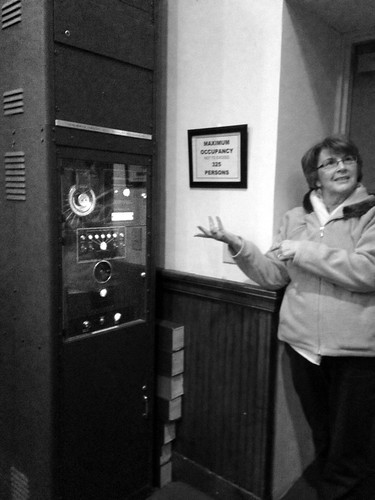
ShulmerlichBW
...contains this Shulmerlich Carillon, probably built in the 1960's. The instrument was played by punched rolls (like a player piano), and each note was struck on a small rod and amplified electronically. The sound was broadcast from speakers in the belfry.
Photo by Bob Kirchman.

Saturday, February 28, 2015

THYME Magazine: Lee Jong-Rak and IMAGO DEI

Citizen Journalism with a Better Flavor

THYMEPstrLEE2
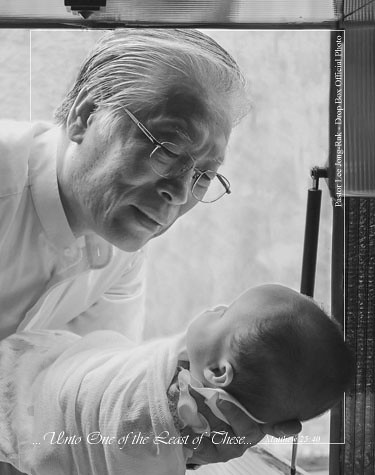
Volume IX, Issue VIIIa: Lee Jong-Rak tenderly lifts an abandoned baby.

Living in Light of IMAGO DEI

In the earliest days of the Christian church, child abandonment was a problem too. Unwanted children were simply cast into the Tiber River. Understanding the preciousness of human life, the Faithful pulled as many of these young souls as they could from the water and raised them as their own. Pastor Lee Jong-Rak of Seoul, South Korea is a man who lives in light of that great Truth today, the Truth that man is created in the image of G-d according to the Holy Scriptures. Each life is precious.

Pastor Lee was moved by the sight of abandoned babies that were simply left on the streets of Seoul. Most of these infants died, so the man of G-d came up with a solution... a heated "mailbox" where infants could be left anonymously. It is estimated that about six hundred childrens' lives have been saved through this unique ministry. Many of the abandoned children are handicapped, having conditions like Down's Syndrome. They are seen by many in that part of the world as a curse and a burden.

Pastor Lee's own son is handicapped, and Pastor Lee sees him as a blessing, noting that such children increase our capacity to love.

The Drop Box” was directed by Brian Ivie, a graduate of the University of Southern California’s School of Cinematic Arts. “Through this movie, we’re hoping that people would see more than Christians working on behalf of orphans,” said Ivie. “We’re hoping that people would see a G-d who has always and will always love the broken and the lost.” Ivie was personally impacted as he directed “The Drop Box.” As he accepted the “Best of Festival” award for the documentary at the 2013 San Antonio Independent Christian Film Festival, Ivie told the audience: “I became a Christian while making this movie. When I started to make it, and I saw all these kids come through the drop box it was like a flash from heaven. Just like these kids with disabilities had crooked bodies, I have a crooked soul. And G-d loves me still.”

The Drop Box [click to read] will be shown in theaters on March 3, 4 and 5. Click on the link to learn more.


The film: The Drop Box will be shown March 3, 4 and 5.

Wednesday, September 3, 2014

THYME Magazine: Finding the C.U.R.E.

Citizen Journalism with a Better Flavor

THYME0810B
Volume VIII, Issue X

Finding the C.U.R.E.
Star Parker's Mission to Give People a Voice

As the wreckage of Watts smoldered in the wake of the riots of 1992, a young woman's dream lay shattered in the ruins. Star Parker had dreamed of creating an urban Christian magazine and that enterprise was now a casualty of the violence. As a teen she had had a troubled life, influenced by crime and drugs. She came to Los Angeles with a dream to become a dancer on Soul Train, but ended up as a single mother on welfare instead. Her life was forever changed when she gave it to Christ. She credits her G-d-given Faith for everything that happened after that.

Ms. Parker was motivated by her Faith to do more than simply cash her check and languish for the rest of her life on public assistance. She worked under the table and found a way to put herself through school, earning a degree in marketing. She launched her magazine, only to see her business destroyed in 1992. But Star Parker was only defeated temporarily. She continued her writing and her activism. Taking on the welfare system she had escaped, she wrote her autobiography, Pimps, Whores and Welfare Brats, published in 1997. Her second book, Uncle Sam's Plantation, was released in 2003.

Star Parker founded the Coalition on Urban Renewal and Education, or CURE, to: "provide a national voice of reason on issues of race and poverty in the media, inner city neighborhoods, and public policy." As a social policy consultant, Star Parker has given regular testimony before the United States Congress, and is a national expert on major television and radio shows across the country. She recently RAN for Congress but was unsuccessful. Star is a regular commentator on CNN, MSNBC, and FOX News. She has debated Jesse Jackson on BET; fought for school choice on Larry King Live; and defended welfare reform on the Oprah Winfrey Show.

Today Ms. Star regularly publishes compelling commentary on issues of the day. Many of them appear on the website of CURE [click to read] and provide a welcome contrast to the repetitive tomes of Jesse Jackson and Al Sharpton. Her story is amazing. Her writing is clear and lucid. She seems like a woman who has stepped out of the Harlem Renaissance and into our century! She is on a mission to inspire black pastors so that they might inspire their congregants.

So why don't we hear more about her? Her story of overcoming does not square well with the 'victim' narrative favored by so many contemporary activists. Also, her Christian Faith, the catalyst in her amazing life story, is problematic to modern Liberal narrative as well!

Could it be that the modern activist narrative, perpetuated by writers like Howard Zinn, conveniently ignores the sin, violence and retribution that lies outside of 'Western' activity. His 776 page A People's History of the United States [click to read] is required reading on many college campuses. No doubt, his philosophy has influenced many an aspiring journalist in their own activism. But Zinn must be seen for the Marxist that he is, and his convenient 'omission' of important history needs to be corrected.The problem is that Zinn, not sin, has become the basis for the activism of men like Sharpton and Jackson, who for the media serve as icons of the Civil Rights Movement.

First of all, it must be noted that Zinn himself admits: “Once I was bar mitzvahed, and I had done my religious duty, and my family needn’t be ashamed of me anymore…. that was the end of my religiosity.” He further perpetuates the marginalization of Faith in his works. Bob Cheeks [click to read] writes: "Rhetorician Richard M. Weaver in his essay, Up From Liberalism, explained the spiritual discernment that gave birth to his intellectual epiphany: “Original sin is a parabolical expression of the immemorial tendency of man to do the wrong thing when he knows the right thing.” By acknowledging Original sin, Weaver, abandoned a youthful dalliance with what at that time (the 1930’s) was called liberalism. Unfortunately, historian/activist Howard Zinn had no such epiphany."

The problem becomes most apparent when 'history' focuses on slavery in the Western world, conveniently forgetting its long-standing existence both ancient and primitive societies. Ignored is the fact that it was the Western world that created conditions for the dialogue and activism that largely ended the foul institution. Faith was the catalyst in the lives of men like John Newton and William Wilberforce. It was the catalyst for Martin Luther King's dream as well.

Indeed, Star Parker finds herself swimming upstream (as far as the academy is concerned) with her message of personal responsibility and empowerment. Her message and indeed her own life story serve to deconstruct the 'victim' narrative so essential to the perpetuation of the modern Liberal philosophy. Where they would focus on reforming 'corrupt' (as they see it) institutions, Parker seeks to reform the man! We would do well to remember that our great universities were founded on this principle, to bring the Gospel into practical practice in the hearts of individuals that make up our society. Star Parker is merely picking up their original mission in the work she does. Her message resonates with that of Martin Luther King's 1962 Speech, given at the Lincoln Memorial:

I am happy to join with you today in what will go down in history as the greatest demonstration for freedom in the history of our nation.

Five score years ago a great American in whose symbolic shadow we stand today signed the Emancipation Proclamation. This momentous decree came as a great beckoning light of hope to millions of Negro slaves who had been seared in the flames of withering injustice. It came as a joyous daybreak to end the long night of their captivity.

But one hundred years later the Negro is still not free. One hundred years later the life of the Negro is still sadly crippled by the manacles of segregation and the chains of discrimination.

One hundred years later the Negro lives on a lonely island of poverty in the midst of a vast ocean of material prosperity.

One hundred years later the Negro is still languishing in the comers of American society and finds himself in exile in his own land.

We all have come to this hallowed spot to remind America of the fierce urgency of now. Now is the time to rise from the dark and desolate valley of segregation to the sunlit path of racial justice. Now is the time to change racial injustice to the solid rock of brotherhood. Now is the time to make justice ring out for all of God's children.

There will be neither rest nor tranquility in America until the Negro is granted citizenship rights.

We must forever conduct our struggle on the high plane of dignity and discipline. We must not allow our creative protest to degenerate into physical violence. Again and again we must rise to the majestic heights of meeting physical force with soul force.

And the marvelous new militarism which has engulfed the Negro community must not lead us to a distrust of all white people, for many of our white brothers have evidenced by their presence here today that they have come to realize that their destiny is part of our destiny.

So even though we face the difficulties of today and tomorrow I still have a dream. It is a dream deeply rooted in the American dream.

I have a dream that one day this nation will rise up and live out the true meaning of its creed: 'We hold these truths to be self-evident; that all men are created equal."

I have a dream that one day on the red hills of Georgia the sons of former slaves and the sons of former slave owners will be able to sit together at the table of brotherhood.

I have a dream that one day even the state of Mississippi, a state sweltering with the heat of injustice, sweltering with the heat of oppression, will be transformed into an oasis of freedom and justice.

I have a dream that little children will one day live in a nation where they will not be judged by the color of their skin but by the content of their character.

I have a dream today.

I have a dream that one day down in Alabama, with its vicious racists, with its Governor having his lips dripping with the words of interposition and nullification, one day right there in Alabama little black boys and black girls will be able to join hands with little white boys and white girls as sisters and brothers.

I have a dream today.

I have a dream that one day every valley shall be exalted, every hill and mountain shall be made low, the rough places plains, and the crooked places will be made straight, and before the Lord will be revealed, and all flesh shall see it together.

This is our hope. This is the faith that I go back to the mount with. With this faith we will be able to hew out of the mountain of despair a stone of hope. With this faith we will be able to transform the genuine discords of our nation into a beautiful symphony of brotherhood. With this faith we will be able to work together, pray together; to struggle together, to go to jail together, to stand up for freedom forever, )mowing that we will be free one day.

And I say to you today my friends, let freedom ring. From the prodigious hilltops of New Hampshire, let freedom ring. From the mighty mountains of New York, let freedom ring. From the mighty Alleghenies of Pennsylvania!

Let freedom ring from the snow capped Rockies of Colorado!

Let freedom ring from the curvaceous slopes of California!

But not only there; let freedom ring from the Stone Mountain of Georgia!

Let freedom ring from Lookout Mountain in Tennessee!

Let freedom ring from every hill and molehill in Mississippi. From every mountainside, let freedom ring.

And when this happens, when we allow freedom to ring, when we let it ring from every village and hamlet, from every state and every city, we will be able to speed up that day when all of G-d's children, black men and white men, Jews and Gentiles, Protestants and Catholics, will be able to join hands and sing in the words of the old Negro spiritual, "Free at last! Free at last! Thank G-d almighty, we're free at last!"

The Divine Plan of Redemption

If my people, which are called by my name shall humble themselves, and pray, and seek my face, and turn from their wicked ways; then I will hear from Heaven, and will forgive their sin, and will heal their land." -- 2 Chronicles 7:14

The Great Depression of the 1930's in America...


What does redemption really look like? "The greater the struggle, the more glorious the triumph" -- Mr. Mendez.

"What this world needs is a little Wonder!" -- Mr Mendez

This beautiful short film has much to say about the mission of G-d's people in the world today. Do we grasp the wonder of Imago Dei in those around us? Do we seek to encourage and nurture it. The Butterfly Circus should be seen as a challenge to all of us in this regard.

Wednesday, June 18, 2014

THYME Magazine: Essential Knowledge III

Citizen Journalism with a Better Flavor

thymebear2
Volume VII, Issue XXVII

Essential  Knowledge III

Does the human condition indeed require Faith to sustain it? I write from that perspective in this essay, but there are those who would disagree. Indeed there is fresh argument to the effect that human compassion  can (and indeed DOES) exist apart from Faith. Leaving the Sciences vs science arguements of the past, a new study from the University of California, Berkley, suggests that Compassion Moves the Non-Religious [click to read] more than the people of Faith. A closer look would not necessarily discredit the compassion of the faithful, but identify the top motivator in the life of a person who's life is not characterized by Faith.

"Overall, we find that for less religious people, the strength of their emotional connection to another person is critical to whether they will help that person or not," explained Robb Willer, co-author of the study and UC Berkeley social psychologist. "The more religious, on the other hand, may ground their generosity less in emotion, and more in other factors such as doctrine, a communal identity, or reputational concerns." -- Laura Saslow, Researcher

Saslow goes on to say that it is more likely that the person of Faith will cite Religious teaching as the reason for his or her actions. The person who professes NO belief will indeed cite compassion by default. Atheists often cite the observed lack or compassion they see in religious people as one reason they chose not to believe. For me the study has deeper implications. I remember Bertrand Russell's wrestling with the meaning of life:

That Man is the product of causes which had no prevision of the end they were achieving; that his origin, his growth, his hopes and fears, his loves and his beliefs, are but the outcome of accidental collocations of atoms; that no fire, no heroism, no intensity of thought and feeling, can preserve an individual life beyond the grave; that all the labours of the ages, all the devotion, all the inspiration, all the noonday brightness of human genius, are destined to extinction in the vast death of the solar system, and that the whole temple of Man’s achievement must inevitably be buried beneath the debris of a universe in ruins—all these things, if not quite beyond dispute, are yet so nearly certain, that no philosophy which rejects them can hope to stand. Only within the scaffolding of these truths, only on the firm foundation of unyielding despair can the soul’s habitation be safely built. -- Bertrand Russell (from A Free Man's Worship, 1903)

In despair, one still reaches out to find an anchor. A soul adrift still seeks safe harbor. Conscience still leads us to the safe waters of compassion... even as we dismiss it as a simple evolution necessary for the survival of the species, that anchor becomes MORE important because we find nothing else to tie our rope to. The first irony implicit in the role of despair is that for many of us this was the point where we began our discipleship IN the Faith. Though those who want to deny Faith will undoubtedly reference obscure similarities to now extinct ancient religions to obfuscate the beacon that I follow, I humbly offer that compassion finds its roots in some very clearly marked repositories. Winston Churchill said it best: "There is no better hope than Christ's principles in the Sermon on the Mount!" Wallace Henley [click to read] writes:

"Everyone on the planet has a worldview. Those who understand reality through a biblical view know transformation is the fundamental issue. "Where do wars come from?" asks James, rhetorically. They come from our lusts and passions. We desire power and possessions, and we enter conflicts to satisfy those perceived needs.

Biblically formed thinkers are the ultimate realists. While many in the world try to find other explanations for "irrational" human behavior whether in the form of nations or individuals, those who embrace the Bible's worldview know the bottom line: "All have sinned and come short of the glory of God." (Romans 3:23)

Then follows the question: What worldview can really bring human transformation that benefits the rest of the world? Certainly not a belief system that advocates intimidation, manipulation, condemnation, and domination to force global allegiance.

Suddenly the Christ towers in our precarious moment: the Christ who taught us to love our enemies, to be harmless as doves but simultaneously wise as serpents, to lead as servants, the Christ who renews the human mind, and who gives us a whole new way of seeing and living."

Alvin Schmidt concurs with Henley. In his book: Under the Influence [click to read], Schmidt documents well the roots of much of what the world today calls "Compassion," in the revelation of the Divine. The Berkley study first referenced finds two reasons for action: compassion (usually for those one feels empathy with), and doctrine. What if pure doctrine expands compassion? Consider those early Christians who pulled discarded babies out of the Tiber River and cared for them. What about the Righteous Gentiles who risked their own lives to protect their Jewish Neighbors from the Holocaust?

In fact Jesus once asked: "Who is my neighbor?" in Luke chapter 10. The lesson he proceeded to teach did just that... EXPANDED the reach of compassion! Jesus was always embracing lepers and talking with people he wasn't supposed to... like WOMEN. In a world where the (self) righteous man would pray, thanking the Divine that he had not been born a Gentile, a Slave or a Woman, Jesus brought the message of promise to all three, as well as to the House of Israel. IMAGO DEI was a non-negotiable concept  for the carpenter from Gallilee.

A very sad story was seen in the Washington Post recently. It was about a 19th Century home for unwed mothers where the bodies of hundreds of discarded children had been buried. The story went on to explain the distain the surrounding community had for the "home babies." They mainly died from neglect. The picture of the building's exterior bore a chilling resemblance to a Müller home, but here the resemblance ends. Where Müller saw IMAGO DEI, the administrators of this facility saw only the children's unwantedness. Today the household of Faith extends compassion in ministry to unwed mothers and their unborn babies.

Expanding compassion might well take the same reporter who investigated this home to shudder at the case of Kermit Gosnell's abortion clinic in Pennsylvania. Where Gosnell saw only unwantedness, we are challenged to see IMAGO DEI! That is the challenge, and the destination we have arrived at... a personal challenge to expand the vision of compassion, directed by the Divine!

Thursday, December 26, 2013

Pie Jesu By Forte on "America's Got Talent"

A Lesson in IMAGO DEI, by John Stonestreet


This group just met two weeks before this audition!

Beauty, Truth and Operatic Boy Bands... [click to read]

"In his book, “Simply Christian,” N.T. Wright speaks about the various “voices” that point to something greater and better than the stuff of everyday life. Among these are beauty and truth.

Beauty, both natural and man-made, he writes, is “sometimes so powerful that it evokes our deepest feelings of awe, wonder, gratitude, and reverence.” It both “calls us out of ourselves” and “appeals to feelings deep within us.”

This kind of transcendence lifts people beyond the distracting noise and sensationalist drivel of popular culture, which almost by definition is superficial, intended to grab our attention long enough to part us from our money.

Forte’s audition has gone viral. And it’s a powerful reminder that there is an alternative to the superficial. The fact that the lyrics sung came from the Church’s liturgy remind us that so much of the West’s enduring beauty was inspired by, and created in service to, Christian truth. And this story should remind us that, in the end – despite the layers of distraction, lies, and confusion – this is still God’s world and every person is made in His image.

The link between Christianity and beauty is so indisputable that, instead of denying it, skeptics and critics will often simply downplay or deny the importance of beauty altogether. But as Wright put it, this is a voice that cannot be silenced. You're likely to hear it in the most unexpected places—for instance, talent competitions on network television." -- John Stonestreet

Thursday, November 28, 2013

THYME Magazine American Renewal Issue VI

Citizen Journalism with a Better Flavor

THYME0602
Volume VI, Issue XXVI
 
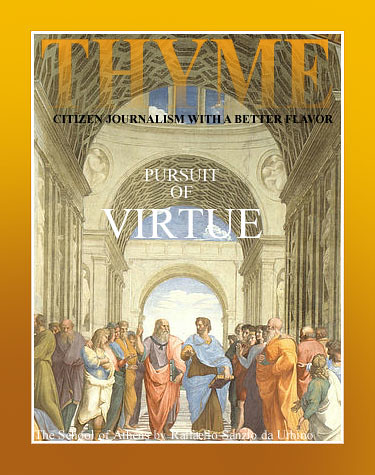
Pursuit of Virtue
Cover: The School of Athens by Raffaello Sanzio da Urbino

"Properly understood, therefore, when John Locke, Samuel Johnson, and Thomas Jefferson wrote of 'the pursuit of happiness,' they were invoking the Greek and Roman philosophical tradition in which happiness is bound up with the civic virtues of courage, moderation, and justice. Because they are civic virtues, not just personal attributes, they implicate the social aspect of eudaimonia. The pursuit of happiness, therefore, is not merely a matter of achieving individual pleasure." -- Carol V. Hamilton, Ph.d.

The 'other' weekly news magazine a while ago considered The Pursuit of Happiness [click to read]. Quoting the philosophers who say we're "wired for happiness," they then delve into the conundrum of why we are so unhappy. THYME once again ventures in where angels fear to tread... to consider the truth intended by the original writers.

Consider These Advertisements [click to read] for Colorado's Health Insurance Marketplace. While they are an insult to the fine young people I actually know and work with, they nonetheless represent the popular narrative's description of "Pursuit of Happiness." Really?, "Kegstands" and "shotsies?" Again, I have to wonder if ageing advertising executives are being allowed to define young people they really need to go out and talk to. One surprise in Virginia's recent gubernatorial election was that the Conservative candidate actually won a strong percentage of the so-called 'Millenial' vote. The 18-24 demographic broke strongly for the Conservative [1.] begging the question: "Is the self-actualization message of the popular culture deconstructing under its own weight as young people open their eyes and see the true cost?" 

Those who seek to write the narrative about modern Americans err because they've replaced the institutions of virtue and protection with the multiplex cinema and the mall as center of the settlement. Consider the first Jamestown settlement, where the church, the storehouse and the armory were at the center. Personal happiness, in the packaging of self-actualization demands we redefine marriage and reduce consequences for pleasurable behaviours. Society must now provide outcome instead of opportunity, even if that outcome is tepid compared to the results of mankind unchained to pursue loftier goals that are out of the direct pervue of government.

Thus, many are lauding the Supreme Court's latest "Dred Scott"  [2.] moment as an American triumph, overturning a portion of the Defense of Marriage Act and striking down the restoration of California's popularly ratified Proposition Eight. The portion of DOMA actually overturned has to do with an inheritance case and is NOT at all like Roe vs Wade, which nullified state abortion laws in a sweeping motion. The media rushes to herald it, but it does not really create what qualifies as a landmark decision. In fact it is but one more strike against traditional thinking which includes the government forcing Catholic Charities in Massachussetts to place children with same-sex couples (they folded rather than compromise their beliefs), the suit against a photographer who, on faith grounds, declined to photograph a same-sex ceremony and the Methodist group in New Jersey who were denied tax-exempt status because they would not allow a same-sex ceremony to be performed in their facility [3.]

Marriage Wins in the Big Picture [click to read]

In each of these cases, there were other options open to the couples and they were in no way forbidden from creating their covenant relationship. At issue, in each case, was the religious freedom of those who hold that G-d alone may define what is marriage. Beyond the religious freedom considerations, a strong body of research suggests that children are best raised by a father and a mother [4.] While the thought may nor be politically correct, the evidence is well-documented. State law is still able to support traditional marriage and may well strengthen the virtues epitomized in eudaimonia by doing so. Courage, moderation and justice would ask: "what is best for our children?"

The First Amendment of the Constitution both prohibits government establishment of a 'state' church and protects citizens in the free exercise of their faith. While it is a good thing to restrict the government's direction of the distribution of an estate (property being an important right), it also follows that the government has no business redefining what for many is a matter of faith (freedom of belief being one of the fundamental rights). Providing protection for a person's directives concerning shared property and hospital visitation priviledges is in keeping with the virtues of courage, moderation and justice. Creating a 'right' for someone to overwrite the tenets of faith with fines and sanctions is the antithesis of them.

Much of the so-called 'Affordable Care Act's' controversy surrounds the law's establishment of access to contraceptives and abortion as 'fundamental rights' in defiance of those institutions and traditions who's purpose is to instill virtue. Requiring Faith-based institutions to provide coverage for things they don't believe in violates the true spirit of "pursuit of Virtue." Mandating that Christian businessmen like David Green [click to read] provide them is equally intrusive on true personal liberty.

Indeed it would seem that the time has come to offer a clear alternative to the tired old cliche's that would reduce significant personal choices to the level of a Superbowl beer commercial. I am not a recognized expert on youth, but I have worked closely with enough young people to know that they can indeed wrap their fingers around noble purposes. History tells us that young people of old took up the task before them to survey great lands and build great works. They were not shipped off to "professionals" to be trained, but rather, received mentoring from older people, often in a highly individualized fashion. Older people were not always 'retired' from service in a mandatory fashion. In an era when few lived past the age of 62 they were a cherished resource. That changed when leaders like Prussia's Otto Von Bismark discovered that their most effective opposition was from people over the age of 65 [5.]. In the days before penicillin it was a safe bet to pension the relatively few Germans who did live past that age.

As one who is two years into his sixth decade, I can tell you that it is a great joy to freely share the things you have learned with a bright young apprentice! Sadly, this does not happen in a world where people enter productive life late and leave too early. There is more of a competitive than collaborative mindset in a workforce that excludes experience and enthusiasm found at the ends of the age spectrum. We need to return to a world where we train our own replacements, cherishing the creation of a legacy more than the accumulation of one's own accomplishment. We do not create a legacy for ourselves, rather we pass the baton and cheer. Virtue WANTS the next generation to run faster, farther and surer!

What better place for this to be reborn than in our churches. A couple of Sundays ago I heard a most inspiring message of intentional care for the younger generation. We were encouraged to pray for each child in our congregation... creating intentional relationships for mentoring, support and discipleship. All of the clever programs in the world cannot surpass the strength of such intentional relationships.

In Colossians 1:9-12 we read: "For this cause we also, since the day we heard it, do not cease to pray for you, and to desire that ye might be filled with the knowledge of his will in all wisdom and spiritual understanding; That ye might walk worthy of the Lord unto all pleasing, being fruitful in every good work, and increasing in the knowledge of G-d; Strengthened with all might, according to his glorious power, unto all patience and longsuffering with joyfulness; Giving thanks unto the Father, which hath made us meet to be partakers of the inheritance of the saints in light:" What would it look like to pray/model that for our young people? The results would certainly be changed young lives...and changed young lives would make an impact on their world! What if our young people were to be brought up in the narrative that they are for us a cherished investment?... Masterpieces of IMAGO DEI entrusted to our care?
Tuesday, February 5, 2013

"Journey to Jesus" Come to Life in Video

Audio Adrenaline - "Kings and Queens"


A beautiful capture of Imago Dei!

This video is such a powerful and beautiful vision of what is to come when that trumpet sounds. It reminds me of the book, the Last Battle (the last in CS Lewis' Narnia series). I was also just so happy to see that someone else had the Journey to Jesus vision. So here is Journey to Jesus, come to life. -- Kristina Elaine Riley

The Epic of Human Civilization: Isaiah 60, Rev: 21

eastwallweb
Click Here for larger image.

westwallweb
Click Here for larger image.

Journey to Jesus is a mural depicting the world's children as princes and princesses of the New Heaven and the New Earth.

Tuesday, November 20, 2012

Jackie Evancho Sings "To Believe"

Eleven Year-Old Vocalist Honors G-d with Her Talent

"...and we'll see in one another, the loving Image of You!"

Thursday, August 9, 2012

The First Thing We See is Imago Dei

A Celebration of the Beautiful Variety of Humankind

imagodeitwo
There is that innocent moment when children simply see children. Source: Unknown

The musical: South Pacific takes place in the madness of a world at war. It is a time when thousands are dying and a time of cold-blooded genocide. Sadly, we have not been able to see a time when cold-blooded killing has been ended. In the musical, Lieutenant Cable sings this song:

You've got to be taught
To hate and fear,
You've got to be taught
From year to year,
It's got to be drummed
In your dear little ear
You've got to be carefully taught.

You've got to be taught to be afraid
Of people whose eyes are oddly made,
And people whose skin is a diff'rent shade,
You've got to be carefully taught.

You've got to be taught before it's too late,
Before you are six or seven or eight,
To hate all the people your relatives hate,
You've got to be carefully taught!

Sikhchildren
Sikh Children. Photo: The Beckett Fund

Wednesday, March 21, 2012

"Do Not Ask For Whom the Bell Tolls..."

"We'll See in One Another, the Loving Image of You!"

toulouse
The scene of the Toulouse school shooting.

"The believer is neither a pessimist nor an optimist. To be either is illusory. The believer sees reality not in a certain light but as it is, and believes only in G-d and G-d’s power towards all and over all that is seen." -- Dietrich Bonhoffer

Jackie Evancho's lyrics are haunting as we learn of the Toulouse shooter's al-Qaida connections. The 24 year-old, who had spent time in Pakistan and Afghanistan, opened fire on a Jewish school killing three children and their Bible teacher, claiming he did it to "avenge Palestinian children [1.]." A photograph circulating the internet of a bloodied Palestinian child turns out to be in actuality one of a 2006 traffic accident [2.], yet it is being used to incite outrage, people against people.

I learned of a graphic designer in Israel who is attempting to help Israelis and Iranians "see" each other through photographs [3.] This is a good thing. I remember when my Mother was teaching at Howard Community College in 1979. One of her students was a young Iranian man and Mom became his friend in those dark and turbulent days.

But it is important to confront a stark reality here. In parts of the world children are being taught to become human bombs and are being forced to fight the wars of their elders. No amount of goodwill between Iranian people and Israelis will blunt the rantings of a Mahmoud Ahmadinejad. In our past Century, Lutheran theologian Dietrich Bonhoeffer was faced with the dilemma of what to do when confronted by unmitigated evil in the world. Hitler and the National Socialists did things that demanded a response.

If Boenhoeffer's life raises questions that are anything but simple, that is a healthy thing. His writings and sayings speak much of the relationships between people. He humbly considers how one should relate to enemies and thoughtfully navigates the realities of life with eyes wide open.

Dietrich Bonhoeffer felt compelled to join the resistance and was later executed. He left behind a legacy in his sermons and his writings. It is hard to find a single line of his to sum up his life and thoughts, but perhaps this one comes close:

"When we come to a clearer and more sober estimate of our own limitations and responsibilities, that makes it possible more genuinely to love our neighbor." -- Dietrich Bonhoeffer, Letters and Papers

Rockets into Roses: Artist's Response to War


roses
___________________________________________________

lokendraacharya
Think your daily commute is bad? Three Nepali girls cross a river on their way to school. Photo by Lokendra Achayara, ht/ Lee Baker.

Monday, March 19, 2012

Jackie Evancho Sings 'To Believe'

Eleven Year-Old Vocalist Honors G-d with Her Talent


"...and we'll see in one another, the loving Image of You!"

Thursday, February 16, 2012

Thoughts on the Arts and Worship

“In the Beginning G-d Created …”

Church in the Park
Photos by Brandon Hylton.

Church in the Park
Creating a painting during worship.

by Reverend Sean Peters, reposted from His Blog [click to read]

Genesis 1.1 reminds us that G-d, by very definition, is an artist.

Why then, I wonder, do we continue to have little to no place in the church for the artists among us? Oh, we try to accommodate by “allowing” them to sing or play their guitar every now and again; or perhaps we’re truly progressive and we include a “drama” into our worship service.

More and more churches have begun embracing the arts, and that is comforting, but we have a long way to go.

Artists have been shunned and dismissed by the church for centuries. Idolatry and worldliness are the primary sins artists are accused of committing; and yet I return again to the first chapter of our Bible: G-d is an artist: what do we do with that?

We live and move and have our being in a world saturated by the arts: film, television, theater, music, technology etc. Why does the church refuse to acknowledge that the people who sit in our pews on Sunday morning have been and will continue to be influenced by the arts in every other social circle that they travel in? Why are the arts not a part of what we do on Sunday mornings?

Andy Crouch’s brilliant study on culture Culture Making sounds a wake-up call to the church. Crouch argues that we have spent too much time bantering over which of Niebuhr’s cultural strategies is most useful for the church today. He suggests that we stop trying to figure out how to counter culture, and simply start creating culture. If Crouch is right, and I think he is, then we need to start looking around for the creative types in our midst, put them on our staffs, pay them a livable wage, and leverage their G-d-given artistic impulses to assist in creating the kinds of Spirit-filled, life-transforming Christ-centered worship experiences that will not simply compete with popular culture, but form an alternative culture.

This alternative culture that I imagine is one where the arts are used not as a means of entertainment to compete with pop culture, but to express true and genuine worship to the creator; it is one where performing artists use their gifts to remind us of our brokenness and sin, and then lead us to a place of forgiveness and hope; it is one where musicians are free to experiment and create music that honors the author of song, and where there are no restrictions with regard to the “styles” of music that are utilized or the types of instruments that are “acceptable;” it is one where painters and sculptors craft images that honor and glorify not the artist or the art itself, but honor and glorify the Master Artist and Sculptor of all things; it is one where storytellers can tell the Story of G-d with passion and boldness remembering that the Savior Himself “never taught without using parables …” (Mark 4.34 NLT); it is one where technology is utilized to its fullest potential so that the Message can be taught in the way that people are learning in every other sphere of life, and so that those among us with gifts in the area of technology: digital animation, video, graphic design etc, can feel that they have something to contribute to this alternative culture of Truth and Beauty.

I truly believe that this kind of culture can be created if the church is willing to embrace it. Some churches have been willing, and the fruits are evident.

Artists are looking for a place where they can worship G-d in the way that they are uniquely wired; the world is looking for a place where they can encounter G-d in new and fresh ways; and I believe G-d is looking for a church that is willing to take a step of faith, invest in the artists among them, and create a culture of creativity and beauty.

Are we willing?

Rev. Sean Peters is a graduate of Florida Atlantic University with a Bachelor of Arts degree in English/Education and Asbury Theological Seminary with a Masters of Divinity degree. He is an ordained elder in the Alabama/West Florida Conference of the United Methodist Church. Sean served as a worship leader and Assistant Pastor at The Grapevine UMC in Port Saint Lucie, FL from 1999-2005, as Worship Leader and Youth Director at Saint Paul's UMC in Tallahassee, FL from 2005-2007 and as Pastor of Emerging Ministries at Shalimar UMC, Shalimar FL from 2007-2011. Sean was also an actor and a public school teacher for 10 years prior to sensing G-d's call on his life to pursue full-time ministry. Sean is an avid 80"s fan, loves good coffee, good books and playing golf. He is currently the pastor of The Journey Church in Crestview, Florida.

Monday, February 6, 2012

The Blind Man in the Bleachers

Meet the Real MVP's of Sunday's Superbowl

parents
Jason Pierre-Paul's parents, Marie and Jean. Sun Sentinal

A Milestone Monday Feature

Jason Pierre-Paul was just nine months old when his Father lost sight in one eye while driving. Within weeks, Jean Pierre-Paul was blind, the victim of a viral infection that destroyed his sight. His Mother Marie became the sole breadwinner for the family, working long hours in the housekeeping department of a hotel.

Jean stayed home and cared for Jason. He and his wife taught their Son great lessons in perserverance as they adjusted to meet the challenges life handed them.

Almost thirty years ago, the family came to the United States, settling in Florida. Jason attended Deerfield Beach High School and actually played basketball until a serious leg injury sidelined him, but then another MVP came into his life.

In his junior year, Jason signed up for a geometry class taught by Manny Martin, who happened to be defensive coordinator for the school's football team. Martin jokingly told Jason that in order to pass the class, he'd have to play football. The rest is history.

There was a problem though. Jason worked after school at Boston Market to help the family with their rent. Marie was working as a domestic and finances were tight. Martin went to Jason's boss at Boston Market and they worked out a schedule so he could keep his job and still make practices. Jason would leave practice and go straight to work. often he would work until midnight and then get up early to make it to high school. The superstar remembers this as the hardest year of his life.

He went to three colleges: College of the Canyons in California, Fort Scott Community College in Kansas and finally University of South Florida. He was drafted by the Giants in the 2010 NFL Draft.

Sunday his Dad went to Indianapolis to attend his first-ever NFL game. He listened as his Son matched wits with Tom Brady, rushing and batting down passes against one of the best quarterbacks in the game. It had to have been an amazing day for Jean and Marie! [1.]

Blind Man in the Bleachers
Kenny Starr

He's just the blind man in the bleachers to the local hometown fans
And he sits beneath the speakers way back in the stands
And he listens to the play by play, he's just waiting for one name
He wants to hear his son get in the game

But the boy's just not a hero, he's strictly second team
Though he runs each night for touchdowns in his fathers sweetest dreams
He's gonna be a star someday though you might never tell
But the blind man in the bleachers knows he will

And the last game of the season is a Friday night at home
And no one knows the reason but the blind man didn't come
And his boy looks kinda nervous,sometimes turns around and stares
Just as though he sees the old man sitting there

Well, the local boys are tryin' but they slowly lose their will
Another players down and now he's carried from the field
At halftime in the locker room the kid goes off alone
And no one sees him talkin' on the phone

And the games already started when he gets back to the team
And half the crowd can hear his coach yell, "Where the hell you been?"
"Just getting' ready for the second half", is all he'll say
"Cause now you're gonna let me in to play"

And without another word he turns and runs into the game
And though the silence on the field, loudspeakers call his name
It'll make the local papers how the team came from behind
When they saw him playing out his heart to win

And when the game was over the coach asked him to tell
What was it he was thinkin' of that made him play so well
"Well, you knew my Dad was blind", he said, "Tonight he passed away"
"It's the first time that my father's seen me play"


laneyadvrt

Friday, January 6, 2012

Thoughts on What Constitutes True Greatness

A Wise Rabbi Gives Insight and Practical Direction

IMG_3241
Detail of a Mural by Laney Riley and Bob Kirchman depicting the promise of a New Heaven and a New Earth.

"The Name of Heaven should become beloved through you." -- Imperative of Scripture -- Jonathan Rosenblum

Today's inspirational feature on Greatness and Healing [click to read] by Jonathan Rosenblum in Jewish World Review is a must-read for all who would seek to live in the light of Divine wisdom and guidance.

Wednesday, September 28, 2011

Paintless Dent Repair

The Art of Smoothing Damaged Auto Metal

IMG_4830
Keith Hebert of Dent Free Paintless Dent Repair [1.] concentrates as he brings an automobile hood back to its original shape using an assortment of specially designed tools.

Thursday, July 28, 2011

THYME Magazine

Citizen Journalism with a Better Flavor

thyme0330
Volume III, Issue XXX

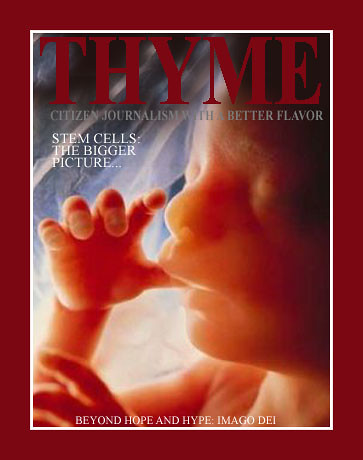
Stem Cells, Beyond the Hope and Hype

That's what the 'other' weekly news magazine is featuring this week. Not surprisingly, they conclude that although the major advances toward the treatment of disease are happening with ADULT stem cells, 'real' scientists 'agree' that we need to continue the embryonic research in order to find more malliable strains of stem cells. So what if the embryonic research is a pretty futile rabbit trail. The potential for breakthrough treatments, they insist, is there.

What is true today is that a solid body of work exists showing real results from adult cells and umbilical cord cells. What needs to be discussed is the danger in reducing ANY human being, no matter how small, into a commodity.

I am a firm believer in IMAGO DEI, the belief that EVERY human being is a creation of G-d, and is fashioned in the Divine's Image. Therefore the notion that human embryos must be manufactured to alleviate human suffering is contradictory.